AMD Hits $1 Trillion on AI Chip Price Hike
AMD crossed $1 trillion in market cap September 21 after reports of a 10% Q4 AI accelerator price hike sent shares past $600 for the first time.
Key Points
- AMD crossed $1 trillion in market cap on September 21 after reports of a roughly 10% Q4 price increase on AI accelerators sent shares past $600 for the first time, with a single-session gain of 9.17%.
- The valuation is underwritten by Anthropic's 2-gigawatt MI450 compute commitment — not AMD's current ~13% slice of the AI accelerator market — making on-time delivery the single most important execution risk.
- Traders should watch AMD's next earnings print for data center revenue specifically, where Lisa Su's forecast of doubling 2027 revenue is the number the trillion-dollar market cap is actually pricing in.
AMD crossed $1 trillion in market cap on September 21 — not on a new chip launch, not on a customer announcement, but on reports that it is raising Q4 prices on AI accelerators and GPUs by roughly 10%. Shares surged 9.17% in a single morning session and punched through $600 for the first time in the company's history, making AMD the fourth chipmaker to join the trillion-dollar club this cycle alongside Nvidia, Broadcom, and SK Hynix.
The Number Behind the Number
The price hike is the headline, but the real story is what it signals about AMD's positioning in the AI infrastructure stack. Pricing power is the one lever that separates a commodity chip vendor from a platform company, and AMD just pulled it with enough force to add roughly $90 billion in market cap in a single session. That is not a market reacting to a 10% price increase on current volume — that is a market extrapolating what 10% pricing power means when volume scales toward the commitments already on the books.
AMD's performance gap versus Nvidia in 2026 stock terms is stark: up 187% against Nvidia's 3% gain year-to-date. That inversion is not a reflection of AMD's current market share, which sits at approximately 13% of the AI accelerator market versus Nvidia's dominant position. It is a bet on the trajectory — specifically on the thesis that AMD is in the early innings of a genuine share gain cycle, not a brief window of relief demand that snaps back once Nvidia's Blackwell supply fully catches up to hyperscaler orders.
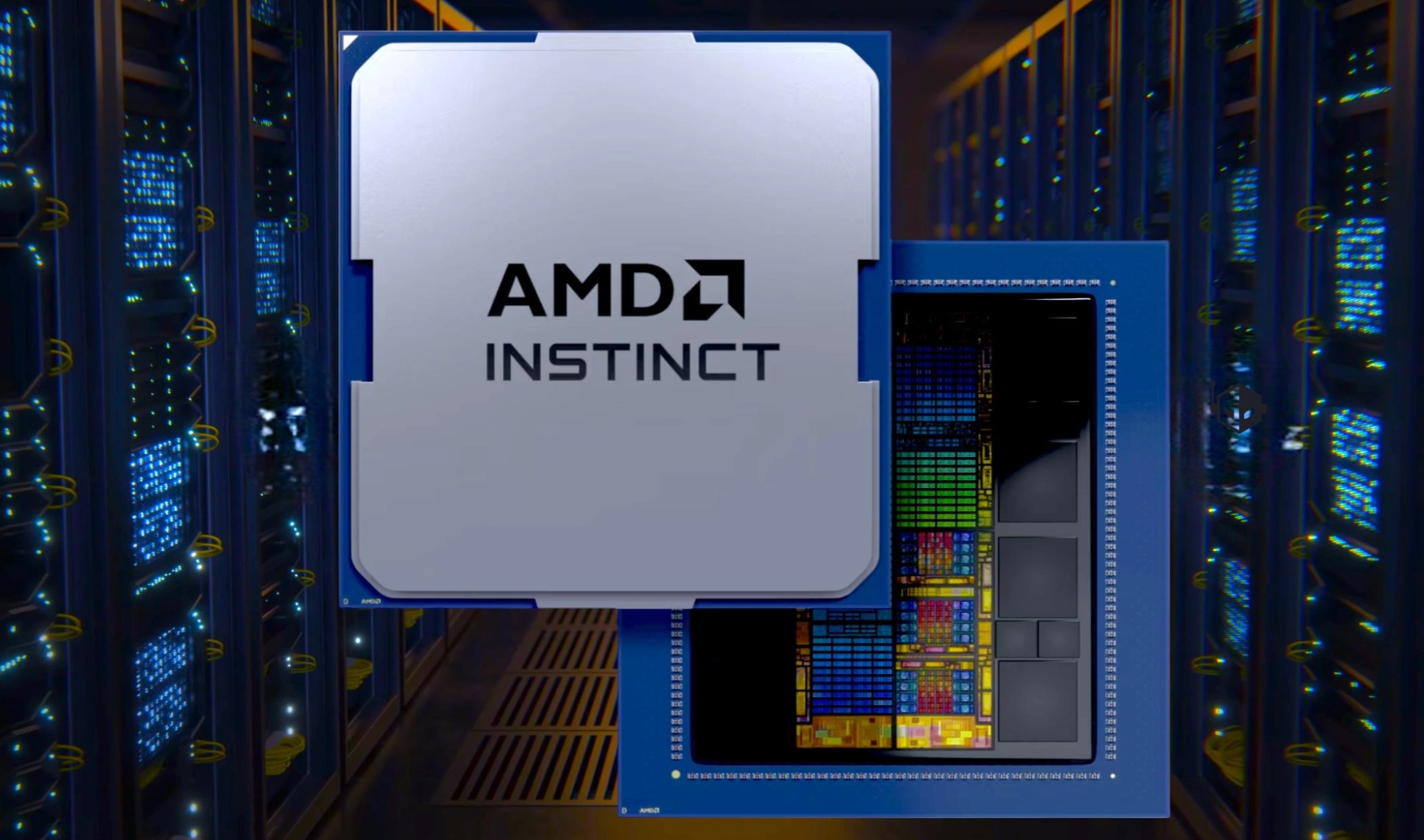
The mechanics of that bet hinge almost entirely on one contract: Anthropic's commitment to deploy AMD's MI450 chips across a 2-gigawatt compute cluster. That is not a pilot program. A 2-gigawatt deployment is hyperscaler-scale infrastructure spending, and it represents the clearest public signal that a frontier AI lab is willing to build a critical training and inference stack on AMD silicon rather than defaulting to Nvidia's CUDA ecosystem. The strategic importance of that reference win cannot be overstated — if Anthropic ships on schedule with MI450 as the backbone, it becomes the case study every other AI lab and cloud operator will study before their next procurement cycle.
Why the Trillion-Dollar Valuation Is a Forward Bet
AMD's trillion-dollar valuation is not being underwritten by its current financials. At $600-plus per share, the market is pricing in a version of AMD that does not yet exist in the revenue line — one where Lisa Su's forecast of doubling data center revenue in 2027 is not an aspiration but an operating plan that executes. That doubling thesis is arithmetically achievable only if MI450 volumes ramp on schedule and AMD can defend or expand its pricing discipline through the next two to three product generations.
The 10% Q4 price hike is the first hard evidence that AMD believes it has enough pricing power to test the market. In any commodity semiconductor segment, a unilateral 10% price move would trigger immediate customer pushback or defection. The fact that the market reacted with a 9% single-day gain rather than concern about customer churn suggests analysts are interpreting the move as confirmation that AMD's order backlog is inelastic — that customers need MI450 chips badly enough to absorb the increase rather than wait for alternatives.
That read is consistent with what the September 18 chip sector rally telegraphed across the broader semiconductor complex: SOXX up 3.4%, Arm up 8.6%, Marvell up 4.8%, Micron up 5.5%. Tight supply and sustained data-center demand are the macro backdrop. AMD raised prices into that backdrop, which is exactly the kind of disciplined commercial behavior that separates a company building durable margin from one chasing volume at the expense of unit economics.
There is a separate read-through for Nvidia here that the market has underappreciated. AMD's ability to raise prices by 10% does not hurt Nvidia's pricing power — it validates it. If the number-two player in AI accelerators has enough demand visibility to lift Q4 prices with confidence, it reinforces that the entire AI compute market remains supply-constrained and that Nvidia's multi-year hyperscaler order commitments are not at risk of renegotiation. AMD's move is constructive for the sector, not just for AMD.
What Traders Watch Next
The trillion-dollar market cap is the easy headline. The harder question is whether the valuation holds through AMD's next earnings print, which will be the first one where data center revenue can be measured against the MI450 ramp and the 10% pricing action simultaneously. Su's 2027-doubling forecast implies a very specific acceleration in sequential data center revenue growth — if the next quarterly print shows data center revenue growing at or above the trend line that gets AMD to that doubling, the stock has room to extend. If it misses, the $600-plus level will be tested hard.
Beyond the quarterly print, the two event risks that matter most are MI450 delivery confirmation from Anthropic — any public signal that the 2-gigawatt deployment is on schedule — and whether AMD's pricing discipline holds into 2027 procurement negotiations with the major cloud providers. Microsoft, Google, and Amazon all have exposure to MI450 through their own internal AI infrastructure buildouts, and their willingness to accept continued price increases will determine whether today's trillion-dollar valuation is a ceiling or a floor.
AMD's stock performance relative to Nvidia in 2026 — 187% versus 3% — is a ratio that will mean-revert at some point. The question for traders is whether that reversion happens because AMD falls back toward Nvidia or because Nvidia accelerates to catch up. On current data, with NVDA's Blackwell cycle still in volume ramp and AMD's MI450 just entering its commercial phase, the next 90 days of delivery execution will answer that question more clearly than any analyst model. Watch September-quarter data center revenue at AMD's next earnings call — that single line item is the number the trillion-dollar market cap is actually betting on.
The Weekly Investor
Daily market analysis for active traders. Free.