AMD Hits $1 Trillion as TSMC's Supply Wall Holds Firm
AMD crosses $1 trillion market cap while TSMC's August revenue surges 53% and CEO C.C. Wei warns AI chip supply remains "far from enough" globally.
Key Points
- AMD crossed the $1 trillion market cap threshold this week, the latest chip company to join a club whose membership is being driven almost entirely by AI compute demand.
- TSMC's August revenue of NT$514.81 billion represented a 53% year-over-year surge, and CEO C.C. Wei publicly stated global AI chip supply remains "far from enough" despite a $100 billion Arizona expansion commitment.
- Watch TSMC's 2nm ramp-up margin data in its next quarterly report — that single line item is the primary asterisk on the most constructive semiconductor demand setup in two decades.
AMD crossed $1 trillion in market capitalization this week, a milestone that lands against a backdrop of TSMC's August revenue printing 53% higher year-over-year at NT$514.81 billion — two data points that together describe a semiconductor sector where demand is structurally outpacing every expansion plan currently on the table.
The Trillion-Dollar Threshold and What It Means
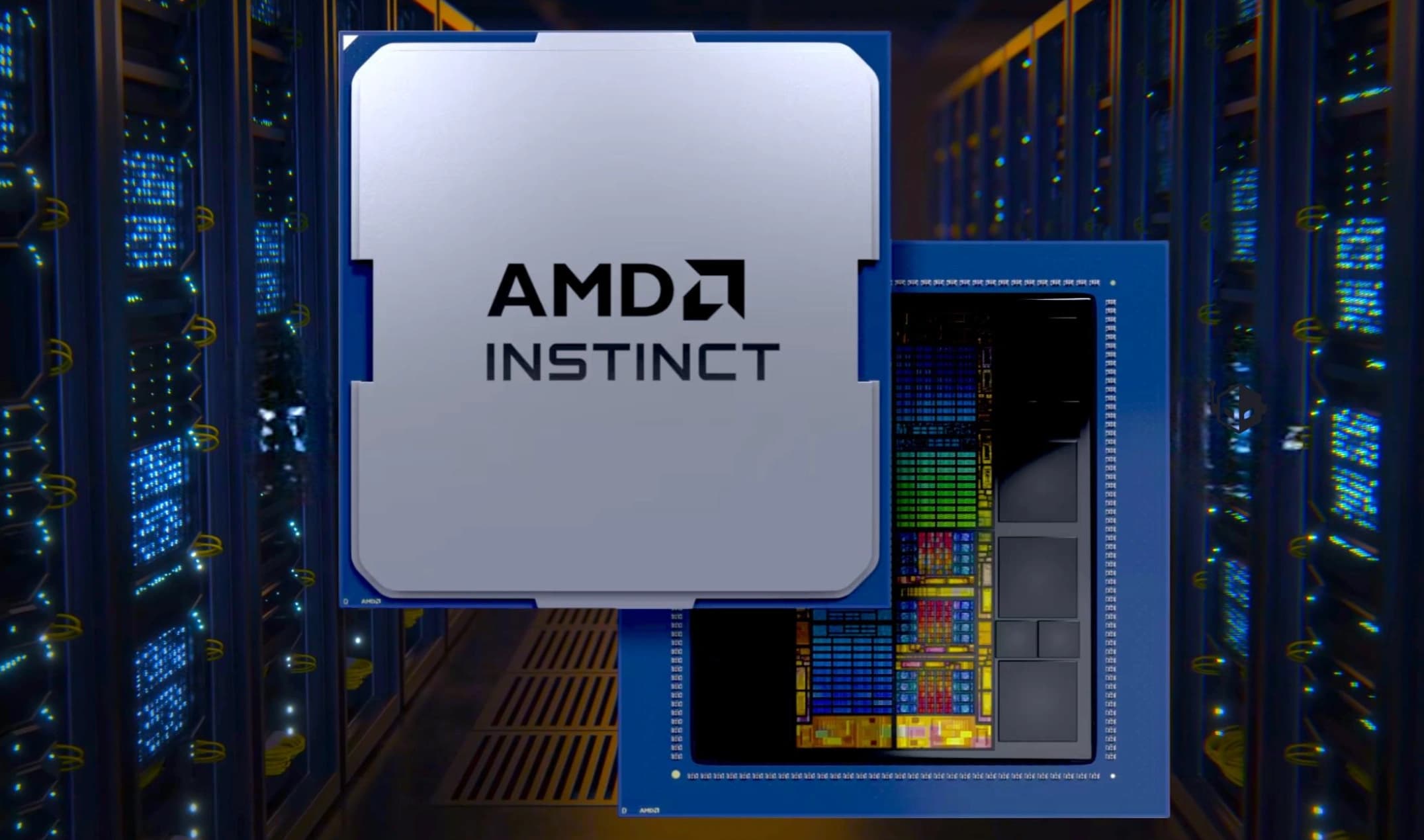
AMD at $1 trillion is a number that requires context to trade properly. This is not AMD in its CPU-turnaround era, when the Lisa Su recovery story was about clawing back server market share from Intel. This is AMD as an AI accelerator company, with its MI-series GPU line positioned as the primary alternative to Nvidia's H and B series in a market where hyperscalers are actively motivated to reduce single-vendor dependency. The $1 trillion print did not arrive in isolation — it follows a sector-wide rally last week in which AMD gained 6.5%, Arm rose 8.6%, Micron added 5.5%, and Intel, which has spent most of 2026 recovering from its foundry strategy restructuring, jumped 7.7%. The Philadelphia Semiconductor Index gained 3.4% on the week.
Thursday's tape is pulling back modestly from those levels. Nvidia was off 1.47%, TSMC fell 1.20%, and Intel dropped 1.02% in recent trading. That cooling is consistent with a sector digesting a sharp move rather than a reversal of the underlying thesis. The more important question for traders is whether AMD's $1 trillion valuation is pricing in an AI buildout that continues to accelerate, or one that is already peaking — and TSMC's supply data is the strongest available evidence on that question.
TSMC's 53% Revenue Print Is the Signal That Matters
TSMC's NT$514.81 billion August revenue figure, reported September 10, is the cleanest leading indicator available for AI chip demand because TSMC is the manufacturing chokepoint for virtually every piece of advanced silicon that matters. The company controls 72% of the global chip foundry market. When TSMC's revenue grows 53% in a single month, it is not a company-specific story — it is a demand signal for the entire AI infrastructure buildout, from Nvidia's Blackwell series to AMD's MI300 to Apple's A-series to Qualcomm's new 2-nanometer agentic chip, which the company this week confirmed is shipping in smartphones, a significant node milestone for mobile AI.
CEO C.C. Wei's public statement this week cuts through any ambiguity about whether that demand is durable. "We are working very hard to build production lines in the U.S., but it is still not enough, far from enough," Wei said, adding that TSMC is extending its expansion footprint to Japan and Germany in addition to the $100 billion Arizona commitment announced in Q2. No other foundry on the planet has the balance sheet to make a $100 billion single-country expansion bet while simultaneously building out in two additional geographies. TSMC's quarterly capital expenditure is running at $15.6 billion — a figure analysts are tracking as both a confirmation of demand confidence and a potential source of free cash flow pressure in the near term.
The insider buying is a secondary but notable signal. SVP Choh Fei Yeap purchased 1,000 shares for $55,780, and VP Shyue-Shyh Lin bought 3,000 shares for approximately $164,160. Neither position is large enough to move markets, but senior executives at a company running $15.6 billion quarterly capex do not add personal equity exposure unless they believe the demand runway justifies it. That's a data point, not a thesis, but it runs in the same direction as the revenue print and the CEO's public commentary.
The competitive landscape at the foundry level is also shifting in ways that reinforce TSMC's structural position. Alibaba this week unveiled the Zhenwu V900 AI chip alongside plans for a next-generation Qwen model with between 5 trillion and 10 trillion parameters. A model at that scale requires compute infrastructure that, at advanced nodes, runs through TSMC. China's domestic chip ambitions are real, but they are not yet threatening TSMC's advanced-node monopoly — they are adding to the global demand pool for the AI chips that TSMC alone can manufacture at scale.
The 2nm Asterisk and What Traders Watch Next
The margin compression risk deserves direct treatment rather than a footnote. TSMC's 2-nanometer ramp is a current headwind that analysts are flagging across coverage notes this week. New node transitions consistently pressure gross margins in the ramp phase — yields are lower, process costs are higher, and pricing power on new nodes takes time to fully materialize as customers qualify their designs. TSMC's 2nm is entering production at exactly the moment when AI accelerator customers are pushing for the fastest possible transition to the most advanced nodes, which means the ramp is happening quickly, which means the yield-curve pressure is hitting now rather than being spread over a longer qualification period.
The chip sector's recent rally — SOXX up 3.4%, Intel up 7.7%, AMD up 6.5% — has priced in a significant amount of the demand optimism already. The Cisco data point cuts the other way: CSCO stock fell 5% after Piper Sandler cut its price target on growth concerns, a reminder that not every piece of tech infrastructure is benefiting equally from the AI buildout. Nvidia's push into robotics with Isaac ROS 5.0 is a longer-duration catalyst that does not resolve in the near term but expands the total addressable market narrative beyond data center accelerators.
The specific event to put in the calendar is TSMC's next quarterly earnings report, where the 2nm gross margin data will be the most watched line item in the semiconductor sector. If TSMC can demonstrate that 2nm ramp costs are trending toward the gross margin profile of its mature 3nm node faster than the market expects — historical TSMC node transitions suggest this takes two to three quarters — the $15.6 billion quarterly capex reads as offensive investment rather than margin dilution. If 2nm yields are tracking below internal targets, the 53% August revenue print will be harder to translate into earnings power at the pace current valuations require. That quarterly print, expected in October, is the next hard number that either validates or stress-tests the $1 trillion AMD milestone and the broader chip sector setup heading into Q4.
The Weekly Investor
Daily market analysis for active traders. Free.