AMD Crosses $1 Trillion — What Comes Next
AMD hit $1 trillion market cap Monday, up 185% in 2026. Here's what the AI inference trade means for traders watching MI450 demand.
Key Points
- AMD became the fourth U.S. chipmaker to surpass $1 trillion in market cap Monday, with shares up 185% year-to-date and nearly 300% over the past 12 months.
- The catalyst is structural: AMD's July partnership with Anthropic to deploy up to 2 gigawatts of MI450 Series GPUs signals that AI inference — not training — is now the dominant growth vector for GPU demand.
- Watch the $615 resistance level — AMD tagged it Monday before pulling back Tuesday, and a clean break above that level on volume is the technical trigger traders need.
AMD hit $1 trillion in market cap Monday, making it the fourth U.S. chipmaker to cross that threshold alongside Nvidia, Broadcom, and Micron — a milestone that would have been unthinkable 18 months ago for a company once dismissed as a perpetual second-place finisher. Shares peaked above $615 intraday before Tuesday's pullback, but the underlying structural story driving the move is only gaining momentum.
How AMD Got Here
The 185% year-to-date gain — and nearly 300% over the trailing 12 months — is not a sentiment story. It is a supply chain story. As Nvidia's Blackwell architecture faces persistent allocation constraints at TSMC, enterprise buyers have been forced to diversify. AMD's Instinct MI450 Series is the primary beneficiary, and the July partnership with Anthropic to deploy up to 2 gigawatts of MI450 GPUs gave institutional investors the demand signal they needed to accelerate positioning. Two gigawatts is not a pilot program. That is data center infrastructure at hyperscaler scale.
AMD also made a strategically underappreciated acquisition in August, buying Taalas to deepen its software stack for AI inference workloads. The hardware-software integration play mirrors exactly what Nvidia did with CUDA over the past decade — and the market is now pricing in the possibility that AMD can replicate that moat in the inference layer before Nvidia fully locks it down. That is a multi-year thesis, not a quarterly trade, but the re-rating is happening now.
The Inference Trade Is Bigger Than Training
Here is the structural shift that most retail traders are still underpricing: AI inference — running models in production, serving queries, generating outputs — requires dramatically more continuous compute than training, which is a one-time capital event per model generation. As Anthropic cuts Claude Opus 5.5 pricing to $4 per million input tokens (down from $5 for Opus 5) and OpenAI rolls out its cheaper Sol and Luna models simultaneously, the economics of frontier AI are compressing at the model layer. That compression is not bearish for chips — it is the opposite. Cheaper inference costs mean more queries, more deployment, more enterprise adoption, and more sustained GPU demand. The volume effect overwhelms the per-query margin effect for chipmakers.
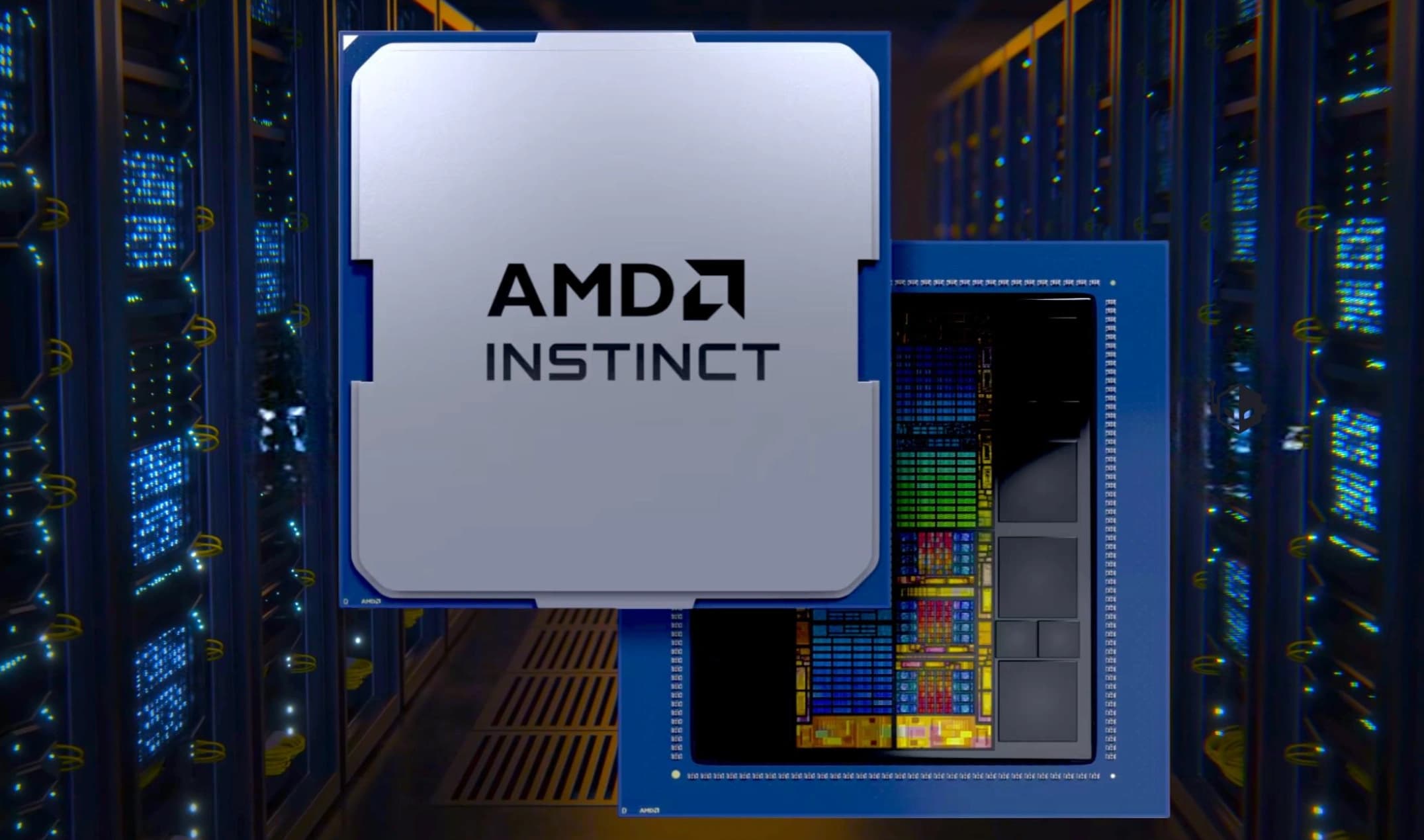
AMD's MI450 is specifically architected for inference workloads — high throughput, lower power per query relative to training-optimized chips. The Anthropic deal is the proof-of-concept. If the Anthropic partnership scales as planned, the 2-gigawatt deployment alone represents a demand anchor that will show up in AMD's revenue print for fiscal 2027. Wall Street consensus has not fully caught up to this timeline. Analysts who built their AMD models around data center GPU share gains in training are now revising upward for inference — and those revisions are still early innings.
What Traders Watch Next
The immediate technical level is simple: $615. AMD tagged it Monday and pulled back Tuesday in what looks like consolidation rather than reversal — volume on the pullback is lighter than the volume on the run-up, which is constructive. A clean close above $615 on volume above the 30-day average would be the signal for the next leg. The prior ceiling before Monday's run was in the $520–$540 range, which has now flipped to support.
Beyond the chart, the next fundamental catalyst is AMD's Q3 2026 earnings report, which will be the first print to capture meaningful MI450 revenue at scale following the Anthropic partnership announcement. Analysts will be watching gross margin trajectory closely — AMD's margins have historically lagged Nvidia's 71.1% fiscal 2026 gross margin, and the degree to which software and systems integration (accelerated by the Taalas acquisition) can improve AMD's margin profile will determine whether the $1 trillion valuation holds or expands. The SIA-Deloitte projection of $1.2 trillion in annual AI data center chip revenue by 2028 is the addressable market backdrop — AMD does not need to win the majority of that to justify current prices, but it needs to demonstrate it is taking durable share. The Q3 print will be the first hard evidence either way.
The Weekly Investor
Daily market analysis for active traders. Free.