AMD Hits $1 Trillion; IonQ Surges 12% on Quantum Leap
AMD crosses the $1 trillion market cap milestone as Meta's AI app drives chip demand. IonQ jumps 12% premarket on a real-time quantum error correction breakthrough.
Key Points
- AMD crossed $1 trillion in market capitalization Wednesday as Meta's "Muse" AI agent hit number one on the U.S. free iPhone app chart, fueling accelerated demand forecasts for AI-optimized CPUs and accelerators.
- IonQ surged approximately 12% premarket after demonstrating a real-time quantum error correction decoder running on a standard CPU — directly addressing the commercialization bottleneck that has kept institutional capital on the sidelines.
- Both moves arrive against a broader market that closed Tuesday in the red across every major index, making the divergence between AI-infrastructure names and the broad tape the defining trade of the week.
AMD crossed $1 trillion in market capitalization Wednesday morning, joining Nvidia, Apple, Microsoft, and Alphabet in the exclusive club — and doing it on the back of a viral AI app, not a product launch. Meanwhile, IonQ exploded 12% premarket on a quantum computing milestone that the company's most vocal bulls have been waiting years to see. Two very different technologies, one identical message: the market is still paying top dollar for anything that looks like the next layer of the AI infrastructure stack.
The App That Moved a Chip Stock
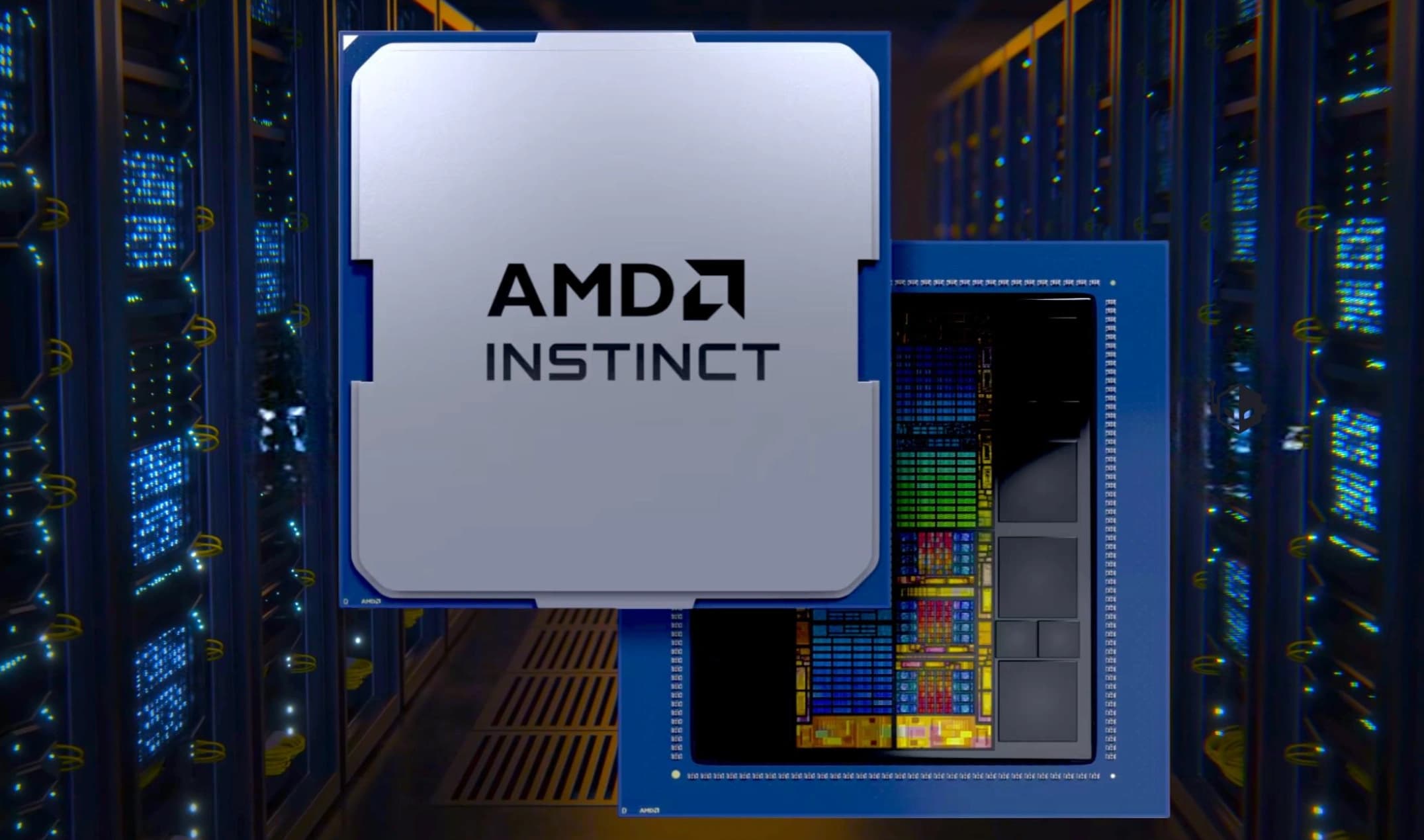
Meta's "Muse" AI agent reaching number one on the U.S. free iPhone app chart is not, on its face, an AMD story. But markets traded it as one, and the logic is straightforward: AI agents running at consumer scale require enormous compute — both in the data center for inference and, increasingly, at the edge for latency-sensitive applications. AMD's EPYC server CPUs and its MI-series AI accelerators sit directly in the path of that demand surge, and investors repriced the stock accordingly.
The trillion-dollar milestone is significant not just as a round number but as a psychological threshold that triggers index rebalancing, passive fund inflows, and renewed analyst coverage mandates at firms that had been underweight the name. AMD's path from $500 billion to $1 trillion has been faster than most models projected eighteen months ago, driven by a combination of data center CPU share gains against Intel and accelerating MI300X adoption among hyperscalers who needed an alternative to Nvidia's supply-constrained H100 and H200 lineup. The Meta Muse catalyst compressed what might have been a weeks-long grind through the trillion-dollar level into a single premarket session.
What makes today's move particularly notable is the broader market context. Tuesday closed with the S&P 500 down 0.69%, the Nasdaq 100 off 0.87%, and the Russell 2000 — the most sensitive index to risk appetite — down 1.71%. AMD didn't just hold in that tape; it broke out to a new valuation milestone while the rest of the market sold off. That kind of divergence between AI-infrastructure names and the broad tape has been a recurring pattern in 2026, and it signals that institutional rotation into the AI supply chain is still active, not exhausted.
IonQ's Real Breakthrough and Why It's Different
IonQ's 12% premarket surge deserves more analytical scrutiny than the typical meme-stock gap. The company demonstrated a real-time quantum error correction decoder running on a conventional CPU — not a specialized co-processor, not a cryogenic control system, but hardware that enterprise clients already own. That is a commercialization milestone, not just a research paper. Quantum error correction has been the field's central unsolved problem for practical deployment; without it, quantum computers produce results too noisy for business-critical applications.
The distinction between "demonstrated in a lab" and "running on a standard CPU in real time" is the entire ballgame for enterprise adoption timelines. Previous error correction demonstrations required custom silicon or were too slow to operate alongside quantum computation rather than after it. If IonQ's approach holds up under independent verification — and that caveat matters significantly — it compresses the timeline for commercially useful quantum advantage in optimization, drug discovery, and financial modeling by a meaningful margin. The stock's 12% premarket reaction reflects that the market is beginning to assign non-trivial probability to near-term revenue from error-corrected quantum systems, a probability that was effectively zero six months ago.
Benzinga's premarket movers coverage noted IonQ as the standout single-stock move of the Wednesday session, with volume in the premarket session already exceeding typical full-day averages before 8 a.m. EDT. Options activity in IonQ has been elevated for the past week, suggesting some participants had advance visibility into a potential catalyst — though the specific technical demonstration appears to have surprised even informed traders given the magnitude of the move.
The Broader AI Infrastructure Trade
AMD and IonQ don't compete, but they rhyme. Both stocks are pricing in a world where the compute demands of AI — whether classical or quantum — continue to outpace current infrastructure capacity. That thesis got additional texture Wednesday from Qualcomm's 2nm chip unveiling, a product milestone that positions QCOM competitively against Apple Silicon and MediaTek ahead of the 2027 smartphone cycle. Analyst upgrades at Morgan Stanley also touched the space directly, with Marvell Technology's price target raised from $246 to $268 and Dell's target lifted from $499 to $511 — both reflecting the same underlying conviction that AI infrastructure spending remains durable even as the broader market softens.
Microsoft's premarket rally added another data point. Stifel's upgrade, combined with news that MSFT is cutting Copilot enterprise prices by up to 50% while preparing an AI "super app," signals that the hyperscale platforms are now competing aggressively on AI pricing — which paradoxically accelerates adoption and drives higher total compute consumption even as per-unit revenue falls. For AMD and Nvidia, that is unambiguously bullish: lower AI application costs expand the addressable user base and ultimately increase aggregate chip demand.
The risk to the AI infrastructure trade is not demand — it is duration. At AMD's current valuation, the market is discounting several years of accelerating earnings growth that has no historical precedent in the semiconductor industry at this scale. If any single hyperscaler pauses its AI capex cycle — as Microsoft briefly signaled in early 2025 before reversing — the repricing of the entire stack would be severe. Traders who rode AMD through the $500 billion level and are now holding at $1 trillion need to be clear-eyed about the exit: the same momentum that created this milestone can unwind it in a single quarter if the demand narrative shifts.
The near-term level to watch for AMD is whether the stock can hold the $1 trillion capitalization through the end of the week, particularly against the backdrop of Costco's earnings tonight and any macro data that might reset risk appetite. For IonQ, the follow-through session on Thursday will be decisive — gap-and-go on a quantum catalyst, or a fade as traders who bought the news sell into strength. A sustained close above the premarket spike level in IonQ, on volume above 150% of its 30-day average, would signal genuine institutional accumulation rather than a retail momentum trade. Watch both names closely into Friday's close for confirmation of the week's divergence trade.
The Weekly Investor
Daily market analysis for active traders. Free.