
XRP and ETH Face Senate Vote That Could Reprice Both
ETH holds $2,513 as Uniswap volume spikes 95% and ETF outflows raise a yellow flag. XRP at $1.39 with a Schwab collateral filing in hand — both hinge on Sept. 15.
Key Points
- Ethereum is trading at $2,513 while Uniswap V3 DEX fees surged 95.22% in 24 hours — a sharp on-chain signal that may indicate genuine demand or a one-session anomaly.
- XRP gained 2.80% to $1.39 on a dual catalyst: the XRP Ledger processed 2,768 transactions in 3.8 seconds, and Charles Schwab disclosed nearly $4.8 million in XRP ETF shares held as money market repo collateral.
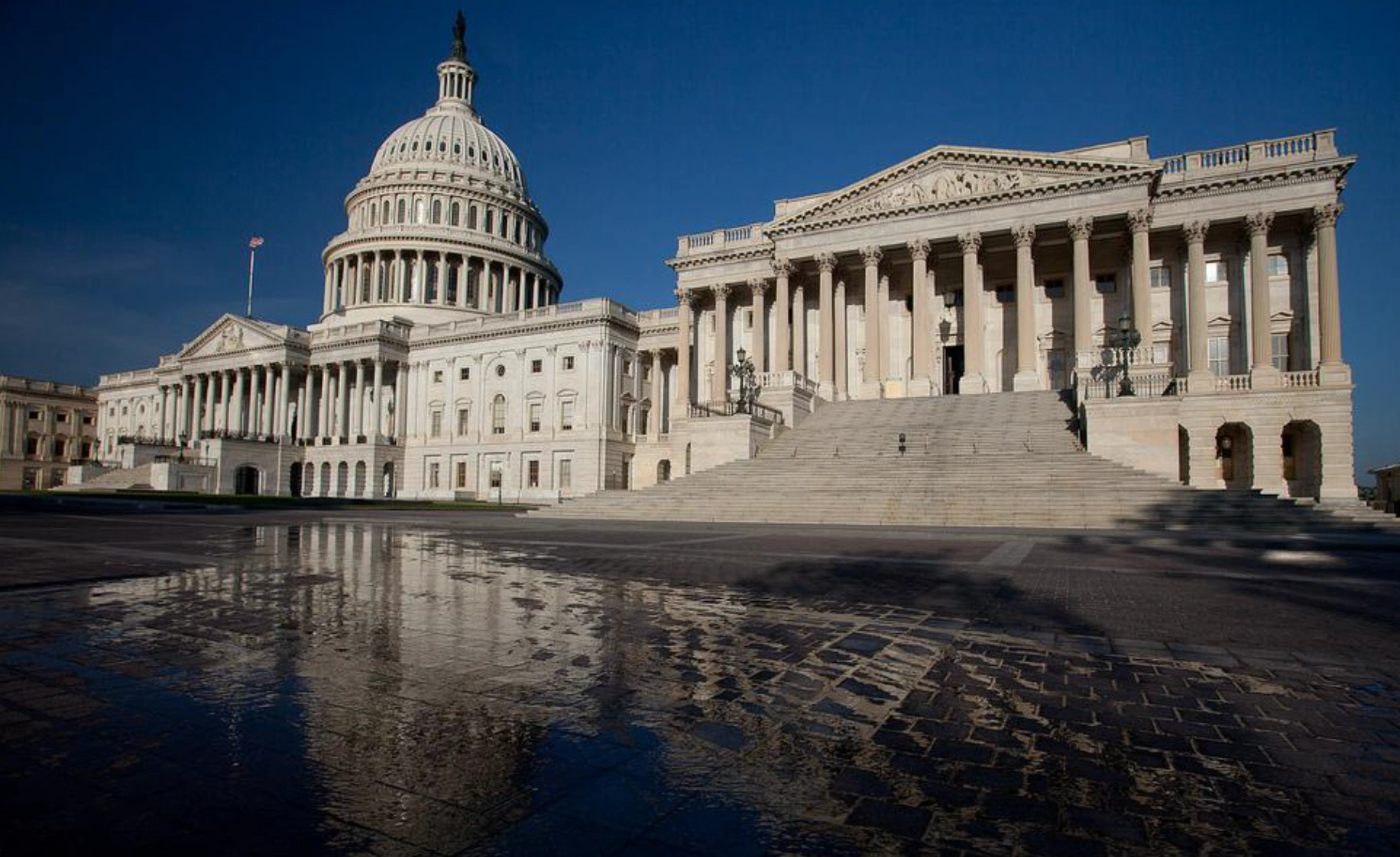
- Both assets face a single binary outcome: tomorrow's Senate cloture vote on the CLARITY Act, which requires 60 votes and would establish the first comprehensive federal crypto market structure framework.
Ethereum is up 2.00% to $2,513 this morning and Uniswap V3 just logged a 95.22% single-day spike in fee revenue — but a $24 million ETF outflow after an $824 million week is flashing yellow at exactly the wrong moment, with the Senate preparing to vote tomorrow on legislation that could fundamentally reprice both ETH and XRP. These two assets are not trading the same story, but they are converging on the same catalyst.
Ethereum's DEX Signal and the ETF Yellow Flag
The Uniswap number is the first thing any serious ETH trader needs to process this morning. A 95.22% surge in V3 fee activity in a single 24-hour window is not noise — that is a statistically significant spike in on-chain trading demand that either confirms genuine network utilization or marks a one-off event that fades by tomorrow's open. Uniswap V4 added another 55.87% in the same window. Together, these figures point to a compression of trading activity onto Ethereum's primary DEX infrastructure at a moment when ETH price itself is showing technical strength above all three key exponential moving averages.
Ethereum is trading at $2,513 above its EMA20 at $2,438.78, its EMA50 at $2,264.97, and its EMA200 at $2,176.84 — a clean bullish stack that mirrors Bitcoin's structure. The daily pivot sits at $2,503.74, and the first meaningful resistance above current price is the H1 level at $2,518.61. Clear that intraday and the next target is daily R1 at $2,542.78, with the upper Bollinger Band at $2,548.72 as the session stretch. The 24-hour range of $2,467.61 to $2,526.70 reflects tightly coiled action, and the MACD histogram has flipped negative at -16.4 — mild, but directionally consistent with the same momentum deceleration visible in Bitcoin's far more extreme -717.91 reading.
The ETF data is where the bull case gets complicated. After two consecutive weeks of record institutional inflows that pushed the weekly total to $824 million, Ethereum ETFs posted a single-session outflow of $24 million. One session of outflows after a historic run is not a reversal signal — but the timing matters. If that outflow was front-running by institutional desks who see tomorrow's Senate vote as a binary risk event rather than a guaranteed catalyst, it is a meaningful tell. Professional money does not often give up a week's worth of positioning clarity for no reason. The more charitable reading is that $24 million is simple profit-taking after a 33.67% price move over 30 days — ETH's trailing month range ran from a low of $1,864.58 to a high of $2,653.07, and managers who bought the August bottom are sitting on substantial gains heading into a high-uncertainty political event.
XRP's Structural Case Just Got a Schwab Filing
XRP is the altcoin with the most concrete, verifiable catalysts on the board today, and they arrived from two entirely different directions within 24 hours. The first is operational. On September 13, the XRP Ledger processed 2,768 transactions in 3.8 seconds during what was characterized as an unplanned stress test — meaning the network hit that throughput without pre-positioning or optimization, and handled it without disruption. For a ledger that competes on settlement speed and finality, that data point is directly relevant to institutional adoption arguments.
The second catalyst is more significant in terms of market structure implications. A Charles Schwab money market fund disclosed holding nearly $4.8 million in XRP ETF shares as repo collateral. This is not a speculative headline — repo collateral eligibility requires that an asset meet specific liquidity, price stability, and regulatory thresholds that money market funds operate under. The fact that an XRP ETF instrument was accepted as collateral by a Schwab vehicle is a quiet but structurally important signal that the asset is being integrated into mainstream financial plumbing. That process, once started, tends to accelerate rather than reverse.
XRP sits at $1.39, up 2.80% on the session, which makes it the strongest performer among the major altcoins tracked this morning. Solana printed $101.45, up 1.47%. BNB held at $724.20 for a 0.92% gain. TRON was the lone decliner at $0.34, down 0.18%. The divergence between XRP's outperformance and the rest of the altcoin complex is consistent with the dual-catalyst story — markets are pricing specific, verifiable developments rather than broad sector momentum. Bitcoin dominance at 58.88% confirms the broad altcoin market is still under pressure, which makes XRP's relative strength more notable, not less.
What the Senate Vote Actually Means for These Assets
The CLARITY Act is not a vague regulatory framework — it is a specific piece of legislation that resolves the single most consequential outstanding question in U.S. crypto markets: whether digital assets are securities under SEC jurisdiction or commodities under CFTC jurisdiction. That question has been the legal cloud hanging over XRP specifically since the SEC's original lawsuit against Ripple, and it is the structural ambiguity that has kept a segment of institutional capital on the sidelines for both ETH and the broader DeFi ecosystem that runs on Ethereum.
The procedural mechanics matter here. Tomorrow's Senate vote is a cloture vote on the motion to proceed — it requires 60 votes and decides whether debate begins, not whether the bill passes. The commentators who follow this legislation are divided on the outcome. Outstanding disagreements include government ethics provisions, illicit finance rules, and the treatment of stablecoin yield and rewards, which are not minor technical differences. These are the provisions that historically generate the cross-party friction that kills cloture votes. The bill passed the House in July 2025 and has been in Senate limbo since, and Senate leadership filing cloture before the August recess does not guarantee they have the votes counted correctly.
A 60-vote passage creates an immediate risk-on event specifically calibrated to benefit assets with the most regulatory uncertainty priced in — which points directly to XRP and ETH. The broader context of 2025 crypto ETF flows is relevant here: the industry raised $47.2 billion in combined ETF capital last year, and the SEC's August 21 publication of proposed "Regulation Crypto Assets" rules signals the regulatory architecture is being built regardless of the CLARITY Act's fate. But the Act's passage would accelerate that timeline by years and remove the litigation risk that currently suppresses institutional position sizing in XRP in particular.
A cloture failure sends the opposite signal and removes the near-term legislative tailwind that has been quietly supporting crypto prices since the August rally. ETH's 24-hour trading volume of $23.86 billion and the Uniswap DEX activity spike both suggest on-chain participants are active ahead of the vote. If the bill fails at 60 votes, watch ETH's $2,503.74 daily pivot as the first support that needs to hold, and watch XRP for a give-back of its 2.80% session gain. If cloture passes, $2,542.78 is ETH's immediate target and XRP has no clear technical resistance until the $1.50–$1.55 zone — a level it last traded above before the post-ATH sector-wide correction.
The Weekly Investor
Daily market analysis for active traders. Free.