Frontier AI Prices Just Collapsed. Here's Who Wins.
Anthropic and OpenAI both cut model prices this week. Cheaper frontier AI isn't bearish for chips — it's a volume accelerant. Here's the trade.
Key Points
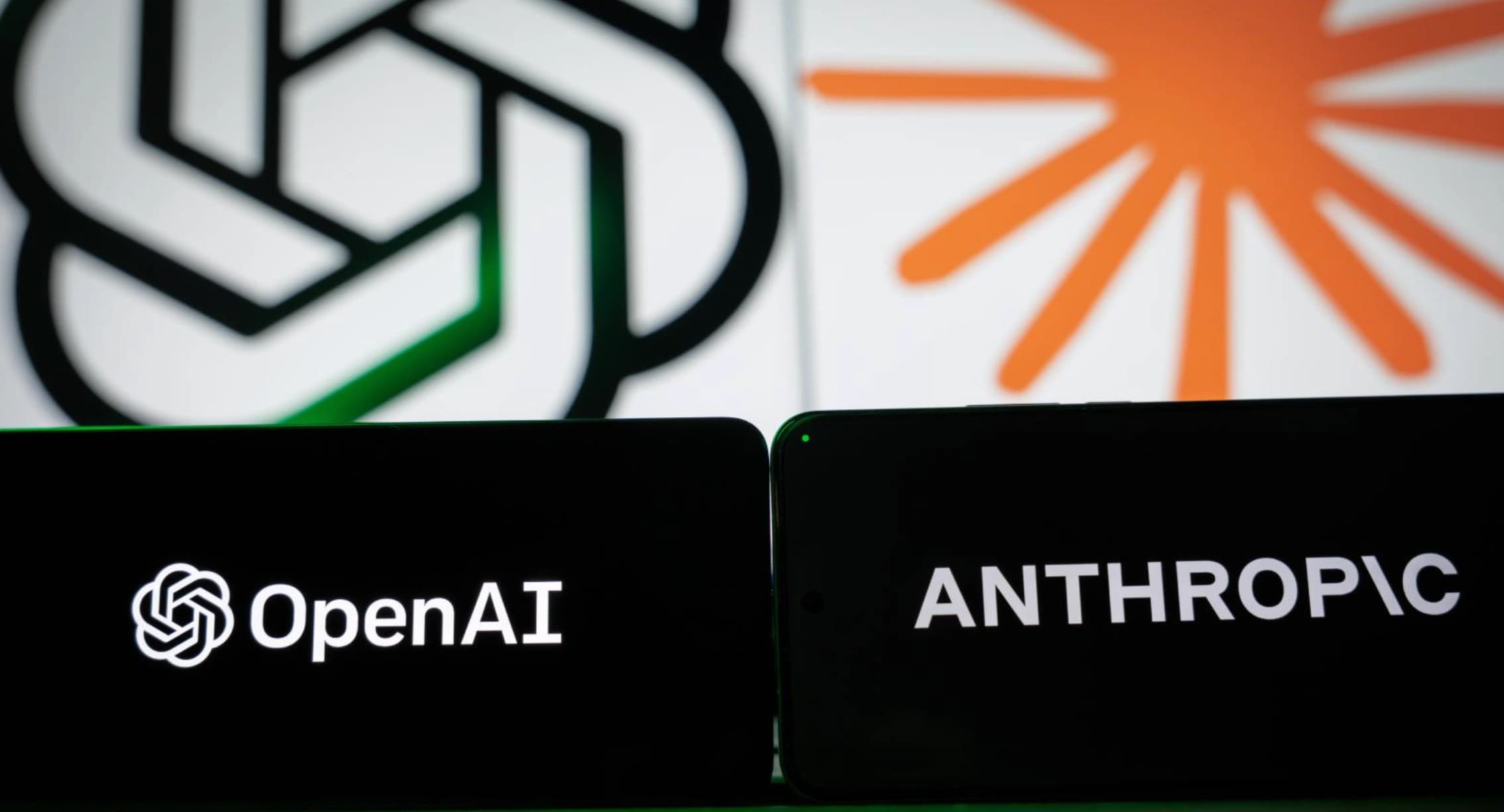
- Anthropic cut Claude Opus 5.5 pricing to $4/$20 per million input/output tokens on September 23, one day after OpenAI launched its cheaper Sol and Luna models — simultaneous price cuts from the two dominant frontier AI labs in 48 hours.
- Lower model prices accelerate enterprise deployment volume, which is net positive for AI inference chip demand from Nvidia and AMD even as per-query revenue compresses for the model providers.
- The critical variable to track is hyperscaler AI revenue per query in Q3 earnings — if volume growth offsets per-query compression, the chip trade stays intact; if it doesn't, the inference thesis cracks.
Anthropic cut Claude Opus 5.5 to $4 per million input tokens and $20 per million output tokens on September 23 — a 20% reduction from Opus 5's $5/$25 pricing — and OpenAI moved first the day before with the launch of its cheaper Sol and Luna models. Two simultaneous price cuts from the two most commercially serious frontier AI labs in 48 hours is not a coincidence. It is the opening salvo of a structural price war at the model layer, and every trader with exposure to AI infrastructure needs to understand which side of this trade they are actually on.
The Price War Is Real, and It Is Accelerating
The cost trajectory of frontier AI models has followed a pattern familiar to anyone who has tracked semiconductor cycles or cloud infrastructure pricing: capability improves, competition intensifies, prices fall, volume explodes. What is different in 2026 is the speed. Claude Opus 5.5 ships with a 1-million-token context window and always-on adaptive reasoning — capabilities that would have required the highest-tier model pricing six months ago — at a 20% discount to its predecessor. OpenAI's Sol and Luna are positioned even lower in the cost stack, designed for enterprise deployments where token costs are the primary barrier to scale.
DeepSeek's reported $1 billion revenue run rate, disclosed in the past 24 hours, adds a third dimension to this dynamic. Chinese AI labs have crossed from R&D into commercial scale, and their cost structures — built without access to the most advanced U.S. chips — have forced aggressive pricing that is now setting a global floor. Anthropic and OpenAI are not cutting prices because they want to; they are cutting prices because they have to. The competitive pressure from below, including well-capitalized Chinese developers willing to operate at thin margins to capture enterprise share, is as significant as the competition between the U.S. labs themselves.
What This Means for Chips
Here is the counterintuitive read that matters for traders: cheaper models are not bearish for Nvidia and AMD. They are a volume accelerant. The logic is straightforward — at $4 per million input tokens, enterprise use cases that were marginally uneconomic at $5 become deployable. Legal document review, customer service automation, internal knowledge management, software development assistance — every workload where token costs were the swing factor in the build-versus-buy decision just got repriced. That means more queries, more sustained inference compute demand, and more pressure on data center operators to expand GPU capacity.
The Benzinga/MarketVector analysis published today makes the structural case explicitly: foundries and chip designers capture AI economics at the infrastructure layer regardless of what happens to model-layer pricing. Nvidia's 71.1% fiscal 2026 gross margin and AMD's expanding MI450 deployments — including the 2-gigawatt Anthropic partnership announced in July — are both downstream of the same demand signal: more queries require more compute. The margin compression happens at Anthropic and OpenAI. The volume benefit accrues to the chip stack beneath them. Microsoft's commitment of more than $10 billion to Middle East AI infrastructure in the past 24 hours is the real-money confirmation of this thesis — hyperscalers are not pulling back CapEx because models are getting cheaper; they are accelerating it.
Where the Trade Breaks Down
The risk case is not zero, and traders need to price it honestly. If cheaper models compress enterprise AI revenue per query faster than volume grows, hyperscalers could face a scenario in which their AI-driven revenue disappoints even as their infrastructure CapEx remains elevated — a margin squeeze that would hit cloud revenue multiples before it hit chip demand. That is the scenario where the inference trade cracks. It is not the base case, but it is the tail risk embedded in every AI infrastructure position right now.
The specific data point to watch is hyperscaler AI revenue per query in Q3 2026 earnings — Amazon, Microsoft, and Google all report in late October. If Azure AI revenue, AWS Bedrock, and Google Cloud AI services show volume growth that more than offsets per-query compression, the thesis holds. If even one of the three shows revenue deceleration despite infrastructure investment, the market will reprice the entire inference stack quickly. Nvidia at a consensus 12-month price target of $327.70 — implying 45.32% upside from current levels and described by analysts as the cheapest it has been in a decade — is pricing in the benign scenario. The Q3 hyperscaler prints in late October are the first hard test of whether that pricing is right or dangerously optimistic. Position accordingly before those numbers land.
The Weekly Investor
Daily market analysis for active traders. Free.