S&P 500 Futures Edge Up After Tuesday's 628-Point Wipeout
S&P 500 futures inch +0.10% Wednesday after the Dow's 628-point collapse. CPI data and a 60% Fed hike probability make this the most dangerous relief bounce of 2026.
Key Points
- The Dow shed 628.18 points Tuesday — its worst single-session drop in months — closing at 52,786.07, with S&P 500 futures recovering only +0.10% by Wednesday pre-market.
- A scorching August payrolls print of 162,000 jobs — three times consensus — has pushed Fed rate-hike odds to 60% for the September 15–16 meeting, with CPI now the decisive trigger.
- Watch the 10-year Treasury yield at 4.80%: a breach higher on a hot CPI print likely drags the S&P back toward 7,600 and kills the relief narrative before noon.
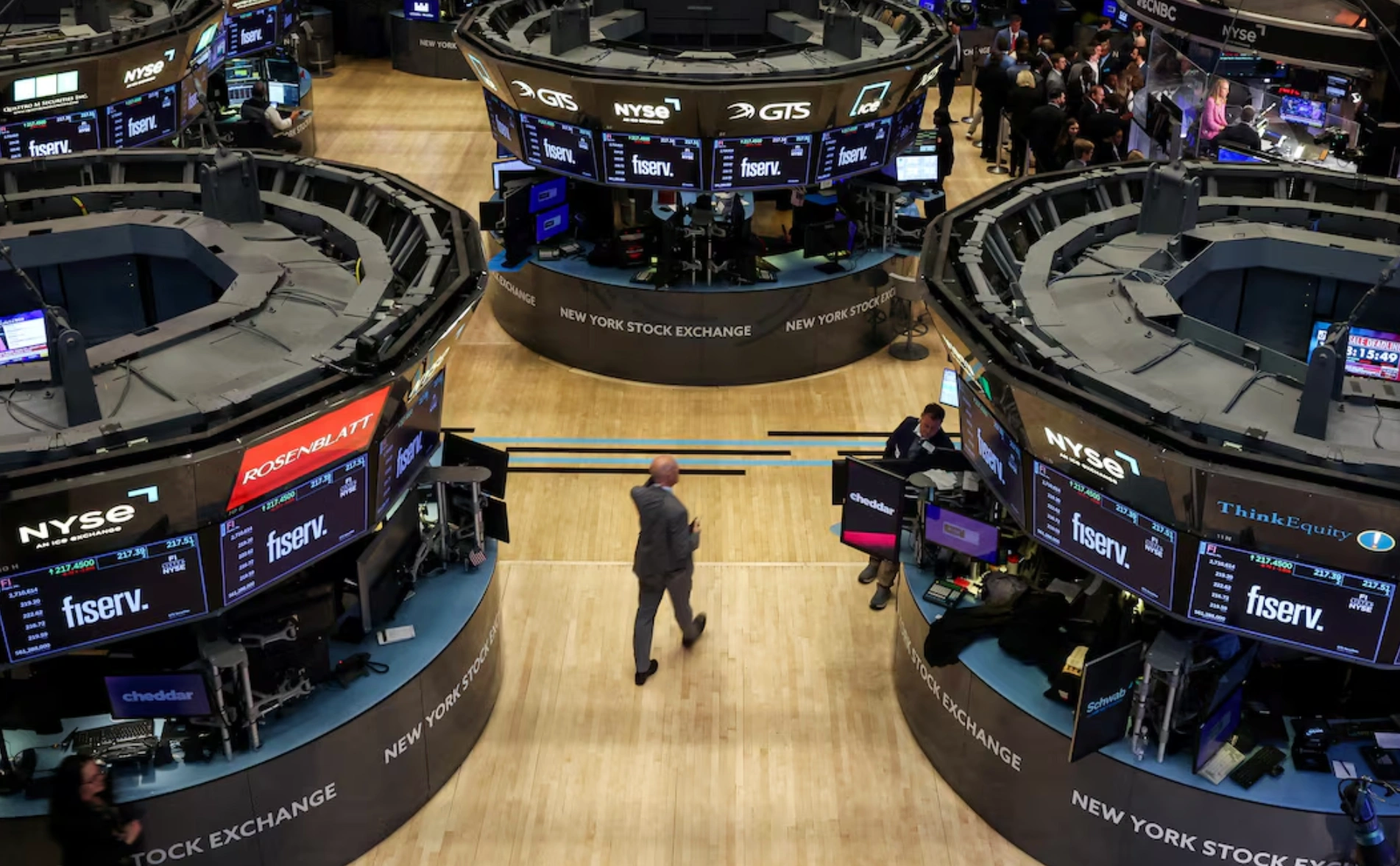
Wednesday's pre-market is offering traders a knife-edge choice: believe in a 66% Polymarket-implied bounce, or treat the fractional green on S&P 500 futures — up just +0.10% to 7,673.52 — as the last exit before CPI data detonates the rate-hike trade all over again. The Dow's 628-point bloodbath Tuesday, driven by Middle East energy shock and a jobs report that came in at three times expectations, has left the market structurally fragile at exactly the wrong moment in the Fed calendar.
The Setup Coming Into Wednesday
Tuesday's session was ugly in a specific, diagnostic way. The damage wasn't evenly distributed — it was concentrated in the credit-sensitive, rate-duration-exposed names that have defined this bull market's leadership. Microsoft dropped -1.1%, Palantir fell -2.3%, and Amazon shed -0.6%. Salesforce lost nearly -3.94% and Amgen cratered -10.15%, accounting for a disproportionate share of the Dow's 628.18-point decline to 52,786.07. These aren't random sell-offs. They're the market repricing the cost of capital in real time.
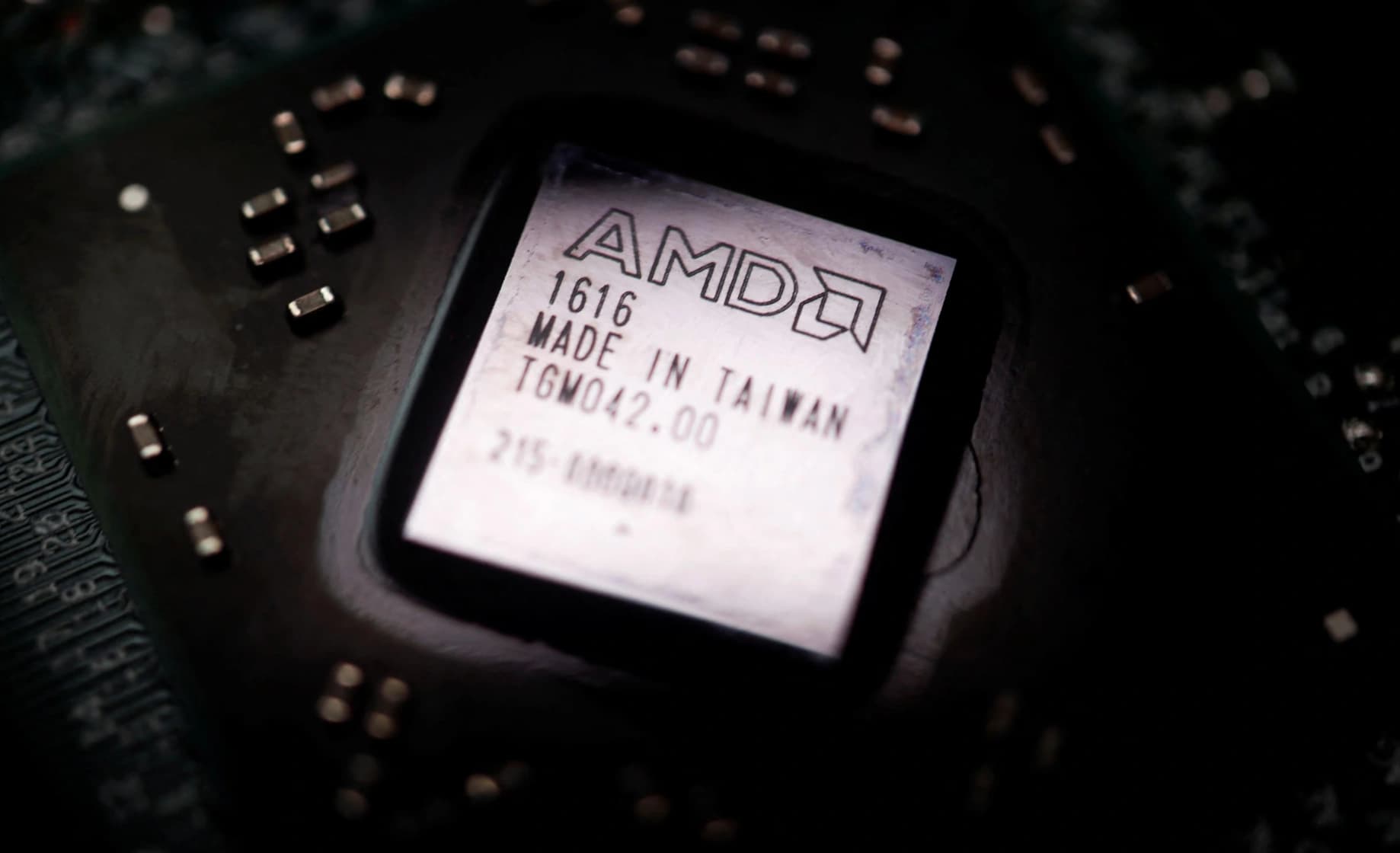
The one cohort that bucked the tape was semiconductors — and it matters. Intel surged +9.1% and AMD gained +5.9%, with Broadcom climbing +3% on the back of CEO Hock Tan's bullish AI revenue projections. That divergence tells you something important: the market isn't abandoning growth entirely. It's rotating hard within the growth universe, away from software multiples that can't survive a 5% fed funds rate and toward hardware and chip names with near-term earnings visibility. That rotation is now the dominant intraday trade.
By Wednesday pre-market, the split personality of Tuesday's session is playing forward almost exactly. Nasdaq 100 futures are up +0.22% while Dow futures have slipped -0.02% and Russell 2000 futures are off -0.03%. Small caps and value are the most vulnerable in a rate-hike environment, and the market is pricing that precisely. The S&P's +0.10% is the average of two very different stories happening simultaneously under the hood.
The Fed's Problem
The core issue is that the Federal Reserve has walked into a trap, and Friday's August payrolls report sprung it. At 162,000 new jobs — against a consensus expectation closer to 55,000 — the labor market is not giving the Fed any cover to pause. Mark Hackett, chief market strategist at Nationwide, put it plainly: "If you have a CPI reading that surprises to the upside, that's going to really make it difficult for them not to hike rates." The market is currently pricing a 60% probability of a 25-basis-point hike at the September 15–16 meeting. A week ago, that number was materially lower.
What makes this particularly treacherous is the oil channel. Brent crude is pressing toward $100 per barrel as U.S.-Iran strikes escalate and Houthi attacks on Saudi infrastructure have reduced Gulf export capacity. Energy is the most direct transmission mechanism between geopolitical risk and headline CPI, and if August's print reflects even a partial pass-through of the oil spike that began in late July, the Fed's hand is essentially forced. The WTI 1-month implied volatility — which surged to 68% last week before settling back to around 51% — tells you how violently the energy market has repriced in recent days.
The 10-year Treasury yield is the fulcrum. It touched above 4.8% in early Tuesday trade before easing slightly into the close. That level is not arbitrary — it's where equity valuations at current S&P earnings multiples start to break down mechanically. At 4.8% on the 10-year, the equity risk premium compresses to levels that historically precede multiple contraction. John Kolovos of Macro Risk Advisors has flagged the sentiment backdrop as worrying: traditional surveys like Investors Intelligence show too many bulls, while real-time data points to complacency that hasn't fully been wrung out of positioning. The VIX closing at 15.30 — elevated from August lows but not at any threshold that signals institutional panic — confirms the market is repricing but not yet capitulating.
What Traders Watch Next
The Polymarket contract on "S&P 500 Up or Down on September 9?" is sitting at 66% for a higher close. That's meaningful as a sentiment read, but it's entirely conditional on one variable: CPI. If August's Consumer Price Index prints above 3.2% year-over-year — which would represent an acceleration from the prior month — the relief bounce in futures evaporates and the rate-hike probability jumps well above 60%. At that point, the 10-year breaks above 4.8% with conviction, and the S&P's next visible support sits around the 7,600 handle, roughly 1% below Tuesday's close of 7,673.52.
The semiconductor trade deserves separate attention because it's not just a one-day phenomenon. Intel's +9.1% move Tuesday came alongside Broadcom's AI revenue commentary and AMD's +5.9% gain in a broad tape-down session. That kind of sector-specific strength in the face of index-level selling is technically significant — it suggests institutional accumulation rather than short covering. Broadcom sits flat in pre-market Wednesday after that 3% gain, and how it trades around its key technical levels on the open will be a leading indicator for whether the semi rally has legs or was simply a rotation out of software into hardware ahead of the rate decision.
The premarket earnings movers add another layer of complexity. TTAN is gapping down -18% after fiscal Q3 guidance disappointed against elevated expectations — a reminder that even in a market looking for reasons to rally, valuation discipline is being enforced brutally. BRZE is off -12% on a similar dynamic. Against that backdrop, any broader bounce today likely needs the 10-year to hold below 4.8% and CPI to come in at or below consensus. The September 15–16 Fed meeting is the next hard date on the calendar; between now and then, every data point is a potential market-mover. A CPI release that surprises to the upside — even by 0.1% — will likely be the event that forces traders to abandon the relief-bounce thesis and position defensively into the Fed decision.
The Weekly Investor
Daily market analysis for active traders. Free.