
SOXX Bleeds $1.16B as AMAT Earnings Loom
Semiconductor ETFs SOXX and SMH shed $1.56B in combined outflows. Applied Materials earnings tonight could reset the trade. Here's what to watch.
Key Points
- SOXX and SMH together shed $1.56 billion in net redemptions on August 7, the largest single-session semiconductor ETF outflow this year.
- Traders are trimming single-sector chip risk while preserving broad-tech exposure through QQQ, which added $1.84 billion the same session.
- Applied Materials reports Q3 2026 results after today's close, with consensus EPS at $3.40 on roughly $9 billion in revenue — a direct catalyst for both SOXX and SMH.
The semiconductor trade is cracking at the edges. SOXX, the iShares Semiconductor ETF, recorded $1.16 billion in net redemptions on August 7 — the second-largest outflow of any ETF that session — while SMH, the VanEck Semiconductor ETF, shed an additional $402.9 million. Combined, $1.56 billion exited the two largest chip-focused funds in a single day, even as the broader market pulled in $15.3 billion in total ETF net flows. That's not sector weakness. That's surgical profit-taking by people who know exactly what they own.
The Rotation Playing Out in Real Time
The critical nuance here is what didn't happen: investors didn't leave tech. They repositioned within it. QQQ, the Invesco Nasdaq 100 ETF, absorbed $1.84 billion in net inflows on the same August 7 session that gutted SOXX and SMH. SPY took in $4.13 billion. IVV added $2.71 billion. The money didn't flee the building — it moved from the concentrated single-sector chip trade into diversified, index-level exposure. ETF.com's own headline framing for the week captures it precisely: "Semiconductor ETFs See Profit-Taking as Investors Pile Into QQQ."
This distinction matters tactically. A wholesale exodus from semiconductor equities would read as a macro call — concerns about AI capex, demand destruction, or a broader risk-off shift. What August 7's data actually shows is a more disciplined trade: investors locking in gains on the highest-beta chip vehicle while maintaining Nasdaq exposure through a fund where semiconductors represent roughly 10% of the index weight rather than 100%. It's a vol reduction move, not a thesis change. Traders running concentrated SOXX positions through a period of uncertainty are cutting the variance, not the conviction.
The XLK data from August 12 reinforces this read. The Technology Select Sector SPDR closed at $188.87, up $2.78, or 1.49%, on volume of 90,500 shares — one of the top sector ETF gainers for the session. If the semiconductor outflow story were driven by genuine tech skepticism, XLK wouldn't be leading. Instead, the sector ETF is bid while the sub-sector pure-play bleeds capital. The market is making a fine-grained distinction between tech exposure and chip-specific risk.
Why AMAT Tonight Is the Inflection Point
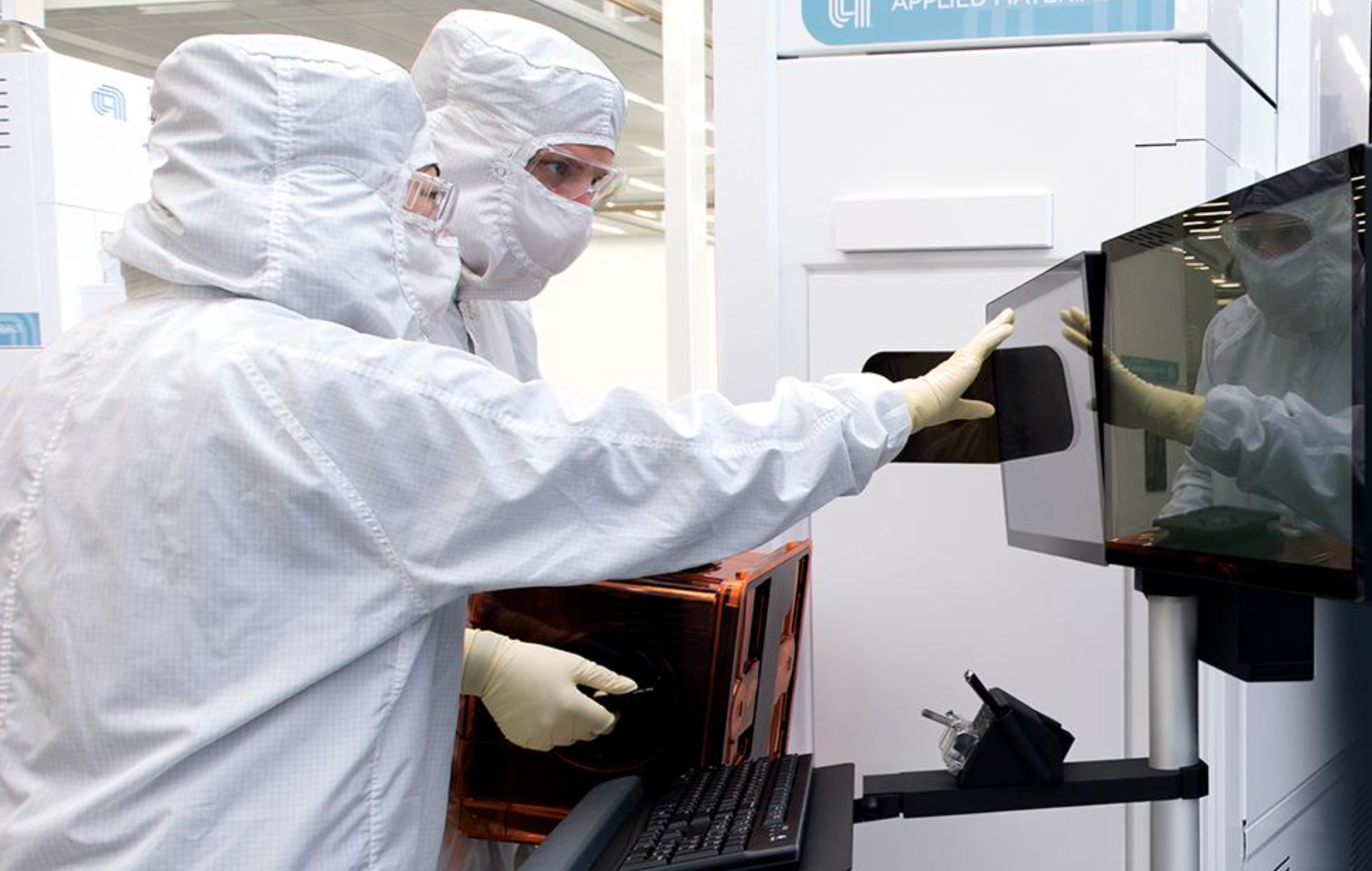
Applied Materials reports Q3 2026 earnings after the close today, August 13. Consensus is sitting at $3.40 in EPS on revenue near $9 billion. AMAT is the largest holding in SOXX by index weight and a top-five position in SMH, which means its guidance commentary will carry direct mechanistic weight on both funds at tomorrow's open. This isn't a soft read-through situation — AMAT's forward bookings from wafer fabrication equipment customers are among the cleanest leading indicators available for the AI chip buildout cycle.
The setup heading into the print is complicated. Semiconductor equipment demand has been bifurcated: leading-edge logic and advanced packaging capacity — driven by AI accelerator demand from NVIDIA, AMD, and the hyperscalers — remains robust, while memory and legacy node spending has been softer. If AMAT's Q4 guidance reflects strength in leading-edge tools and a recovery in DRAM equipment orders, the outflows of the past week could reverse sharply as traders reload on SOXX and SMH. If guidance disappoints or management flags any softening in customer ordering timelines, the $1.56 billion in outflows this week may look like the first move in a larger reallocation.
Yahoo Finance's earnings tracker shows the options market is pricing a meaningful move in AMAT shares on the print, consistent with heightened uncertainty around both the magnitude and direction of equipment spending into year-end. SOXX's reaction will be amplified relative to SMH because of its weighting methodology — SOXX uses a modified equal-weight approach with a cap on the largest holdings, while SMH is more heavily concentrated in TSMC and NVIDIA. Traders holding SOXX should expect higher beta on the AMAT catalyst in either direction.
What Traders Need to Watch at Tomorrow's Open
Beyond the AMAT catalyst, the structural flow picture for semiconductor ETFs is running against a complicated macro backdrop. The 10-year Treasury yield sits at 4.7% as of August 11 — a level that continues to apply a discount-rate headwind to the high-multiple names that dominate SOXX and SMH. Core CPI at 2.5% year-over-year is constructive for the eventual rate normalization thesis, but the 48-basis-point spread between the 10-year at 4.7% and the Fed Funds Rate at 3.63% reflects a market that is not confident the Fed can cut without reigniting inflation. That duration pressure doesn't go away with one good CPI print.
The 2026 inflow record is itself a relevant piece of context. Total ETF flows hit $191 billion in July alone, bringing the year-to-date total to nearly $1.3 trillion — already a full-year record with nearly five months remaining. That level of aggregate flow means there is enormous capital sitting in positions taken at elevated valuations, and any disappointment in the AI spending narrative — the narrative that has driven semiconductor ETFs through much of 2025 and 2026 — could trigger redemptions at a scale that dwarfs August 7's $1.56 billion print.
The specific level to watch in SOXX is the 50-day moving average, which has acted as support on each of the three pullbacks since February. A close below that level following a weak AMAT print would be a technically significant development that could accelerate the profit-taking dynamic already visible in the flow data. On the upside, a beat-and-raise from AMAT with strong leading-edge guidance would likely refuel SOXX and SMH inflows within 48 hours — ETF flow data updated daily on Yahoo Finance will be the fastest confirmation signal. Watch the August 14 flow settlement numbers by mid-morning tomorrow. That will tell you whether the institutional money that left on August 7 is coming back or digging in.
The Weekly Investor
Daily market analysis for active traders. Free.