SNB Decision Tomorrow: Zero Rate, Live Risk at 07:30 GMT
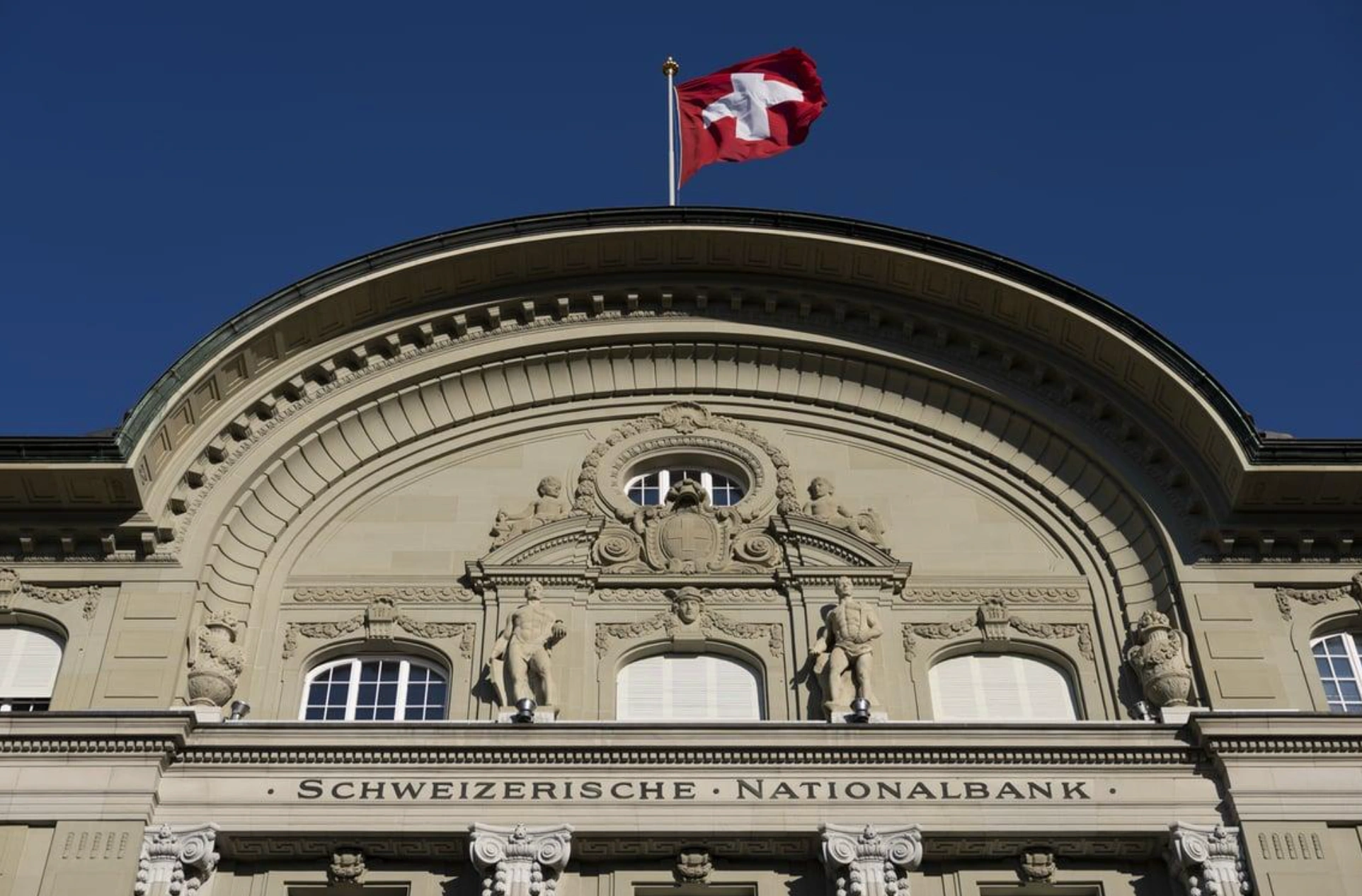
The Swiss National Bank decides tomorrow at 07:30 GMT with its rate at 0%. Here's what the ECB's September hike means for Thursday's SNB call and EUR/CHF.
Key Points
- The Swiss National Bank announces its rate decision Wednesday at 07:30 GMT with the current policy rate at 0% — the only developed-market central bank still anchored at the zero bound.
- The ECB's 25-basis-point hike to 2.50% on September 10 and the Fed's move to 3.75%–4.00% on September 16 have widened the rate differential against the franc to levels that historically pressure SNB communication on currency intervention.
- FX traders need a position framework before Wednesday morning: a hold with dovish language opens EUR/CHF upside, while any signal of SNB discomfort with deflation risk or CHF strength could be the surprise of the week.
The only live central bank event on this week's calendar fires at 07:30 GMT Wednesday morning, and most equity-focused traders haven't looked at it yet. The Swiss National Bank delivers its September rate decision with its policy rate sitting at exactly 0% — an outlier in a global cycle where the Fed just moved to 3.75%–4.00% and the ECB hiked for the second time this year to 2.50% just 13 days ago. The differential is wide, the franc is in the crosshairs, and the SNB has a history of moving when nobody is watching.
The Rate Gap Nobody Is Pricing
Zero percent. That is where the SNB sits while every other major developed-market central bank is operating at a positive — and in most cases rising — policy rate. The Fed's target range is now 3.75%–4.00% after last Tuesday's 12-0 vote to hike 25 basis points. The ECB moved its deposit rate from 2.25% to 2.50% on September 10, citing inflationary pressure from the Middle East conflict. The Bank of Japan is at 1.00% after its June 16 hike. Norway holds at 4.50%. India at 5.25%. Russia at 21.00%. The SNB is the last major central bank anchored at zero, and that position requires a credible ongoing narrative to sustain — particularly when inflation is rising in the eurozone and the United States.
Switzerland's policy rate history matters here. The SNB spent years at negative rates — deeper in the red than any other central bank in the world — precisely because of chronic deflationary pressure and an overvalued franc that functioned as a safe-haven magnet in every global risk-off episode. The move back to 0% was itself a significant normalization. The question for Wednesday is whether the SNB sees any justification to join the hiking cycle that the ECB and Fed have now both rejoined, or whether Swiss domestic inflation dynamics — historically below eurozone levels — give the Governing Board cover to sit on its hands while every neighbor tightens.
The ECB Factor and EUR/CHF Mechanics
When the ECB hikes and the SNB holds, EUR/CHF tends to weaken — the franc appreciates against the euro because the interest rate incentive to hold euros over francs increases at the margin, even when both currencies are considered safe. The ECB's September 10 move to 2.50% opened a 250-basis-point differential over the SNB's 0% rate, the widest gap in this cycle. If tomorrow's SNB decision is a straightforward hold with no hawkish tilt in the statement language, EUR/CHF traders need to decide whether that differential is already priced or whether there's further CHF appreciation pressure building.
The ECB's justification for hiking — inflationary pressure from the Middle East conflict — is a geopolitical input that Switzerland is not immune to. Switzerland imports energy. Swiss inflation, while historically lower than the eurozone average, is not isolated from commodity price shocks or supply-chain disruptions that originate in the same geography. If the SNB's statement Wednesday acknowledges any uptick in domestic price pressure or signals concern about imported inflation through a weakening franc, the market will immediately begin discounting a rate lift-off from zero, and EUR/CHF would likely gap lower as that repricing happens in real time at thin morning liquidity.
What the Decision Actually Means for Positioning
The SNB decision is a 07:30 GMT announcement, which means it lands before the London open fully develops and well before New York comes online. Liquidity in EUR/CHF, USD/CHF, and CHF crosses at that hour is thinner than at peak session, and the SNB has a well-documented history of using that window to maximum effect — the January 2015 floor removal remains the canonical example of the SNB acting when the market is least positioned. That history isn't a prediction for tomorrow, but it is a risk-management input that any FX trader carrying CHF exposure should have in the model.
Three scenarios deserve explicit probability assignment before Wednesday morning. The first is a clean hold: policy rate stays at 0%, statement language is neutral-to-dovish, and the SNB reiterates its willingness to intervene in FX markets to prevent excessive CHF appreciation. That outcome likely puts modest upward pressure on EUR/CHF as carry differentials reassert. The second is a hold with hawkish tilt: rate stays at 0% but the statement flags rising inflation risks or removes dovish language about FX intervention — that scenario forces a rapid repricing and is the most asymmetric risk given it is least expected. The third is an outright hike: a 25-basis-point move to 0.25% that brings the SNB into the global tightening camp. That outcome would be the week's largest FX surprise and would send USD/CHF sharply lower.
The global central bank backdrop makes the hawkish tilt scenario more plausible than the market is currently treating it. With the Fed's dot plot showing 16 of 18 officials expecting at least one more U.S. hike and the ECB having moved twice this year, the SNB faces a credibility question about what staying at 0% communicates to currency markets. A zero rate in a 3%-plus inflation world — even if Swiss domestic CPI is lower — reads to FX participants as an implicit commitment to CHF weakness, which is the opposite of what the SNB's intervention mandate is designed to achieve.
Traders running into Wednesday morning should have EUR/CHF levels defined before 07:00 GMT. Any statement language deviating from the SNB's standard neutral template — particularly any removal of the phrase "highly valued" in reference to the franc, or any acknowledgment of upside inflation risk — should be treated as a tactical entry signal for CHF strength. The next scheduled SNB decision after this one is December 2026, making Wednesday the last opportunity this quarter for the Governing Board to adjust its stance or messaging before year-end positioning flows begin in earnest.
The Weekly Investor
Daily market analysis for active traders. Free.