NVDA's $108B Guide Meets Its First Real Speed Test
NVIDIA guided Q3 to $108 billion. Now Mercury 2.5 runs 1,107 tok/s on standard NVDA GPUs — and Lutnick's tariff threat is the risk traders can't ignore.
Key Points
- NVIDIA guided Q3 FY2027 revenue to $108 billion, ±2%, after reporting Q2 data center revenue of $89 billion out of $96 billion total — the largest data center quarter in semiconductor history.
- Inception's Mercury 2.5 launch today, running at 1,107 tokens per second on standard NVIDIA GPUs, is a live inference demand signal that supports GPU utilization rates heading into Q3.
- Commerce Secretary Lutnick's semiconductor tariff warning is the single most material macro risk to NVDA's Q3 number and the entire advanced chip supply chain into Q4 2026.
NVIDIA's Q3 guide of $108 billion is now the most closely watched number in the semiconductor sector, and today is the kind of day that tells you whether the demand side of that equation is holding. Two things happened this morning that bear directly on the answer: Inception launched Mercury 2.5, a diffusion language model running at 1,107 tokens per second on standard NVIDIA GPUs, and Mistral closed a €3 billion Series D — the largest equity round ever raised by a European tech company. Both are real-money signals that AI inference and model development spending are not decelerating.
The Demand Signal Is Live
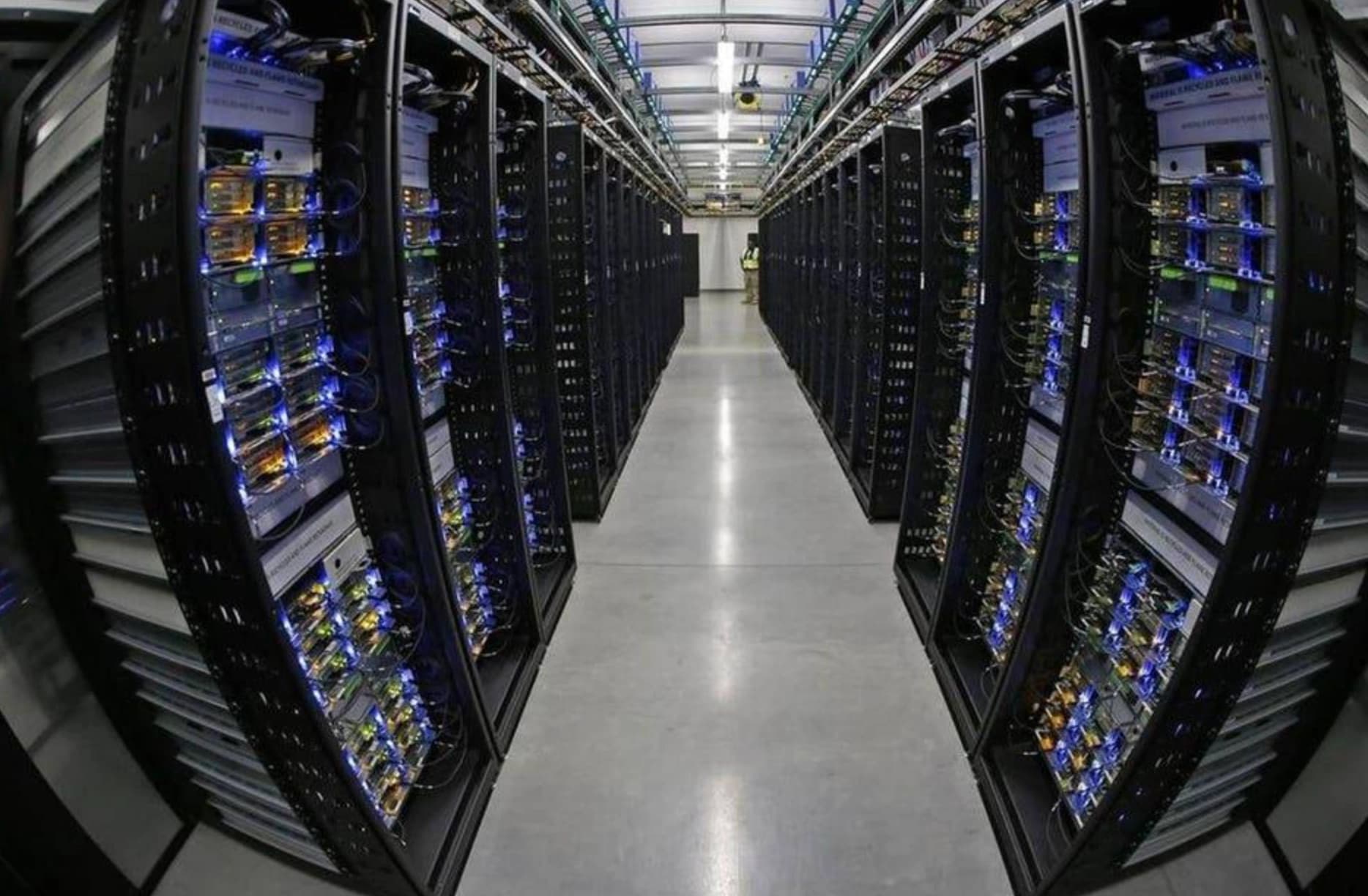
Inception's Mercury 2.5 is not a research paper. It is a deployed model, and the benchmark that matters for NVIDIA investors is not the intelligence score — it is the throughput figure. At 1,107 tokens per second on standard NVIDIA GPU hardware, Mercury 2.5 is a data point about how hard developers are driving GPU utilization in production inference environments today, on the exact hardware that NVIDIA is shipping at $89 billion quarterly run rates. The company claims Mercury 2.5 matches Gemini 3.5 Flash and GPT 5.6 Luna Low in performance while delivering 40% higher intelligence than its predecessor, Mercury 2. If that benchmark holds under independent testing, it means a new class of inference workloads just became viable on existing NVIDIA infrastructure — which is a pull-forward of GPU demand, not a displacement of it.
Mistral's €3 billion raise is the other number worth sitting with. Three years after launch, a European AI lab just raised the largest equity round in European tech history. Verify the final denomination at close — yesterday's reporting from TechStartups put the figure at $3.5 billion, suggesting either a rounding differential or a revised close figure. Either way, the capital flowing into frontier model development is not tapering. The direct implication for NVIDIA is straightforward: every serious frontier lab — whether it is Mistral in Paris, Inception deploying Mercury, or the hyperscalers running their own model stacks — buys compute, and NVIDIA sells the compute. The SOXQ ETF has returned over 58% in the past three months as Microsoft and Oracle placed massive orders for advanced chips for AI data centers. That is the environment NVDA's $108 billion guide was written into.
Microsoft's announcement this week of a $2.5 billion "Frontier" enterprise unit staffed with 6,000 engineers — focused on helping enterprise clients design and deploy AI systems at scale — is additional demand infrastructure. Those engineers are not running on CPUs. Microsoft's Azure AI buildout is one of NVIDIA's largest revenue channels, and the Frontier unit is effectively a deployment accelerant that pulls GPU orders forward as enterprise clients move from pilots to production.
The Tariff Threat Is Not Priced In
Commerce Secretary Howard Lutnick's statement that semiconductor tariffs are coming — reported September 2 — has not been fully absorbed by the market. NVDA has gained 15.72% over the past month and 22.39% year-to-date, closing recently at $227.98. That price action reflects the demand story. It does not adequately reflect a scenario in which tariffs are imposed on advanced semiconductor imports, because the precise scope, timeline, and exemption structure of those tariffs remains undefined. Undefined risk is the kind the market discounts until it can't.
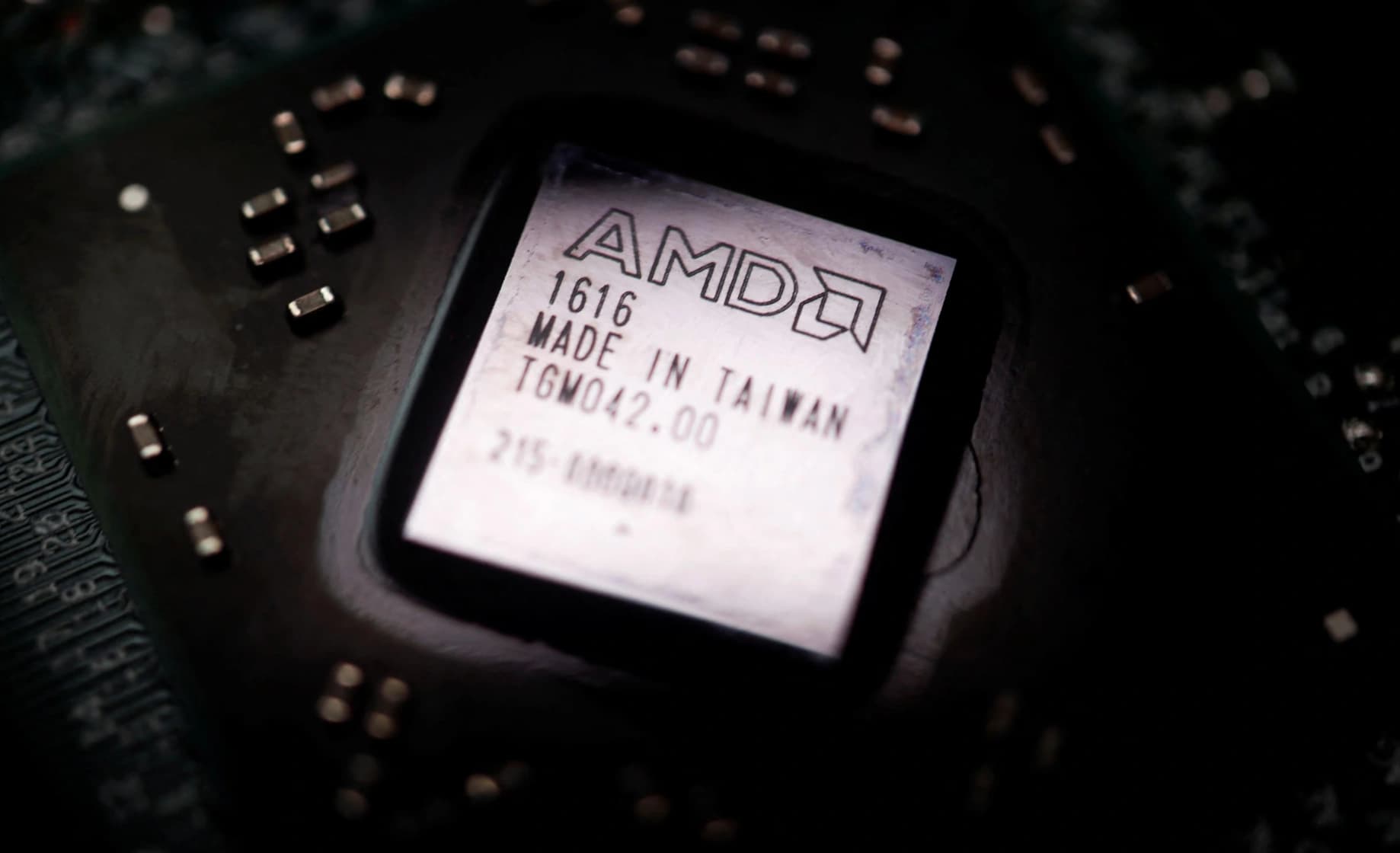
NVIDIA's supply chain runs directly through TSMC in Taiwan. Every H100, H200, and Blackwell-architecture GPU is fabbed at TSMC's most advanced nodes. A tariff regime targeting semiconductor imports — even if structured with carve-outs for chips without domestic alternatives — introduces cost uncertainty into a business model that currently operates on the assumption of frictionless cross-Pacific chip flow. AMD faces the same exposure. Broadcom's custom ASIC business, which runs its most advanced chips through TSMC, faces it too. The Semiconductor Industry Association reported that global semiconductor sales rose 93.9% year-over-year from April 2025 to April 2026, reaching $110.5 billion monthly. A tariff shock applied to that volume would be measured in tens of billions of dollars of additional cost burden across the industry.
The irony is that the tariff pressure is, in part, a strategic response to China's compute buildup — which is itself a source of long-term GPU demand. China's Ministry of Industry has outlined a five-year plan calling for 3.8 trillion yuan (~$532 billion) in cumulative investment in information infrastructure from 2026–2030, targeting 9,800 eflops of intelligent computing capacity. China had already reached approximately 2,450 eflops by end of July, up 177% year-over-year. That buildout is happening with domestic alternatives to NVIDIA where possible, but the performance gap between China's domestically available chips and NVIDIA's Blackwell architecture remains wide enough that demand for smuggled or gray-market NVDA hardware persists. Tariffs designed to contain China's compute access simultaneously raise costs for U.S.-based AI infrastructure — a policy tension that has not been resolved.
What Traders Watch Next
The $108 billion Q3 guide implies approximately $27 billion in quarterly revenue beyond what NVIDIA delivered in Q2. That is not a rounding error — it is a number that requires sustained hyperscaler capital expenditure, continued enterprise AI deployment, and no material supply chain disruption between now and NVIDIA's next earnings report. The Mercury 2.5 inference benchmark today is a green check on the demand side. Lutnick's tariff signal is the red flag on the supply and margin side.
Watch $220 as the near-term support level for NVDA. A tariff announcement with specifics — percentages, effective dates, covered product categories — would likely test that level quickly. A quiet news cycle through September, combined with strong Apple iPhone pre-order data on September 11–12 (which implies continued consumer device demand pulling TSMC's 2nm capacity and validating the broader AI silicon buildout), keeps the bull case intact into October earnings season. The single most important non-NVDA data point for NVIDIA investors in the next 30 days is not another model launch — it is any formal language from Commerce on what semiconductor tariffs will actually cover and when they take effect. That is the event risk that the $108 billion guide has not stress-tested.
The Weekly Investor
Daily market analysis for active traders. Free.