Intel Surges 9%, Semis Defy Selloff as AI Trade Rotates
Intel jumped 9.1% and AMD gained 5.9% Tuesday as semiconductors broke from the broader market rout. Here's why the AI hardware rotation is accelerating now.
Key Points
- Intel surged +9.1% and AMD gained +5.9% Tuesday — both in a session where the Dow dropped 628 points and S&P fell -0.58% — signaling institutional rotation rather than broad market strength.
- Broadcom CEO Hock Tan's bullish AI revenue projections catalyzed the sector move, with AVGO gaining +3% even as software names like Salesforce and Microsoft sold off hard.
- Broadcom's behavior at key technical levels on the Wednesday open is the tell: if it holds Tuesday's gains flat in pre-market, the semi rotation has institutional conviction behind it.
In a session where the Dow lost 628 points and Amgen fell more than 10%, Intel gained +9.1% — and that's not a footnote, it's the most important signal in Tuesday's tape. The semiconductor sector didn't just outperform; it moved in the opposite direction from nearly everything else, which is the market's way of telling you that a genuine rotation is underway, not a sympathy bounce.
What Actually Drove the Move
The catalyst with the clearest fingerprints is Broadcom. CEO Hock Tan delivered AI revenue projections that the market received as a credibility-establishing moment for the company's custom silicon business, and the ripple effect across the semiconductor universe was immediate. Broadcom itself gained +3% on the session — modest compared to Intel and AMD, but significant given that it was already carrying a higher valuation multiple and had less room to run on a sentiment beat. The AVGO move validated the narrative; the Intel and AMD moves monetized it.
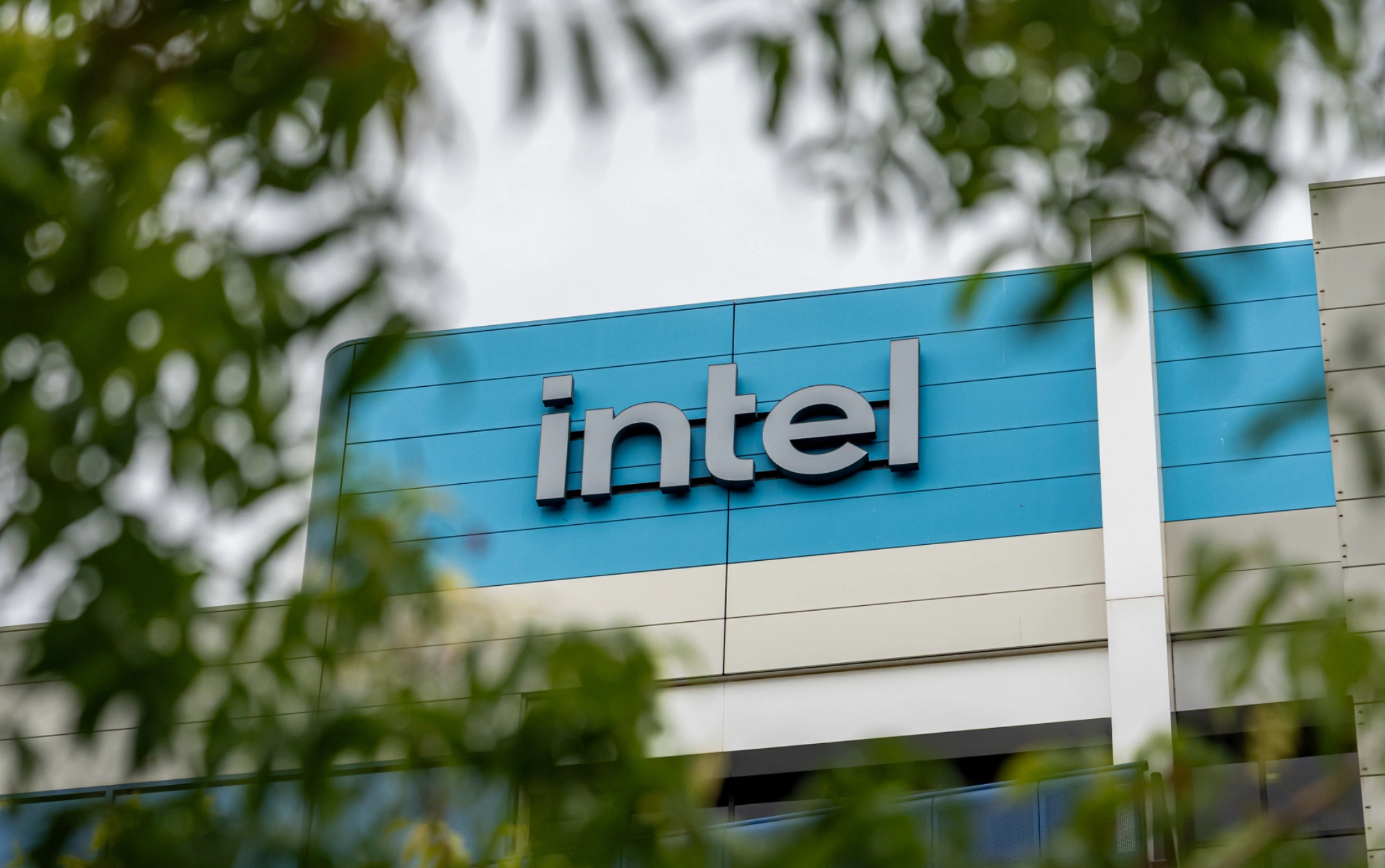
Intel's +9.1% is particularly notable because the stock has spent much of 2026 as a turnaround story that the market has been skeptical about in real time. A near-double-digit gain in a tape-down session where Microsoft fell -1.1% and Palantir dropped -2.3% is not a retail momentum play — the volume profile and the magnitude of the move in the context of index-level selling point to institutional repositioning. Funds that have been underweight semiconductors relative to software are being forced to reconsider that allocation as the rate environment shifts the relative attractiveness of the two sub-sectors dramatically.
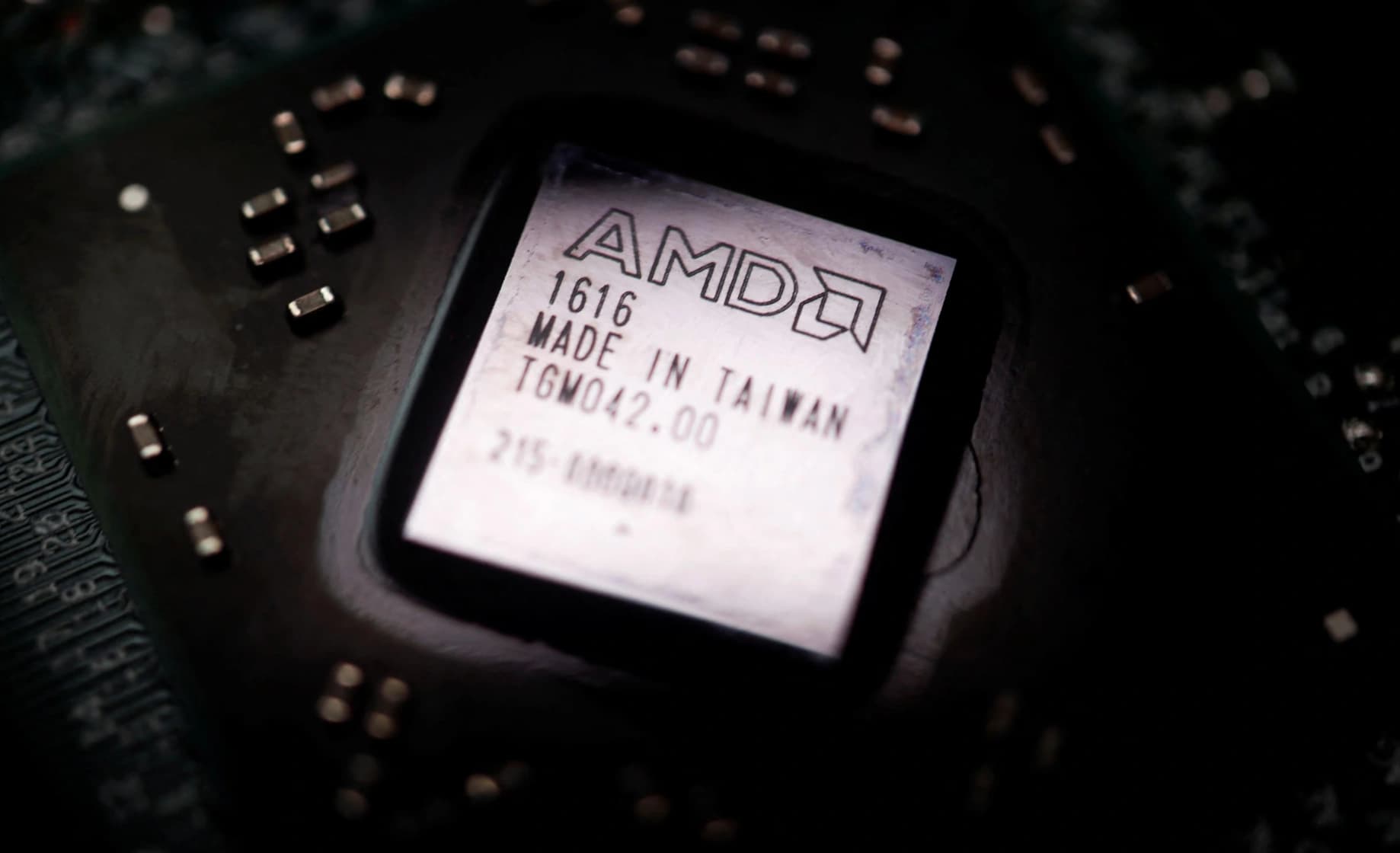
AMD's +5.9% follows a similar logic. AMD has been the more consistently favored name in the AI accelerator trade, but the gain Tuesday suggests the money moving into the sector wasn't discriminating between the two. When Intel and AMD rally together by nearly 6–9% on the same session, it's a sector call, not a stock-picking event. That's the kind of move that shows up in fund flow data weeks later and confirms what the price action is already telegraphing now.
Software vs. Hardware: Why the Rotation Makes Sense Here
The rotation from software to hardware semiconductors in a rising-rate environment has a clear mechanical logic, and it's worth spelling out for traders who may be tempted to fade the semi move as an overreaction. Software companies — particularly the cloud and SaaS names that have led this market since 2023 — are duration assets. Their valuations are built on discounted future cash flows, which means every basis point increase in the risk-free rate compresses their multiples directly and mathematically. When the 10-year Treasury yield touches 4.8%, as it did in early Tuesday trading, the DCF math on a 30x forward earnings software multiple simply doesn't hold up.
Semiconductor companies, by contrast, are increasingly valued on near-term earnings power driven by the AI capex cycle. Hyperscalers — Microsoft, Google, Amazon, Meta — have all committed to multi-year capital expenditure programs that front-load chip and custom silicon demand regardless of the interest rate environment. That makes the revenue visibility for companies like Broadcom, AMD, and increasingly Intel far more durable in a rate-hike scenario than the revenue visibility of the software platforms layered on top of that infrastructure. The market is pricing this distinction with unusual clarity right now.
The software carnage Tuesday underscored how sharp the divide has become. Salesforce fell -3.94%, Microsoft dropped -1.1%, and Palantir — which carries one of the highest valuation multiples in the enterprise software space — lost -2.3% in a session where its AI narrative should theoretically have been supportive. The divergence between Palantir's -2.3% and Intel's +9.1% in the same session, on the same AI theme, captures the rotation dynamic better than any chart pattern. Both companies are AI beneficiaries. Only one of them makes money regardless of what the Fed does next week.
What Traders Watch Next
Broadcom's behavior Wednesday morning is the tell for whether Tuesday's semiconductor surge was a one-day event or the opening of a sustained rotation. AVGO is sitting flat in pre-market — which, after a +3% gain in a down tape, is actually a constructive sign. Flat pre-market on high-conviction Tuesday gainers typically means the institutional buyers who drove the move aren't distributing into the open. The key test will be whether Broadcom holds above its Tuesday closing level in the first 30 minutes of trading, when retail and algorithmic sellers typically test the prior session's breakout.
Intel faces a different technical picture. A +9.1% single-session move creates an air pocket below — if the stock gives back even 3–4% intraday Wednesday, the headline reads as a failed breakout and the semi momentum trade gets questioned. Traders should be watching the $35 area on Intel as the first meaningful support level; a close above that on Wednesday would confirm that institutional buyers are treating Tuesday's move as a new base, not a blowoff.
The broader macro context complicates the picture in one specific way: if CPI prints hot today and the Fed-hike probability surges above 60%, even the semiconductor names may not be immune to the initial tape reaction. Rate shock tends to sell everything first and ask questions later. The nuance is that semis would likely recover faster than software in that scenario — within hours rather than days — because their earnings duration argument holds up regardless of the CPI number. The September 15–16 Fed meeting is the next hard catalyst. Between now and then, any position in Intel, AMD, or Broadcom needs to be sized for the possibility that a hot CPI print creates a 2–3% drawdown opportunity in names that the market will almost certainly re-bid before the Fed decision is announced.
The Weekly Investor
Daily market analysis for active traders. Free.