Google Launches Third Flash Model in Six Weeks, Targets Enterprise AI
Google's Gemini 3.8 Flash arrives six weeks after two prior Flash releases, with a cybersecurity model for government clients, as Alphabet rebuilds AI momentum.
Key Points
- Google launched Gemini 3.8 Flash — its third Flash-series model in six weeks — alongside a dedicated cybersecurity model capable of detecting and patching software vulnerabilities at frontier-level performance.
- Alphabet enters September with AI product velocity accelerating after its longest monthly losing streak on Wall Street in over a decade, with an additional tailwind from a favorable antitrust ruling on its ad business.
- Traders should watch whether Gemini 3.8 Flash's 31.2% Real-SWE benchmark score — trailing Anthropic's 38.8% — closes in subsequent model iterations, and whether the cybersecurity model generates enterprise contract announcements before year-end.
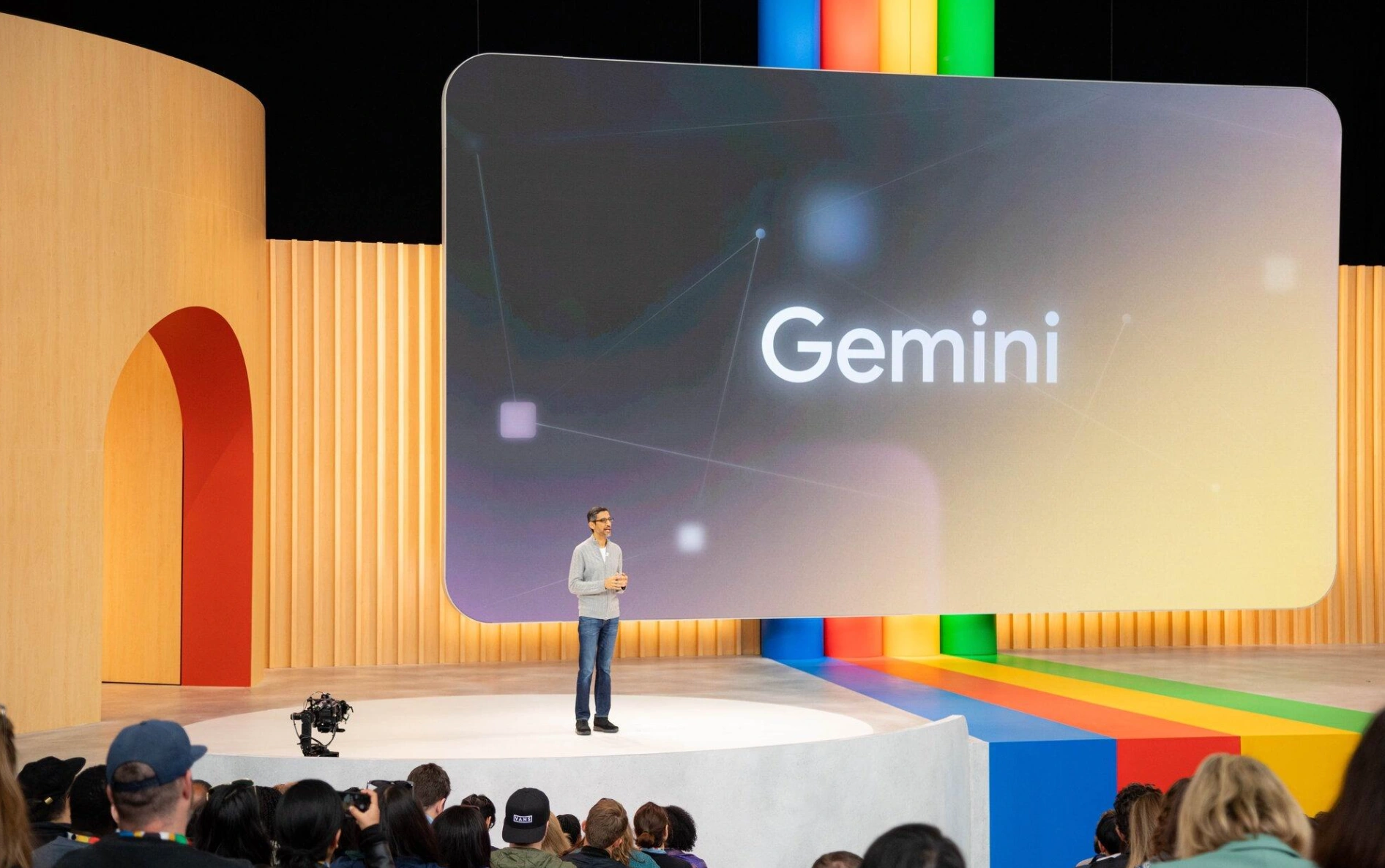
Google launched Gemini 3.8 Flash on Monday, the third Flash-series model the company has shipped in six weeks, and simultaneously introduced a cybersecurity-focused variant designed for trusted government and enterprise clients. The release arrives as Alphabet attempts to regain AI credibility after enduring its longest monthly losing streak on Wall Street in more than a decade — a stretch that ended with September now offering investors multiple reasons to reassess the stock.
Three Models in Six Weeks
The cadence matters as much as the content. Shipping three Flash-series models in six weeks is not a product strategy — it is a competitive response. Anthropic released Fable 5.1 and holds the top spot on the Real-SWE enterprise benchmark at 38.8% resolution. OpenAI's GPT-6 Astra sits at 33.8%. Gemini 3.8 Flash comes in at 31.2%, a gap of 7.6 percentage points to the leader that enterprise buyers cannot ignore when evaluating which model handles production software engineering workloads. Google is compressing its release cycle to close that gap before it calcifies into procurement decisions.
The Flash product line is Google's sub-flagship tier — faster, cheaper, and optimized for high-volume deployment rather than maximum benchmark performance. That positioning is commercially rational. The bulk of enterprise AI spending in 2026 is not going to the smartest model; it is going to the model that can handle millions of API calls per day at a cost structure that fits inside a software operating budget. Flash competes directly with Anthropic's mid-tier Claude offerings and OpenAI's GPT-4o derivatives on that axis. Google's ability to iterate Flash three times in six weeks suggests the underlying infrastructure and fine-tuning pipeline have matured considerably since the rocky Gemini 1.0 launch in late 2023, which cost then-CEO Sundar Pichai credibility with both investors and developers.
The Cybersecurity Model Changes the Addressable Market
The more strategically significant announcement is Gemini 3.8 Flash Cyber. Google says the model can detect and patch software vulnerabilities at frontier-level performance while running substantially faster and more affordably than full-scale frontier models. The target customer base — trusted government and enterprise clients — is a segment where relationships, security clearances, and procurement cycles operate on different timelines than commercial cloud contracts. A win here is not a one-quarter revenue event; it is a multi-year contract with the kind of locked-in renewal characteristics that justify premium valuation multiples.
The government cybersecurity AI market is expanding rapidly. The Pentagon's reported talks to lend roughly $5 billion to AI cloud-computing startup Fluidstack — with Erebor Bank, Palmer Luckey's hard-tech national bank, advising the application — reflects how aggressively the U.S. defense establishment is moving to secure AI infrastructure. Google entering this space with a purpose-built model rather than a general-purpose one is a signal that the company has done the classified-deployment groundwork required to pursue government contracts at scale. That work — FedRAMP authorizations, IL4 and IL5 compliance certifications, ITAR-controlled deployment environments — takes years and is a genuine barrier to entry that Google's existing government cloud relationships give it a structural advantage in clearing.
There is also a competitive moat argument embedded in the cybersecurity model announcement that extends beyond revenue. If Gemini 3.8 Flash Cyber becomes the standard tool for government vulnerability detection, the feedback loop on real-world security data could accelerate Google's model quality in ways that benchmarks do not capture. Government cybersecurity workloads produce novel, high-stakes edge cases that are not in any public training dataset. Access to that data, even in aggregate fine-tuning form, is a capability compounding mechanism that money alone cannot replicate quickly.
What Traders Watch Next
Alphabet's technical picture has shifted in September. The stock came into the month carrying the weight of its longest sustained losing streak in over a decade, then received a favorable antitrust ruling on its advertising business — the unit that generated the majority of Alphabet's revenue — and has now launched three AI models in rapid succession. The combination of regulatory overhang lifting on the ad side and product velocity accelerating on the AI side is the kind of setup that historically precedes institutional re-rating, not just a dead-cat bounce.
The risk that remains unresolved is the FTC's advancing antitrust probe into Microsoft's cloud and AI businesses — a reminder that regulatory exposure across the sector has not disappeared. For Alphabet specifically, the DOJ's ongoing scrutiny of its search and ad dominance has not concluded, and the favorable ruling on ads is one data point in a longer legal narrative. Traders who buy GOOGL on AI momentum need to hold both variables simultaneously: product velocity is real, but the legal calendar has not cleared.
The Gemini benchmark gap is the number to track on the product side. Gemini 3.8 Flash at 31.2% on Real-SWE versus Anthropic's 38.8% is a 7.6-point gap that will either close with a Gemini 4.0 or Ultra-tier release before year-end or widen if Anthropic's next iteration extends its lead. Google has historically announced major model releases at its annual Cloud Next conference; watch for any scheduling signals around a Q4 event that could serve as the stage for a benchmark-competitive response. If GOOGL reclaims its 52-week high near the $210 level — roughly 8% above current trading — on the back of a credible Gemini 4.0 announcement and continued Flash adoption data, the six-week model sprint will look prescient in hindsight.
The Weekly Investor
Daily market analysis for active traders. Free.