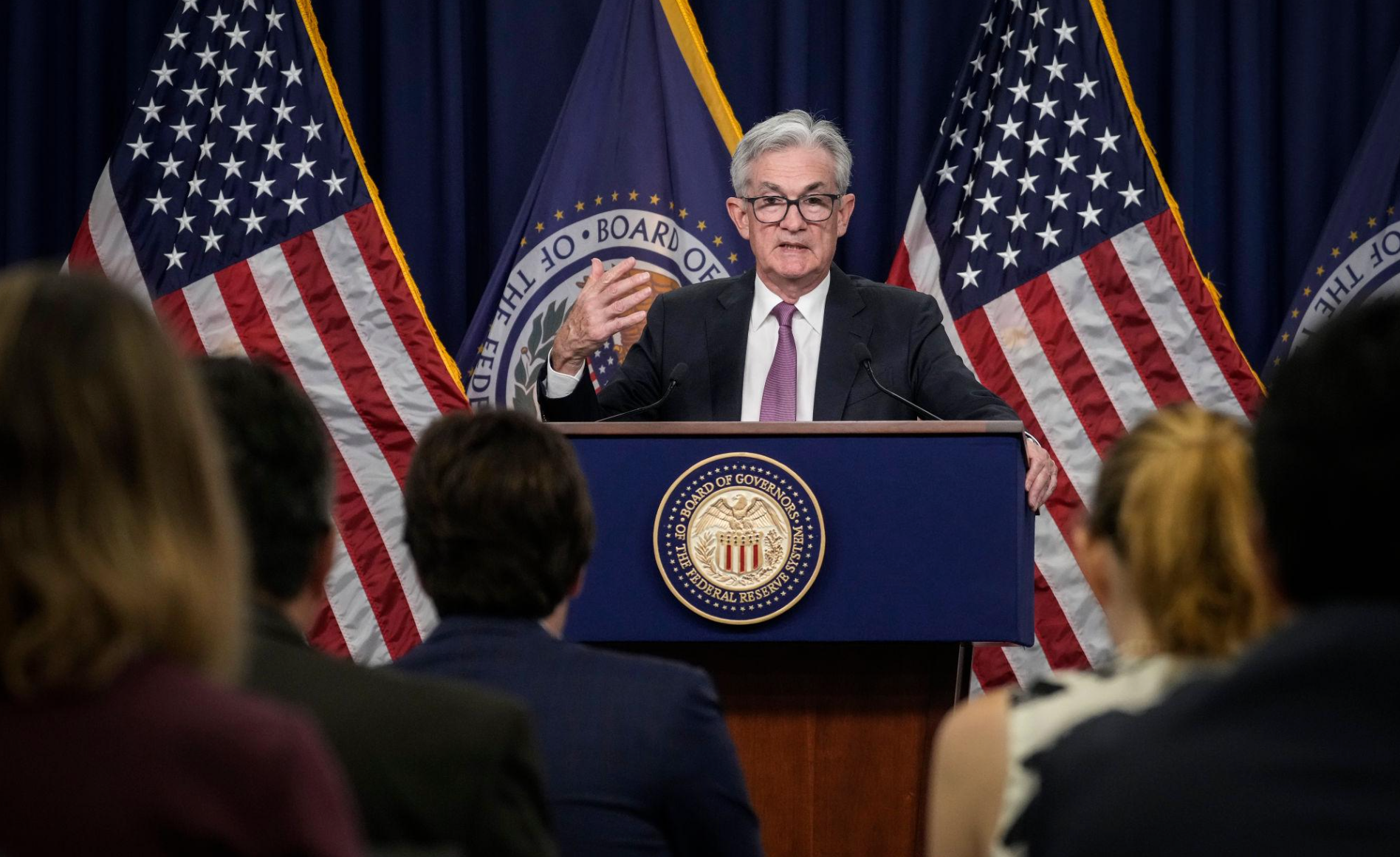
FOMC Day 1: Fed Holds at 3.50–3.75% With Real Two-Way Risk
The FOMC convenes today with a 64.2% hold probability — down 23 points in one week. Here's what the Warsh presser must deliver tomorrow.
Key Points
- CME FedWatch showed a 64.2% probability of a hold as of July 24 — a 23-point collapse from 87.2% just one week earlier, the sharpest pre-meeting repricing of 2026.
- Oil's roughly 20% surge in July is keeping headline inflation hot, eroding the Fed's room to signal any dovish pivot even if it holds today.
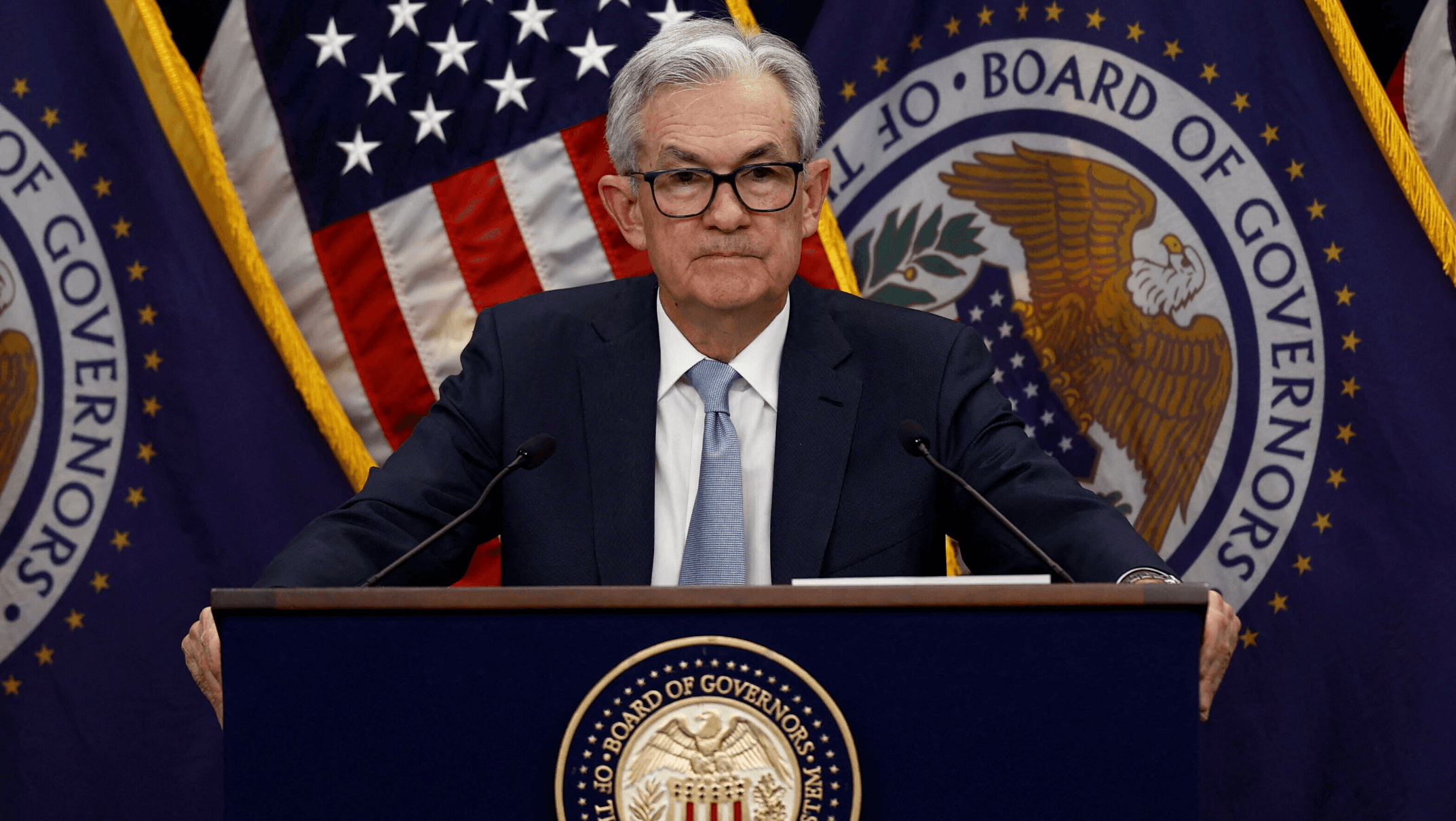
- With no dot plot at this meeting, every word of Warsh's 2:30 p.m. ET press conference tomorrow is the entire forward guidance mechanism — watch the inflation characterization language.
The sharpest pre-meeting repricing of 2026 is the headline going into today's FOMC session: markets gave an 87.2% probability to a Fed hold just seven days ago; that number sat at 64.2% as of last Thursday. The Fed hasn't moved rates in this window, the data hasn't dramatically shifted, and yet 23 percentage points of certainty evaporated in a single week. That's not noise. That's the market telling you something about what it expects to hear from Chair Kevin Warsh at 2:30 p.m. ET tomorrow.
The Pressure Building Underneath This Hold
The federal funds target sits at 3.50%–3.75%, established at the June 17 FOMC meeting — Warsh's first as chair. That decision held rates steady, accompanied by language noting that economic activity is expanding at a solid pace while inflation remains elevated relative to the Committee's 2% goal. Neither of those statements has aged poorly. The June CPI print showed headline inflation running at 3.5% year-over-year, with core CPI at 2.6% — both above target, both sticky enough to keep any talk of rate cuts firmly off the table.
What's changed materially in the six weeks since June 17 is energy. WTI crude is currently near $80.77 per barrel and Brent is at $82.93 — but those figures, dated to July 17, don't fully capture the month's volatility. Crude futures are up roughly 20% for July, driven by on-again, off-again military hostilities between the U.S. and Iran that have injected sustained geopolitical risk premium into energy markets. That spike won't show up fully in the June CPI data the Committee already has — but it absolutely will show up in July and August readings. The Fed is looking at backward-facing data while the forward-facing energy market is flashing an inflationary signal it cannot ignore.
The 10-year Treasury yield is at 4.69% and the 2-year is at 4.33% as of July 24, producing a positive yield curve spread of 36 basis points. That's a notable structural shift from the inverted curve that dominated much of 2023–2024. A steepening curve in this context isn't necessarily bullish for the economy — it can reflect the market pricing in either stronger growth or, more troublingly, persistent inflation that forces the Fed's hand higher for longer. The SOFR print of 3.64% and EFFR of 3.63% confirm the market is operating in lock-step with the current target range, with no dislocation in the overnight funding complex.
What Warsh Inherited — and What He Can't Ignore
The June FOMC minutes revealed that asset prices during the intermeeting period were driven by four simultaneous forces: Middle East conflict, continued solid real economic data, higher inflation, and accelerating AI investment. That four-variable backdrop is still intact today — arguably more acute on the energy and inflation dimensions than it was six weeks ago. A growing number of FOMC members, per Wells Fargo's read of the committee composition, favor a neutral or hawkish bias, supporting a base case of no rate changes in 2026. That view has institutional support inside the Eccles Building, but the market's sudden 23-point repricing suggests traders are not fully convinced the committee will communicate that posture convincingly enough to hold expectations in place.
Warsh is operating under a specific structural constraint at this meeting: there is no Summary of Economic Projections and no dot plot. The July meeting is not one of the four SEP-associated meetings — those are March, June, September, and December. That means the press conference at 2:30 p.m. ET tomorrow carries the entire signaling burden. In a meeting where the market has already shifted 23 points in one week, every adjective Warsh uses to characterize inflation will matter. If he repeats the June language — "somewhat elevated" — traders will parse that as a hold-and-wait posture. If he upgrades the inflation language to anything more urgent, the September 15–16 SEP meeting immediately becomes a live hike possibility, and the front end of the yield curve will move accordingly.
The unemployment rate at 4.2% as of June gives the Fed no urgency from the labor market side. Job gains have kept pace with workforce growth and the unemployment rate has been essentially flat. That's the definition of a labor market the Fed doesn't need to rescue — which removes one of the two traditional justifications for cutting. With inflation above target and unemployment near structural full employment, the dual mandate is not pulling the Fed in any one direction forcefully. That ambiguity is precisely what makes tomorrow's statement language — particularly any characterization of inflation trajectory — the decisive variable.
What Traders Watch Next
The practical trading setup for tomorrow is binary on the statement language and then graduated on the press conference tone. A hold with unchanged language — "somewhat elevated" on inflation, "solid pace" on growth — is the path of least resistance and likely sends rates slightly lower and equities marginally higher in the immediate 2:00 p.m. window. A hold with upgraded inflation language, or any reference to the energy spike's persistence, flips that reaction: front-end yields rise, the dollar firms, and rate-sensitive equities — particularly REITs, utilities, and long-duration growth — sell off.
The CB Consumer Confidence report is today's only domestic data catalyst, and while it will move intraday sentiment, it carries no weight against the FOMC gravitational field this week. More consequential are the PCE data and weekly jobless claims due later this week, both of which feed the September 15–16 SEP meeting where the dot plot returns and a hike becomes structurally possible if the inflation picture deteriorates further. That meeting is the real horizon line. Watch the 10-year yield at 4.69% — a break above 4.80% following tomorrow's statement would be the market's explicit verdict that the September hike probability is repricing higher. The 2-year at 4.33% is the number to watch at 2:00 p.m. sharp.
The Weekly Investor
Daily market analysis for active traders. Free.