Fed Holds at 3.50%–3.75% for Fifth Straight Meeting
The FOMC holds rates unchanged for a fifth consecutive meeting as Warsh prepares to speak. No dot plot today — the press conference is all traders get.
Key Points
- The FOMC held the federal funds rate at 3.50%–3.75% for the fifth consecutive meeting, with the statement flagging inflation as "somewhat elevated reflecting supply shocks and energy constraints."
- No Summary of Economic Projections accompanies today's decision, making Warsh's 2:30 PM ET press conference the only forward-guidance signal traders will get until September.
- With the June dot plot median pointing to a year-end rate of 3.8% and nearly half of FOMC voters on record supporting a hike, the September 16 meeting is now the live risk event that repositions portfolios.
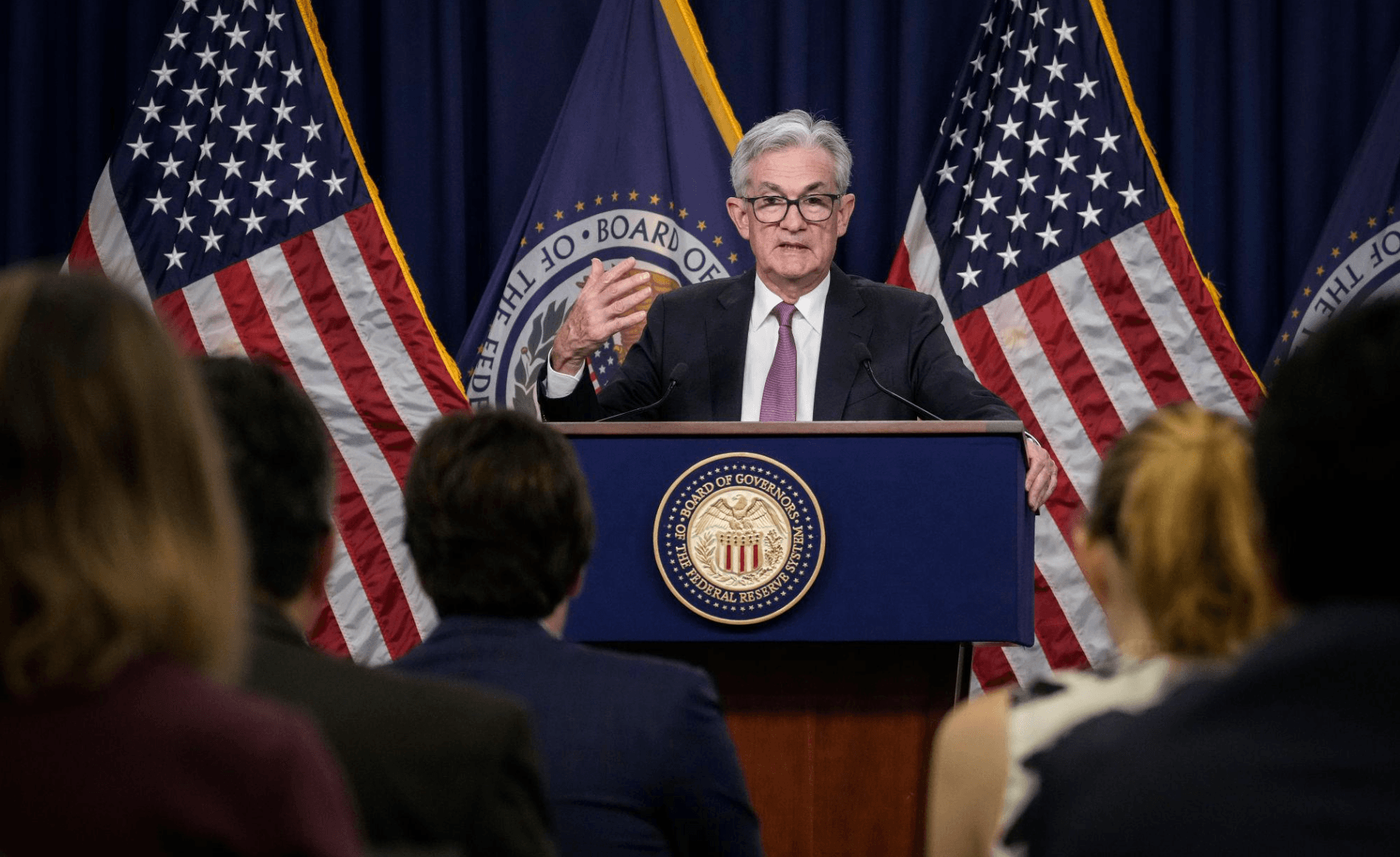
The Federal Reserve held the federal funds rate at 3.50%–3.75% at today's FOMC meeting — the fifth consecutive hold — but paired the decision with statement language that tilts unmistakably hawkish, describing inflation as "somewhat elevated reflecting supply shocks and energy constraints." Chairman Kevin Warsh steps to the podium at 2:30 PM ET. There is no dot plot today. The press conference is the entire trade.
The Fed's Inflation Problem Hasn't Gone Away
Headline CPI cooled to 3.5% year-over-year in June from 4.2% in May, and that deceleration gave the Committee political cover to hold for a fifth straight meeting rather than deliver a surprise hike at a meeting with no SEP backdrop. But the relief is fragile. Crude oil surged roughly 20% through July alone, with WTI topping $100 a barrel in recent sessions — a level not reflected in the June CPI print, which measured prices through mid-month at best. The July inflation data, which won't land until mid-August, will capture the full force of that energy shock. The Fed just bought itself a month, not a reprieve.
Core CPI, at 2.6% year-over-year as of June, is the number the Committee is quietly watching as its cleanest read on domestic demand pressures. It remains 60 basis points above the Fed's 2% target, and the history of central banking tells you that the last mile of disinflation is where policymakers make their worst mistakes — either tightening into a growth cliff or easing too early and watching inflation re-anchor above target. Warsh has staked his chairmanship on not repeating the latter error. His June remarks were explicit: the Fed must prevent volatile price shocks from generating second-round wage and expectations effects. That framing hasn't changed. If anything, the oil surge reinforces it.
The 10-year Treasury yield at 4.65% and the 2-year at 4.31% as of Monday tell a story the statement itself won't say aloud: the bond market is not pricing a near-term cut. The 34-basis-point spread between those two tenors — a curve that has steepened modestly from deeply inverted levels earlier this cycle — reflects a market that believes the Fed stays higher for longer while conceding that growth holds up. SOFR at 3.64% and the effective fed funds rate at 3.63% confirm policy is sitting comfortably in the middle of the 3.50%–3.75% corridor, exactly where the Fed wants it.
No Dot Plot Means Every Word Warsh Says Gets Traded
July is one of four FOMC meetings per year without a Summary of Economic Projections, and that structural reality is doing real work today. In a normal decision cycle, traders get a 19-member rate path grid, updated GDP and unemployment forecasts, and individual inflation projections that allow the market to triangulate where the median voter sits. Today, none of that exists. There is no scatter plot to anchor the September pricing. There are no revised growth projections to trade against Thursday's Q2 GDP first release. There is only Warsh's prepared remarks and Q&A — and Warsh has explicitly pledged to reduce forward guidance, which means he may say less than markets want to hear.
That deliberate ambiguity is itself a policy tool. By refusing to pre-commit to September, Warsh preserves maximum optionality as the Committee waits for the July PCE data, the July employment report, and at least one more monthly CPI print before its September 16 meeting. The risk, from a market-functioning standpoint, is that the absence of guidance creates a volatility vacuum that fills on Thursday. Q2 GDP, June PCE deflator, and initial jobless claims all drop simultaneously at 8:30 AM ET tomorrow. If GDP prints above 2.5% and PCE runs hot, the September hike probability — currently priced around 33% — reprices sharply higher and the front end of the curve sells off hard.
What Warsh cannot walk away from today is the June dot plot legacy. The median FOMC projection submitted in June showed the federal funds rate ending 2026 at 3.8% — a quarter-point above the current range. That wasn't a rounding error or a dovish hedge; it was a concrete signal that the Committee's central case in June included one more 25-basis-point hike this year. Nearly half of policymakers said at that meeting they would support a hike in 2026. Warsh famously declined to submit his own individual projections — an unusual act of deliberate opacity from a chairman that told the market exactly what he wanted it to know: he is not constraining himself with a publicly filed forecast.
What Traders Watch Next — Starting at 8:30 AM Thursday
The most important number on tomorrow's tape is not GDP. It's the PCE deflator. The Federal Reserve's preferred inflation measure has consistently run below CPI, but the gap has been narrowing. If June PCE prints at or above 3.0% year-over-year — consistent with but slightly below the June CPI read — it confirms that inflation, while decelerating, remains nowhere near a level that allows the Fed to shift its policy bias. If it prints below 2.8%, Warsh gets narrative relief heading into the August recess and September hike odds compress. Every tenth of a percent on that number moves the September FOMC pricing by several percentage points.
The BOJ decision, expected Thursday between 3:00 and 5:00 AM ET, adds a second macro variable to an already loaded session. The Bank of Japan is sitting at a 1.0% policy rate with its next meeting Thursday, and signals have pointed toward a potential hike driven more by yen dynamics than domestic inflation orthodoxy. A BOJ hike into a Fed hold widens the policy divergence that has driven dollar-yen for the past 18 months. Watch USD/JPY as a real-time barometer of how the market is repricing global rate differentials in the hours between Warsh's press conference and the Tokyo decision.
The Bank of England meets August 1 — three days out — and the ECB follows on September 10, the same week as the FOMC. The ECB's June hike to a 2.25% deposit rate, explicitly tied to Middle East inflation pass-through, sets up a possible September scenario where both Frankfurt and Washington are tightening simultaneously for the first time since 2022. That is a global liquidity event, not a regional one. Position accordingly. For domestic traders, the level to watch on the 2-year Treasury is 4.50%: a break through that ceiling on hot PCE data tomorrow would represent the bond market formally pricing a September hike as base case, not tail risk. That move would reprice everything from bank stocks to rate-sensitive REITs before the equity market even opens.
The Weekly Investor
Daily market analysis for active traders. Free.