Fed Hikes to 4.00% — Dot Plot Says December Is Live
The Fed raised rates 25 bps to 3.75%–4.00% in a unanimous 12-0 vote. The dot plot shows 16 of 18 officials expect another hike. December is live.
Key Points
- The FOMC voted 12-0 to raise the fed funds rate 25 basis points to a target range of 3.75%–4.00%, the first hike in more than three years.
- Sixteen of 18 dot-plot participants see at least one more hike this year, with the median endpoint sitting at 4.10%, as core PCE projections were revised up to 3.4% for end-2026.
- Traders should watch the 8:30 AM ET jobless claims print Thursday — a strong labor number removes the last credible argument against a December hike.
The Federal Reserve pulled the trigger Wednesday, raising its benchmark rate 25 basis points to a target range of 3.75%–4.00% in a unanimous 12-0 vote — the first hike since 2023 and a decisive break from the holding pattern that defined the first half of this year. The dot plot made the real statement: 16 of 18 officials now see rates going higher still before year-end, with the median terminal projection sitting at 4.10%.
The Unanimous Vote Changes Everything
The unanimity of Wednesday's decision carries more analytical weight than the 25 basis points itself. As recently as July, three regional Fed presidents — Beth Hammack, Neel Kashkari, and Lorie Logan — voted to hike while the majority held. That dissent reflected a committee that was genuinely split on timing. Wednesday's 12-0 vote signals that split has closed. Every voting member — including those who were cautious in the spring — now agrees the inflation problem is urgent enough to act. That kind of institutional alignment tends to persist. Markets that are pricing in any meaningful probability of a December pause need to reprice.
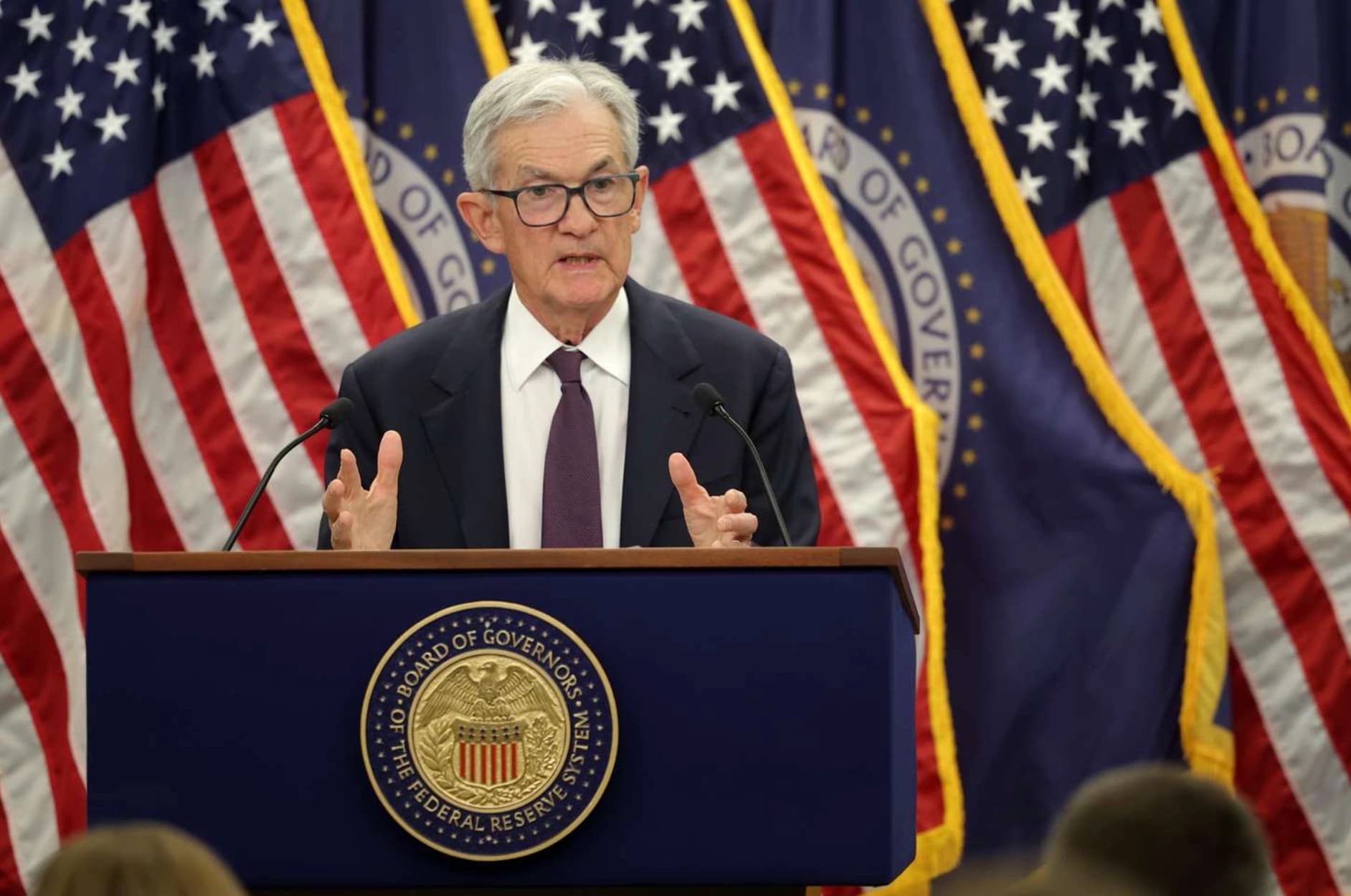
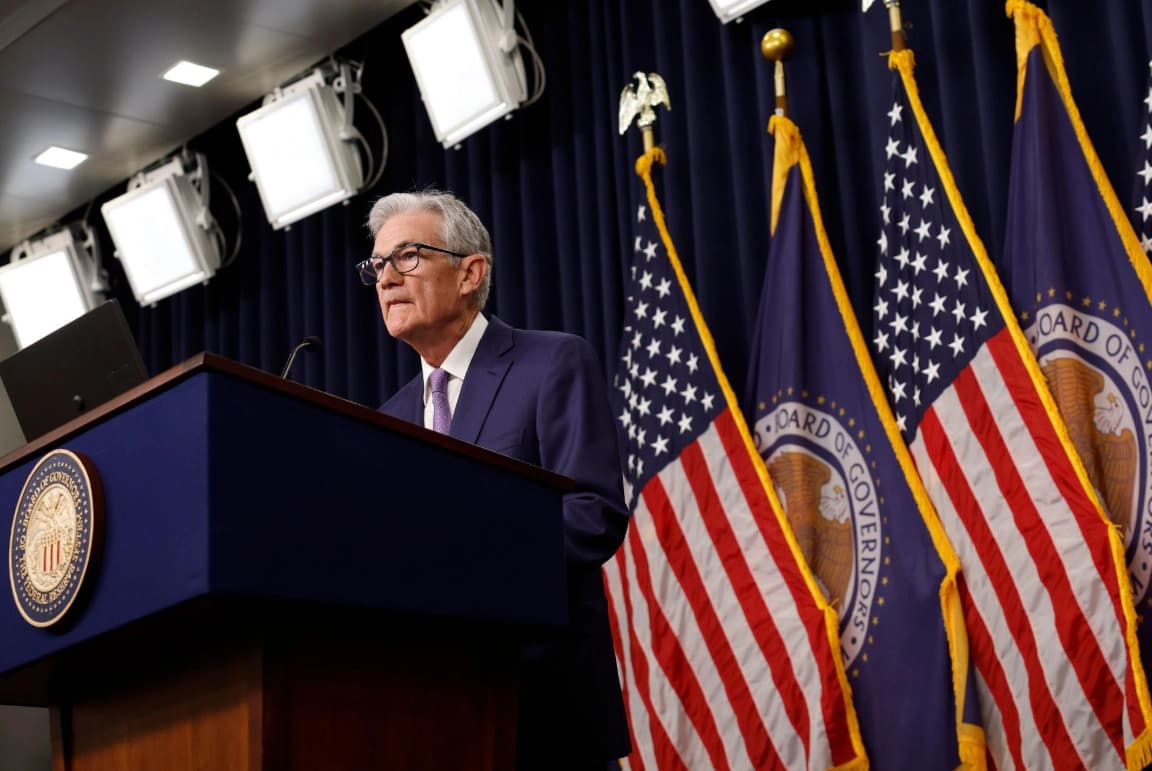
Chairman Warsh's press conference reinforced the hawkish pivot. His tone scored a 7.4 out of 10 on the FXStreet Speechtracker, modestly above the 7.0 historical average for Fed chairs at post-meeting pressers, and notably firmer than his communication style following the June meeting. The key line: "Because of underlying strength of the economy, we can afford to focus on price stability." That sentence is doing a lot of work. Warsh is explicitly telling markets that the Fed is not worried enough about growth to pull its punches on inflation — the opposite of the 2025 posture that led to the prolonged hold.
One notable wrinkle: Warsh again withheld his own rate forecast from the dot plot, as he did at the June SEP release. The practice is unusual but not unprecedented among chairs, who sometimes prefer to avoid anchoring market expectations to a single data point. What it means in practice is that the median dot — 4.10% — is being pulled by 18 participants whose forecasts collectively skew hawkish, without the chair's own anchor. If anything, that makes the distribution more, not less, credible as a signal.
What the Inflation Data Actually Shows
The Summary of Economic Projections revised the median core PCE forecast for end-2026 higher to 3.4%, up from 3.3% in June. The July actual print came in at 3.3% annually — still more than 165 basis points above the Fed's 2% target. That gap is not closing fast enough. Two consecutive SEP revisions in an upward direction, combined with August CPI running at 3.4% year-over-year, tells a consistent story: the last mile of disinflation is proving as stubborn as every Fed hawk warned it would be.
The economic backdrop that enabled this hike is worth naming precisely. U.S. GDP grew at 1.5% annualized in Q2 2026 — below trend, but not contractionary. The unemployment rate in August held at 4.1%, with 7.0 million workers unemployed. Warsh's "underlying strength" framing maps directly onto those numbers: an economy expanding, even slowly, with a labor market that, while softening, has not cracked. The Fed's dual mandate calculus is currently weighted almost entirely toward inflation because growth has not deteriorated enough to force a trade-off. That is a critical regime distinction from late 2025, when the committee was actively debating whether rate cuts were needed to cushion a potential slowdown.
The FOMC's post-meeting statement language was pointed: "Inflation remains elevated. Today's policy action will support a timelier return to the Committee's 2 percent goal. The Committee will deliver price stability." The word "deliver" is not accidental Fed-speak. It is commitment language, the kind of phrasing the committee uses when it wants to credibly pre-commit to a course of action without formally locking in a schedule. Compare that to the more conditional phrasing used throughout the hold period — "remains attentive to," "prepared to adjust" — and the rhetorical shift toward active tightening is unmistakable.
What Traders Watch Next
December 16 is the date that now dominates every rates desk calendar. The dot plot's median endpoint of 4.10% implies exactly one more 25 basis point hike after Wednesday's move — and the December FOMC meeting is the only remaining scheduled opportunity this year. Of the 18 participants, 12 indicated one more increase, four anticipated two more hikes before year-end, and only two signaled rates should hold at current levels. That distribution leaves essentially no institutional support for cutting or pausing through year-end.
The tradeable consequence plays out across the curve. Long-duration bond ETFs like TLT face structural headwinds as long as the December hike remains the base case. The dollar index, already elevated, could extend gains if Thursday's 8:30 AM ET jobless claims print comes in below consensus — fewer initial claims would confirm the labor market durability that gives the Fed political cover to hike again. Building permits, also due at 8:30 AM ET, are forecast to slip to 1.400 million from the prior 1.433 million, which would add to the picture of a housing sector already under rate pressure. Pending Home Sales from NAR follow at 10:00 AM ET and could reinforce the same narrative.
Watch the 4.25%–4.50% level as the credible ceiling for this cycle. Four FOMC members are projecting two more hikes from here, which would land the funds rate in that range. If Thursday's data — particularly jobless claims — comes in strong, expect fed funds futures to immediately reprice December above 80% probability and the front end of the curve to steepen inversely. The single most important number between now and December 16 is the October core PCE print, due in late November. If it accelerates above 3.4%, the four members calling for two more hikes become the consensus, not the outliers.
The Weekly Investor
Daily market analysis for active traders. Free.