AVAV Earnings Due: $465M Army Win Meets Low Bar
AeroVironment reports fiscal Q1 2027 earnings after Wednesday's close. A $465M Army laser contract and 55% upside target make AVAV worth watching tonight.
Key Points
- Wall Street expects AeroVironment to post fiscal Q1 2027 EPS of $0.30 — down 6.3% year-over-year — on revenue of $459.9 million, just a 1.2% increase.
- A $465 million U.S. Army Enduring High Energy Laser contract awarded September 2 gives management a concrete catalyst to frame forward guidance around tonight.
- With 17 Buy ratings, an average price target of $225.77 implying 55%-plus upside, and a low consensus bar to clear, the asymmetry into tonight's print favors bulls — if revenue guidance holds.
AeroVironment reports fiscal first-quarter 2027 results after Wednesday's close, and the setup is more interesting than the headline numbers suggest. The consensus EPS target of $0.30 — a 6.3% year-over-year decline — sets a low bar, while a $465 million U.S. Army laser contract awarded just seven days ago gives management fresh ammunition to upgrade its forward narrative. Seventeen of 20 covering analysts are at Buy with a $225.77 average price target, implying more than 55% upside from current levels.
A Deliberately Low Bar
When Wall Street models a 6.3% earnings decline on only 1.2% revenue growth for a defense contractor in the middle of a global rearmament cycle, one of two things is true: either the business is genuinely struggling with margins and contract timing, or analysts have deliberately set a floor that almost anything positive can beat. In AeroVironment's case, the evidence points toward the latter.
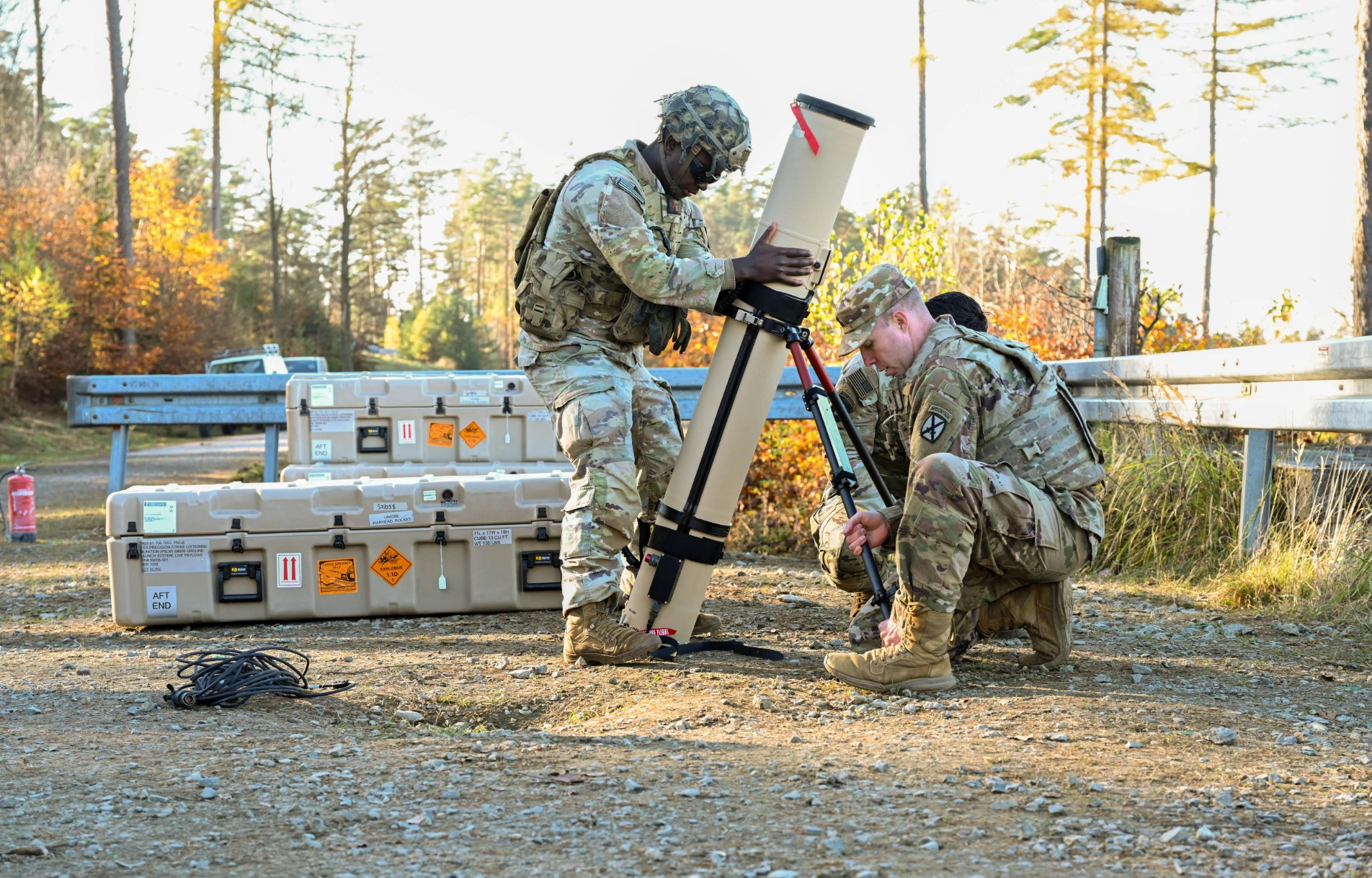
AVAV's revenue model is lumpy by nature. The company's flagship Switchblade loitering munitions and Puma reconnaissance systems are delivered under government contracts with irregular milestone-based revenue recognition schedules. A quarter that looks soft on paper may simply be a quarter where large deliverables fall in Q2 or Q3 rather than Q1 — which means the sequential story management tells tonight on the call matters as much as the reported number itself. Traders who trade AVAV purely off the EPS print without listening to the contract pipeline commentary typically leave money on the table.
The fiscal Q1 2027 consensus of $459.9 million in revenue is worth benchmarking against what the company has shown it can do. AeroVironment has been growing its top line consistently on the back of both domestic procurement and international demand — Ukraine-related orders and NATO member purchases have meaningfully accelerated the munitions backlog across the defense small-UAS sector. Any commentary tonight that quantifies how much international demand has contributed to the current backlog, or how it expects those orders to convert in Q2 and Q3, will move the stock more than the Q1 EPS figure.
The E-HEL Contract Changes the Conversation
The September 2 award of a $465 million U.S. Army contract under the Enduring High Energy Laser program is the most consequential near-term development for AVAV, and tonight's call is the first time management will address it formally in a structured investor setting. Jonathan Siegmann at a major sell-side firm reiterated his Buy rating with a $220 price target specifically citing this contract — and his framing matters: the E-HEL program isn't a one-time delivery contract, it's a development-to-fielding pathway that creates sustained revenue streams across multiple budget cycles.
Directed energy is one of the fastest-growing segments of U.S. defense procurement, driven by the demonstrated threat environment in the Middle East and the persistent challenge of cost-effective counter-drone and counter-missile defense. The Pentagon has been explicit in its budget submissions about prioritizing high-energy laser programs as a complement to kinetic interceptors, which are proving too expensive to field at scale against cheap drone swarms. AeroVironment's positioning in both loitering munitions and now directed energy puts it at the intersection of the two highest-priority counter-UAS technology vectors in the current defense budget environment.
The size of the E-HEL contract — $465 million — is material relative to AVAV's quarterly revenue run rate of roughly $460 million. That does not mean it books in a single quarter, but it does mean that over the next 12 to 24 months, E-HEL alone could add meaningful upside to consensus revenue estimates that were built before the award. If management provides a revenue contribution timeline tonight, even a rough one, expect analysts to revise their out-quarter models upward in Thursday morning notes.
The broader defense sector backdrop is supportive. Geopolitical tensions involving U.S.-Iran military exchanges and Saudi oil facility attacks — which helped push crude to $93.85 per barrel as of Tuesday's close — keep defense spending a bipartisan political priority heading into the 2027 budget cycle. Rising Treasury yields at 4.8% create headwinds for growth multiples broadly, but defense contractors with hard backlog and government contract revenue tend to be far more insulated from rate-driven multiple compression than commercial tech or consumer discretionary names. That relative defensiveness is part of why 17 of 20 analysts hold Buy ratings.
What Tonight's Call Must Deliver
The structural bull case for AVAV at a $225 price target — roughly 55% above current levels — requires two things management has not yet confirmed publicly: a credible timeline for E-HEL revenue recognition, and no negative surprises on existing program margins. If either of those gets called into question tonight, the consensus target becomes a ceiling rather than a floor.
Margin execution is the hidden risk in tonight's print. AeroVironment has historically faced cost pressures when it scales new programs rapidly — the transition from development to production contracts involves significant upfront investment that compresses gross margins in the near term before the revenue curve catches up. If Q1 gross margins come in below the 35% range that analysts have been modeling, the EPS miss will be double-layered: lower revenue recognition plus higher unit costs. That scenario would be the one outcome that gives the bear case real traction, despite the contract wins.
The macro noise Wednesday is not helping pre-earnings sentiment. The cautious open flagged by QQQ declining 0.42% in premarket, semiconductor weakness, and rising rate anxiety following Friday's 162,000-job payrolls print create a twitchy tape into tonight's after-hours release. Defense stocks have historically been a relative safe haven in exactly this type of environment — high yields, geopolitical risk, and equity market uncertainty — but AVAV's valuation is not the deeply discounted type that attracts pure defensiveness buyers. At current levels, it is priced for execution, not for multiple expansion from a flight-to-safety bid.
Watch the $148 to $152 range as near-term support if the print disappoints, and $165 as the first meaningful resistance to clear if management delivers a beat-and-raise on the revenue guidance line. The E-HEL contract gives tonight's call a narrative hook that most defense earnings lack — but narrative alone won't hold the stock if the Q1 margin story comes in soft. The after-hours tape by 5:30 PM ET will tell traders everything they need to know before Thursday's open.
The Weekly Investor
Daily market analysis for active traders. Free.