Anthropic at $800B: The IPO Math, the Chip Bet, and NVDA Risk
Anthropic's October IPO targets an $800B valuation on $30B+ ARR and 80% gross margins. Its in-house chip play puts Nvidia's inference revenue directly at risk.
Key Points
- Anthropic reported $11.5B in Q2 revenue with 80%-plus gross margins and a $30B-plus annualized run rate — 1,400% year-over-year growth — with an October IPO at an $800B valuation now in play.
- The company is building proprietary inference chips, hiring engineers at up to $485K, and has $21B in committed custom chip orders from Broadcom alone — a direct threat to Nvidia's inference revenue at scale.
- Traders should watch the IPO filing date for lock-up structure and insider selling provisions, and monitor Nvidia's next earnings call for any commentary on customer concentration risk as frontier labs move to custom silicon.
Anthropic's Q2 revenue hit $11.5 billion with gross margins above 80%, and the company is now targeting an October IPO at an $800 billion valuation — a number that would make it one of the largest technology listings in history and reprice every private AI lab on the planet. Twelve months ago, Anthropic was burning $5.6 billion annually. Today it is profitable, scaling vertically, and preparing to exit private markets at a valuation that exceeds Goldman Sachs, Morgan Stanley, and every U.S. airline combined.
The Revenue Trajectory Is the Whole Argument
The annualized revenue figures are the starkest way to see what is happening inside Anthropic. The company exited 2025 at a $9 billion annualized run rate. By early April 2026, that number had crossed $30 billion — roughly a $21 billion increase in ARR in less than four months. That is not a growth rate, it is a vertical line. The Q2 print of $11.5 billion in a single quarter, if it holds at that level for four quarters, implies a $46 billion annual business. At the $800 billion IPO price target, that is approximately a 17-times forward revenue multiple — aggressive but not insane for a category leader at this growth rate, particularly one with gross margins now running in the mid-60% range on a GAAP basis and self-reported above 80% on some reporting frameworks.
The revenue mix matters as much as the headline. Approximately 75% to 85% of Anthropic's ARR is usage-based API revenue — meaning it is tied directly to query volume, not seat licenses or subscription commitments that can be canceled in a downturn without usage. Usage-based revenue scales with customer workloads. If an enterprise customer's AI usage doubles, Anthropic's revenue from that customer doubles automatically. This is a structurally different model from the SaaS businesses that dominated the 2015-to-2022 tech cycle, and it is why the gross margin profile is so critical: high margins on a usage-based model mean incremental revenue drops to profit at an extraordinary rate once fixed cost coverage is achieved.
The Chip Strategy Changes the Margin Story Permanently
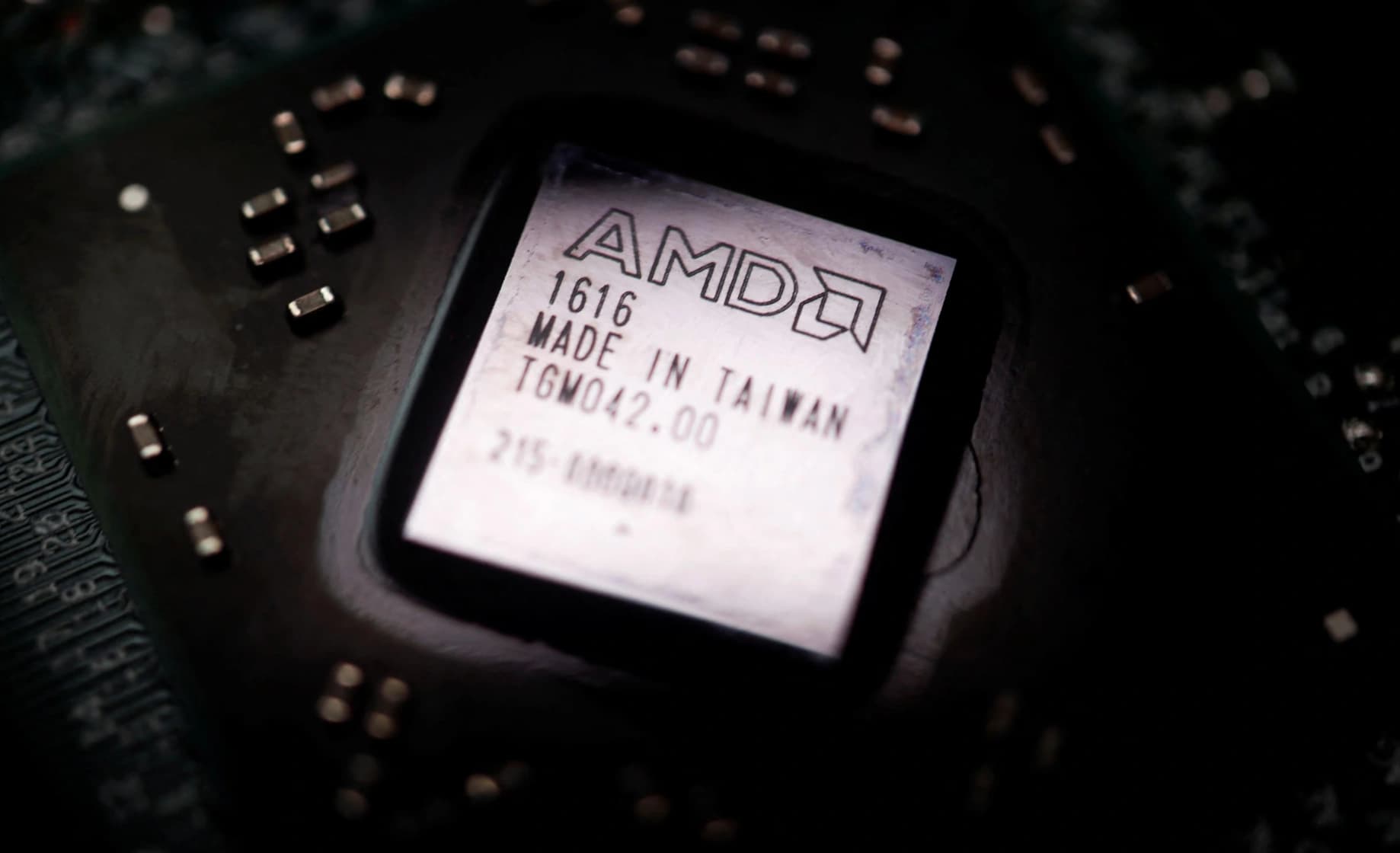
The detail that deserves more attention than it is getting in today's IPO coverage is Anthropic's in-house chip program. The company has posted an engineering role paying $320,000 to $485,000 annually, specifically for engineers who have personally shipped finished semiconductor designs — not researchers, not architects, shipped silicon. This is not an exploratory program. At that compensation level, Anthropic is competing for the same engineers TSMC, Apple, and Nvidia deploy on production tape-outs.
The strategic logic is straightforward math. At a $30 billion-plus revenue run rate, inference compute is the single largest cost line on Anthropic's income statement. Every query Claude answers runs on Nvidia GPUs or third-party cloud instances, either way priced at rates that reflect Nvidia's 70%-plus data center GPU market share. A 10% reduction in inference cost at $30 billion in revenue is worth $3 billion annually in cost savings before the company has added a single new customer. At $50 billion in revenue, that same 10% efficiency gain is worth $5 billion. Custom silicon, optimized specifically for Claude's inference workload rather than general-purpose GPU training, is how you get there — and it is exactly the path Google took with TPUs and Amazon took with Trainium and Inferentia.
The Broadcom relationship adds a second dimension. Anthropic has placed $21 billion in committed custom ASIC orders with Broadcom — a $10 billion order revealed earlier this year, followed almost immediately by an $11 billion order in the same quarter. Broadcom CEO Hock Tan has projected close to $100 billion in AI chip revenue for 2027, with Anthropic cited as a primary driver. This means Anthropic is simultaneously outsourcing custom silicon design to Broadcom for near-term scale and building an internal team to own the architecture long-term. The Broadcom orders are the bridge; the internal chip team is the destination. For Nvidia investors tracking competitive threats, this is the sequence that matters: frontier labs start with Nvidia GPUs, move to Broadcom custom ASICs, then eventually own their silicon end-to-end. Anthropic appears to be in the middle of that transition right now.
What the IPO Means for Everything Else
An Anthropic public listing at $800 billion reprices the entire private AI ecosystem instantly. It establishes a market-observed multiple for frontier model revenue that every venture-backed AI company — and every corporate AI division contemplating a spinout — will be marked against. It also creates a direct public market competitor to Microsoft, Google, and Amazon in the enterprise AI segment, because a public Anthropic with a liquid currency can pursue acquisitions, talent, and partnerships that a private company cannot.
The safety researcher departures — Joe Benton from Anthropic's Scalable Oversight team and Josh Engels from Google DeepMind, both leaving on September 12 to join METR for independent risk assessments — are worth holding alongside the IPO narrative. Two senior safety researchers exiting two leading labs in a single week is a governance signal that prospective IPO investors should price. Anthropic's commercial growth story is compelling; the question an S-1 will have to answer is how the company governs frontier model development at $50 billion in revenue and beyond.
For Nvidia specifically, today's data points are net negative at the margin. TSMC's 53.3% August revenue growth confirms AI infrastructure demand remains intense, but Nvidia shares were down more than 1% in pre-market on that report — classic "priced in" dynamics. If Anthropic's IPO filing, expected before October, includes detailed disclosure on its chip roadmap and Broadcom order commitments, watch for Nvidia to sell off on the language around custom silicon adoption. The specific level to watch on NVDA is the 200-day moving average, which has acted as support twice in the past four months — a break below it on IPO filing day would be a meaningful technical signal that the custom silicon transition is being taken seriously by the market for the first time.
The Weekly Investor
Daily market analysis for active traders. Free.