AMAT Reports Tonight: The $9B Number That Moves Semis
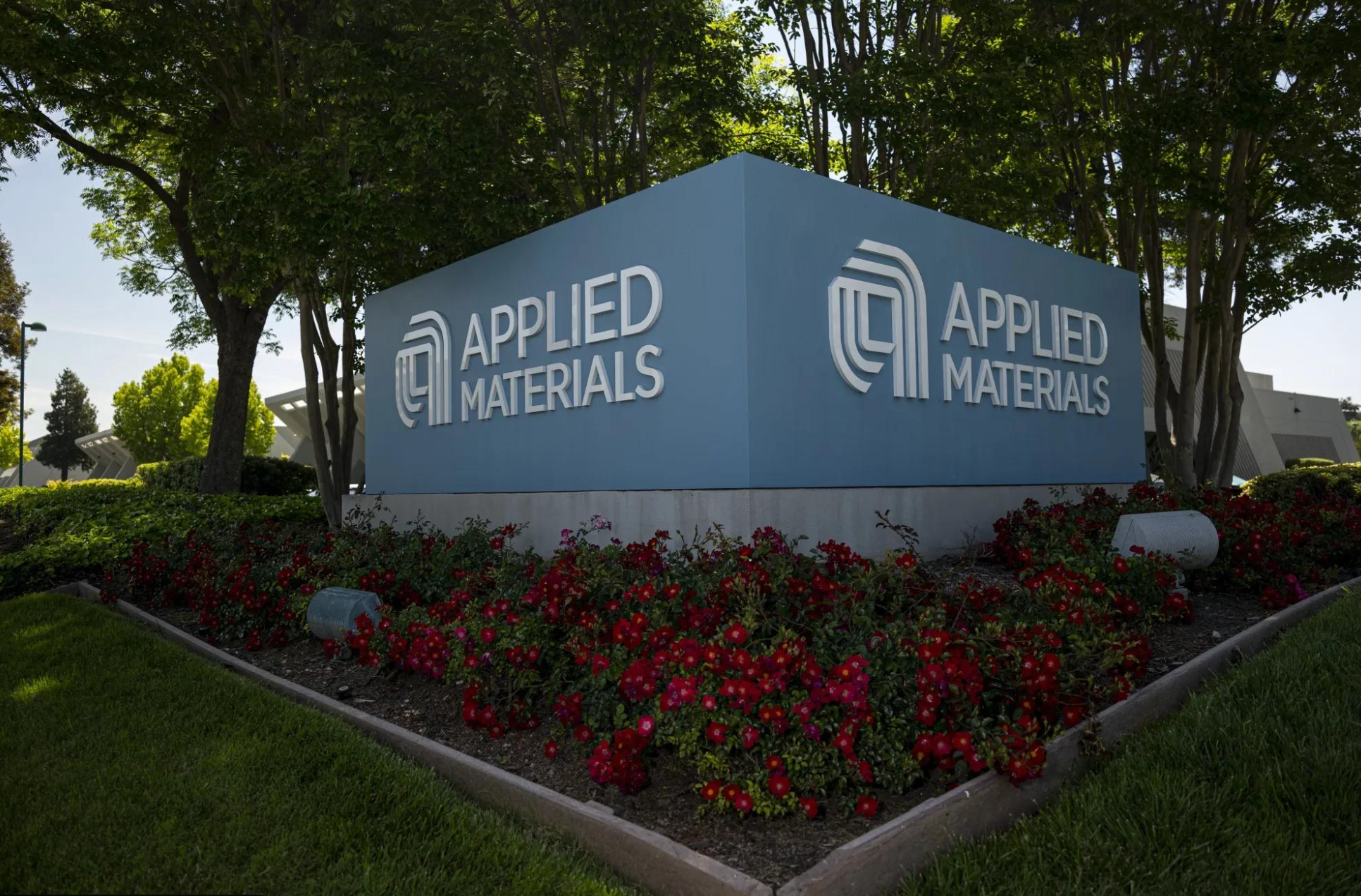
Applied Materials reports Q3 2026 earnings after the close. Here's the revenue target, EPS setup, and guidance language that will move the entire semiconductor sector.
Key Points
- Applied Materials reports Q3 fiscal 2026 results tonight at 4:30 PM ET against a consensus of $9.0B in revenue and adjusted EPS of $3.36, implying 35.5% year-over-year earnings growth.
- The real trade isn't the beat or miss — it's the October quarter guidance and any specific language on HBM memory and advanced packaging orders, which will reprice the entire chip equipment sector in real time.
- With NVDA reporting August 26, tonight's AMAT call is the last hard data point traders get on AI infrastructure spending before the semiconductor sector's single biggest catalyst of the year.
Applied Materials stock was sitting at $548.34 in pre-market trading Thursday, down a fractional $0.27, and the calm belies what's coming: Q3 fiscal 2026 results after the close that will function as the semiconductor sector's most important forward indicator until NVIDIA opens its books on August 26. The consensus is $9.0 billion in revenue and $3.36 in adjusted EPS. Beat both, and the stock closes the gap toward UBS's $705 price target. Miss on guidance, and 28 strong-buy ratings provide no cushion at 43.8 times forward earnings.
The Setup and the Stakes
The numbers management already handed traders in May matter here. AMAT guided Q3 to approximately $8.95 billion, plus or minus $500 million, and EPS of $3.36, plus or minus $0.20. That guidance implied roughly 35.5% earnings growth from the $2.48 reported in the year-ago quarter. Management simultaneously projected full-year 2026 semiconductor equipment growth of over 30% and packaging revenue growth above 50%. Those were big numbers in May. The question tonight is whether the underlying demand has held, accelerated, or quietly softened at the margin.
Context matters on what AMAT delivered most recently. The company posted record Q2 results in May — $7.91 billion in revenue, up 11% year over year, with EPS of $3.51. It has beaten Wall Street's earnings estimates in each of the past four consecutive quarters. That track record has earned the stock a more-than-100% gain year to date, but it has also embedded enormous expectations into the multiple. At 43.8 times forward earnings, AMAT trades at more than double its five-year historical average of 21.18 times. Stocks at those multiples don't absorb guidance cuts gracefully, and they don't need to miss — they only need to fail to exceed.
The analyst community is positioned aggressively bullish. Citi's Atif Malik expects management to guide the October quarter above Street consensus. UBS moved its price target to $705 from $570. Goldman Sachs holds a $645 target. Morgan Stanley raised its target to $647 from $502 but maintained an Equal Weight rating, which is the clearest signal in the coverage universe that the bull case is priced and the upside is narrower than the targets suggest. Twenty-eight of 38 analysts rate AMAT a Strong Buy; three say Moderate Buy; seven say Hold. Not a single sell. That kind of unanimity is itself a risk.
What the Guidance Language Actually Signals
Wall Street will listen to the revenue and EPS print for about ninety seconds. The next sixty minutes of the earnings call will be about one thing: what AMAT's order book says about AI infrastructure spending through the end of 2026 and into early 2027.
Applied Materials is a direct supplier to every foundry and memory maker that matters — TSMC, Intel, SK Hynix, and Micron all sit in its customer base. When AMAT's order flow shifts, it tells you what those companies are planning to build three to six months before they announce it publicly. Tonight's most actionable signal is any management commentary specifically addressing high-bandwidth memory tooling and advanced packaging demand. Memory is the current chokepoint across the AI supply chain. Elon Musk described memory pricing as "insane" on Tesla's last earnings call. Amazon's Andy Jassy attributed higher capex guidance directly to elevated memory chip costs. If AMAT says HBM-related equipment orders are accelerating into Q4, that is a direct positive read for SK Hynix and Micron. If the commentary is cautious or vague, that ambiguity will hit memory names in after-hours trading before traders even process the AMAT headline.
The advanced packaging segment deserves equal attention. AMAT guided that business to grow more than 50% for the full year — a projection that, if reiterated or raised tonight, confirms that the substrate-level bottleneck in AI chip assembly is generating sustained equipment demand beyond the front-end wafer fabrication that most investors focus on. A reiteration of the 50%-plus packaging growth forecast effectively validates the structural AI infrastructure thesis through at least the first half of 2027. A downward revision or hedged language would be the most bearish scenario for the sector, exceeding even a modest EPS miss in its implications.
One documented headwind worth tracking: Michael Burry holds a short position in AMAT, which has generated incremental negative sentiment. Burry's thesis has not been publicly detailed in full, but at 43.8 times forward earnings, the mechanical argument for a short — mean reversion toward the five-year average multiple of 21.18 times — does not require a fundamental deterioration. It only requires that growth fails to surprise to the upside. Tonight's print and guide will either validate or undercut that positioning in a single session.
What Traders Watch Next
The three-week window between tonight and NVDA's August 26 report is the highest-density risk corridor in technology equities this year. Applied Materials sets the tone tonight. Marvell reports August 27. Broadcom follows September 3. Each print functions as a successive data point on the same underlying question: is AI infrastructure capex sustaining at the pace hyperscalers and sovereign AI buyers implied in their own Q2 commentary, or is there a deceleration building beneath the headline figures?
The macro backdrop does not make this easier to read. The 10-year Treasury yield is sitting at 4.7% as of August 11, with the 2-year at 4.22%. That yield curve configuration — positively sloped but elevated across the term structure — keeps the cost of capital high for speculative positions. Core CPI came in at 2.5% year over year as of July, which is constructive but not low enough to pressure the Fed into near-term cuts; the effective Fed Funds rate is 3.63%. In that environment, a 43.8-times forward multiple on AMAT is a leveraged bet on guidance delivery, not on valuation support.
Deloitte's 2026 Semiconductor Industry Outlook projects global semiconductor sales will reach a historic peak of $975 billion this year, driven by AI infrastructure. TSMC, which controls 72% of the global foundry market and is actively ramping 3-nanometer production, has drawn analyst price targets ranging from Needham's $530 to Susquehanna's $600. Those targets rest on the same AI capex acceleration thesis that AMAT's guidance will either confirm or complicate tonight. Traders holding TSMC, Micron, or any HBM-adjacent name into tomorrow's open should treat the 4:30 PM ET call as a direct risk event for those positions, not just for AMAT itself.
The specific level to watch on AMAT: the stock is 28% below its record high of $739.67 set June 30. A strong beat-and-raise that moves the stock toward $600 would still leave it 19% below that peak — which is the range where the bull case argues the next leg of the trade begins and where a short covering from Burry's position would add mechanical fuel to the move. The October quarter guide is the ignition switch. If management prints revenue guidance above $9.5 billion for Q4, the path toward the UBS $705 target reopens. Anything softer, and the stock is a crowded long at a demanding multiple with two weeks of uncertainty before NVDA either rescues or reprices the entire sector.
The Weekly Investor
Daily market analysis for active traders. Free.