AMAT Earnings Tonight: The $9B Revenue Test
Applied Materials reports fiscal Q3 after the close today. Here's the revenue line, margin signal, and forward guide that will move the stock Friday.
Key Points
- Consensus expects $9.04 billion in revenue and $3.36 EPS — a 23% year-over-year revenue jump — when Applied Materials reports after today's close.
- UBS raised its price target to $705 on evidence that equipment makers are actively raising prices, a gross margin signal the market will scrutinize closely.
- Watch the Q4 guide: Citi's Atif Malik expects AMAT to set October-quarter guidance above Street expectations, and that number — not Q3 — is what will move the stock Friday morning.
Applied Materials reports fiscal third-quarter results after the bell tonight, with the call starting at 4:30 PM ET, and a single number frames the entire event: $9.04 billion in revenue. That's the consensus line, representing 23% year-over-year growth, and it's the threshold that separates a relief rally from a selloff in a stock already trading $200 below its 2026 peak. AMAT closed Wednesday near $539, down roughly 27% from its June high of $739.67, meaning bulls need more than a beat — they need a forward guide that justifies re-rating the stock toward the $645–$705 range where major Wall Street targets now cluster.
The Bar Is Already High
Applied Materials has beaten Wall Street's earnings estimates in each of the past four consecutive quarters, a streak that simultaneously raises expectations and compresses the upside from another narrow beat. Last quarter, the company posted record revenue of $7.91 billion — up 11% year-over-year — with EPS of $3.51. Tonight's consensus of $3.36 in EPS is actually below that Q2 print on a per-share basis, so a simple headline beat is essentially baked in. What the market doesn't have priced with confidence is a blowout Q4 guide, and that asymmetry is where the trade lives.
The company's own guidance bracket for Q3 was $8.95 billion in revenue, plus or minus $500 million, and EPS of $3.36, plus or minus $0.20. That wide band reflects genuine uncertainty in the capital equipment cycle — customers can delay or accelerate tool purchases in ways that are notoriously hard to forecast. But the directional signal from peers has been constructive. Equipment makers across the board have reported robust orders tied to AI-driven fab buildouts in both advanced logic and high-bandwidth memory. If AMAT's mix has tilted further toward those high-value segments, gross margin is the tell. Watch for any sequential expansion above the record levels set in Q2; UBS specifically flagged pricing power as a differentiator when analyst David Vogt lifted his target to $705 from $570 last week.
The AI Capex Tailwind — And Its Limits
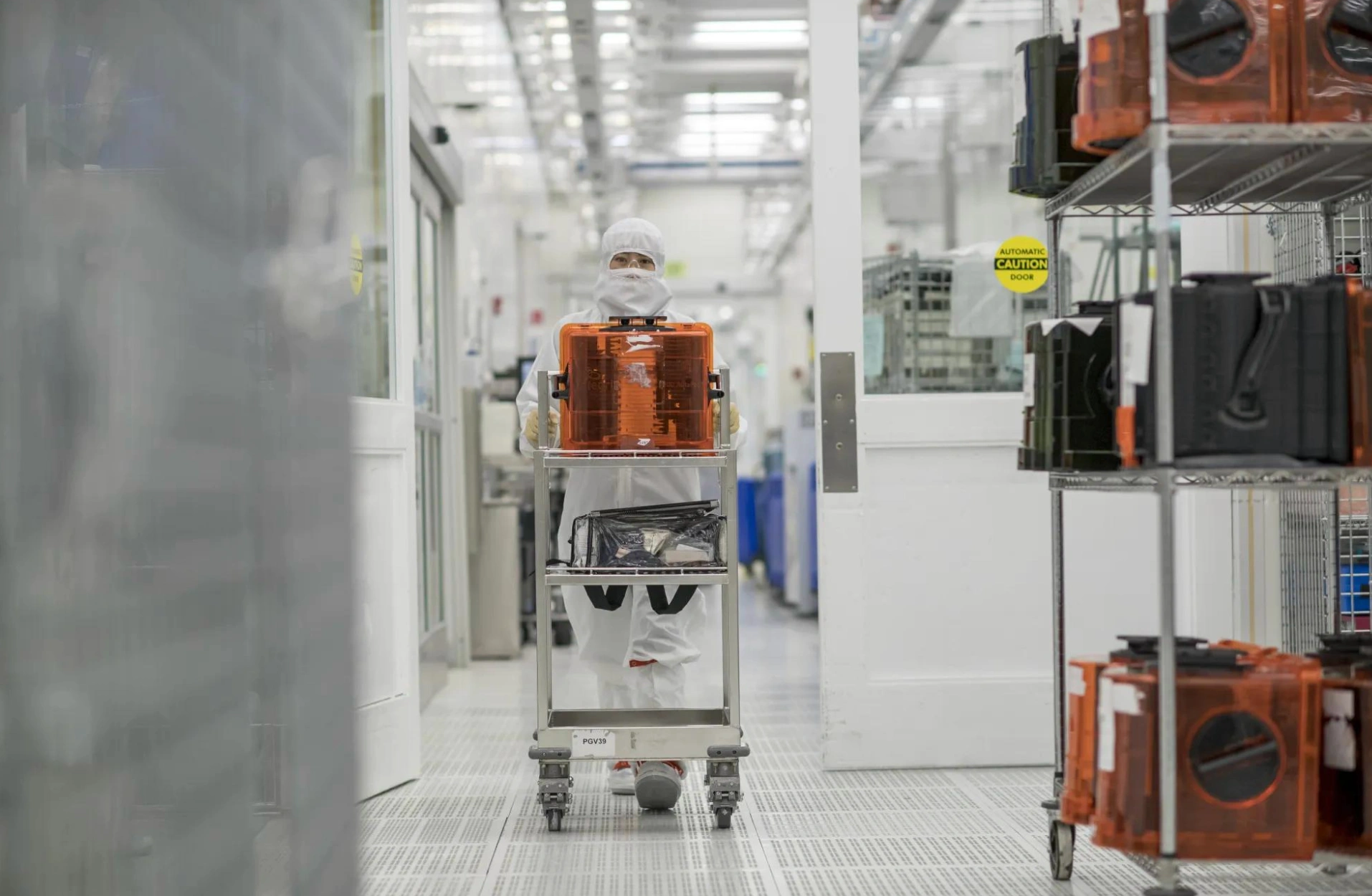
The structural case for AMAT is straightforward and well-documented. Hyperscalers and chipmakers are racing to build out AI training and inference capacity, which requires leading-edge deposition, etch, and inspection tools that Applied Materials supplies. Taiwan Semiconductor, Samsung, and Intel are all running aggressive expansion schedules through at least 2027, and each incremental fab announcement translates into equipment orders measured in the hundreds of millions of dollars. Goldman Sachs has maintained a positive stance with a $645 target precisely because the visibility into that pipeline is unusually high by semiconductor standards.
Morgan Stanley is the most instructive counterpoint. The firm raised its price target to $647 from $502 on July 6 — a significant 29% increase — but held its Equal Weight rating, signaling that the upside is already reflected in valuation relative to risk. At $539, AMAT trades at roughly 23 times forward earnings, which is not stretched for a cyclical compounder in an upcycle, but it leaves no margin for a guide-down. The stock's 100.5% year-to-date gain has pulled forward a substantial amount of the cycle benefit. Any commentary tonight suggesting that China export restrictions are tightening further, or that customer order pacing is being pushed into calendar 2027, will hit the stock hard — and the $500 level represents the first meaningful technical support below current prices.
What Traders Watch Next
The Michael Burry short disclosure adds a layer of sentiment complexity that experienced traders shouldn't dismiss entirely, even if the fundamental picture remains intact. Burry's documented position is not a near-term catalyst — shorts against AMAT are a macro call on overvaluation and potential demand air pockets, not a bet on a bad quarterly print tonight. But it does mean that any disappointment in the guide will be amplified by short-side pressure, and the options market into tonight's print has implied moves in the 6–8% range in either direction, which is consistent with the stock's recent behavior around major catalysts.
Citi analyst Atif Malik's read is the most actionable framing: he expects Applied Materials to guide the October quarter above current Street expectations. If that's correct, the $9.04 billion Q3 beat becomes the setup and the Q4 number — consensus currently sits below $9.5 billion for the October quarter — becomes the headline. A Q4 guide of $9.6 billion or better would functionally validate the UBS $705 target and create a clear path back toward the $600 level before year-end. Anything below $9.2 billion on Q4 guidance, combined with margin pressure language, and the stock tests $510 by Friday's open.
The AMAT investor relations webcast goes live at 4:30 PM ET. Traders should have a position or a plan before 4:00 PM — post-print liquidity in after-hours is thin enough that bid-ask spreads can move 1–2% against you in the first five minutes. The gross margin figure — watch for anything above 48.5%, which would signal the pricing power thesis UBS has been building — is the first number to pull from the release, before revenue, before EPS. If margin expands sequentially and Q4 guidance clears $9.5 billion, the trade back toward $600 has legs into September. If either disappoints, the $200 round-trip from the June peak is still incomplete.
The Weekly Investor
Daily market analysis for active traders. Free.