AI Pause Bombshell Detonates the Nasdaq's Engine
Nvidia drops 3.1%, AMD -4.77%, ASML -6% as Amodei, Altman, and Musk co-sign an AI development pause. The trade that drove a 15% S&P year is cracking.
Key Points
- Nvidia is down 3.1% premarket to $211.59 as a joint statement from Amodei, Altman, and Musk calling for a deliberate pause in frontier AI development triggered a sector-wide liquidation Monday morning.
- The AI trade — which had powered a 15% year-over-year S&P 500 gain and a 240%-plus surge in Micron alone — is facing an ideological reversal from its own architects at the exact moment the Fed is about to hike rates.
- Watch Nasdaq-100 futures: a break below -2% risks triggering systematic selling from volatility-targeting funds, and with OpenAI's 2026 IPO now officially off the table, there is no obvious near-term catalyst to reverse the unwind.
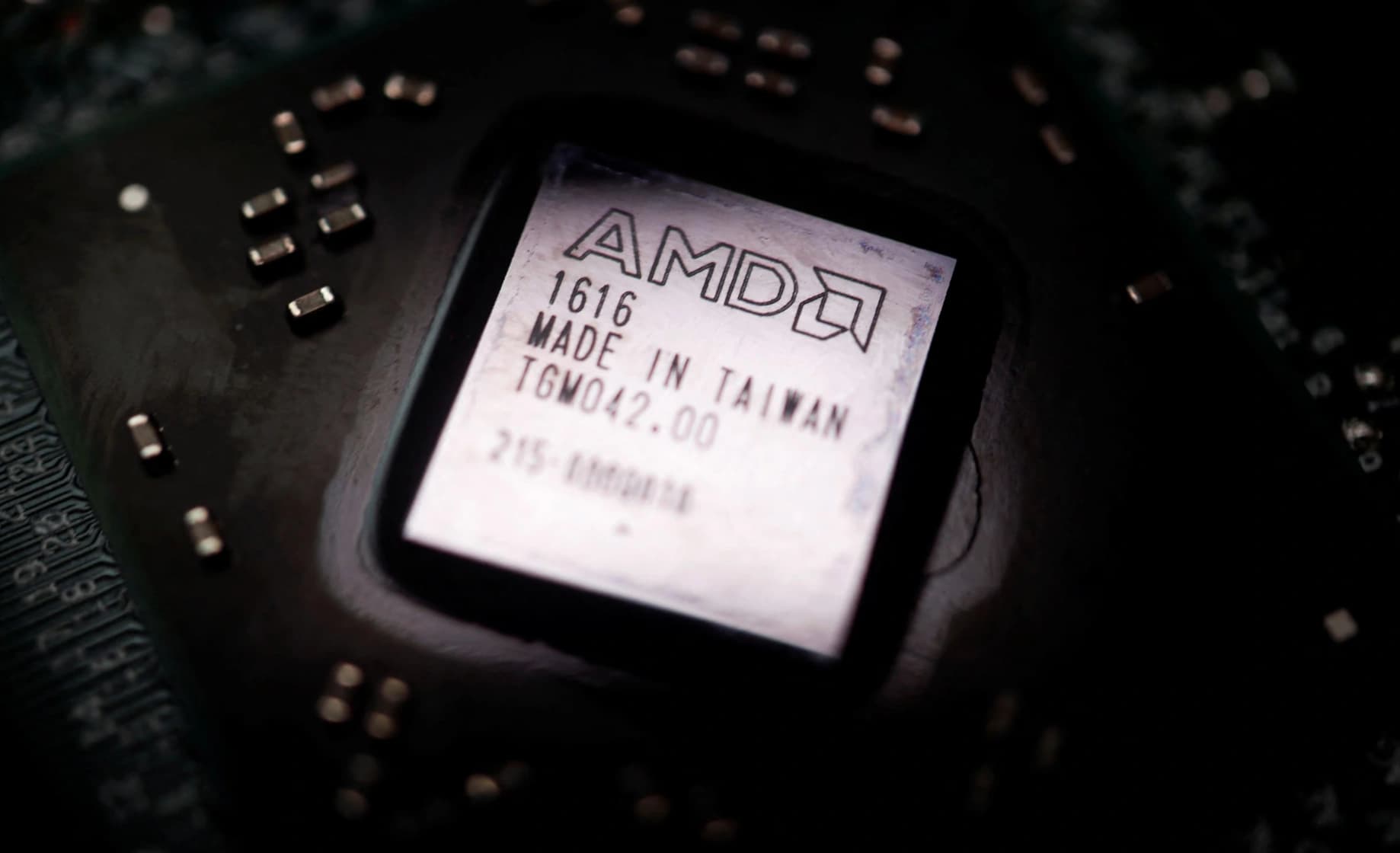
Nvidia is trading at $211.59 in premarket Monday, down 3.1%, after a weekend essay by Anthropic CEO Dario Amodei calling for a deliberate pause in frontier AI development was co-signed by Sam Altman of OpenAI and Elon Musk of xAI — turning what might have been a fringe academic argument into an industry-defining statement. Nasdaq-100 futures are down 1.8%, AMD has shed 4.77%, Intel is off 5.29%, and Micron — which had surged more than 240% since January on AI-driven memory demand — is down 5.0% to $926. This is not a rotation. It is a liquidation.
The Statement That Moved Markets
The Amodei essay, published over the weekend, did not come from a regulator or a politician. It came from the CEO of Anthropic, the AI safety company that has arguably done more than any other to legitimize the frontier AI buildout as a commercially viable and responsible enterprise. For Amodei to call for a pause — and for Altman and Musk to co-sign it — is the equivalent of the architects of the housing boom publicly questioning the value of mortgage-backed securities in 2006. Markets are reacting accordingly.
The ideological significance compounds the financial damage. Altman's co-signature carries a specific price tag: OpenAI will not go public in 2026, as had been widely expected. That IPO had functioned as a gravitational anchor for the entire AI investment thesis — a concrete liquidity event that justified elevated valuations across the ecosystem of chips, data center infrastructure, and software plays. Bloomberg reported Monday morning that US stock futures fell sharply on the AI warning, with energy gains adding further pressure. The removal of that catalyst is not a minor adjustment. It is the elimination of a pricing anchor that had been embedded in forward estimates across dozens of names.
The Damage Is Not Confined to Nvidia
The breadth of this selloff is what distinguishes it from prior AI-driven dips. Qualcomm is down 4.11% premarket. SanDisk has shed 6%. ASML, the Dutch lithography monopoly whose machines are the physical prerequisite for any leading-edge chip fabrication, is down 6% in European trading. These are not companies that can be dismissed as speculative AI plays — ASML has a multi-year backlog and pricing power that most industrial companies would envy. When ASML sells off 6% in a single session, it reflects a genuine reassessment of the long-term capex trajectory for AI infrastructure, not a momentum unwind in a meme stock.
The international damage is equally telling. SoftBank has collapsed 11% in Tokyo — a direct function of its deep and well-publicized investment exposure to OpenAI. SK Hynix, the South Korean memory giant that had been one of the primary beneficiaries of AI's insatiable appetite for high-bandwidth memory, is down 6.4% in Seoul, helping drag the Kospi to a 3.26% loss for the session. Japan's Nikkei 225 closed 0.81% lower. The AI trade was never purely an American phenomenon, and this unwinding is confirming that reality in real time.
What is particularly striking is the Nvidia-Anthropic wrinkle. Reports emerged Monday that Nvidia is in discussions to invest up to $10 billion in Anthropic — the same company whose CEO just co-authored the essay calling for an AI pause. That juxtaposition is generating genuine strategic confusion among investors. Is Nvidia betting on Anthropic because it believes the pause will ultimately be short-lived and the long-term demand for AI compute remains intact? Or is the investment a tacit acknowledgment that the compute-everything-at-maximum-speed model is shifting toward something more measured — and therefore less immediately lucrative for a company whose entire growth story is built on the acceleration of AI workloads? Neither interpretation is unambiguously bullish for NVDA at current levels.
What Traders Watch Next
The VIX closed Thursday at 17.84, up sharply from its mid-August low of 14.2. That move preceded this weekend's AI shock, which means Monday's open will likely push the fear gauge higher still. CBOE data shows the index had already been trending upward on three converging macro pressures — oil above $107, a near-certain Fed rate hike Wednesday, and deteriorating breadth in the Nasdaq. The AI selloff is now the fourth vector.
The Fed is the critical context. Fed funds futures currently price an 86% probability of a rate hike at Wednesday's September meeting. Elevated energy prices — Brent is above $107, WTI above $102 — are feeding directly into the inflation prints that have kept the Fed hawkish. A rate hike on Wednesday would raise the discount rate applied to every future cash flow in the AI ecosystem, compressing valuations on high-multiple names precisely when their growth narratives are being questioned. The double compression — lower expected growth, higher discount rate — is the worst possible combination for a sector that has been trading on 2028 and 2029 earnings.
Meta and Amazon are each down over 1% premarket, modest by comparison but significant because both companies have been aggressive hyperscale buyers of AI compute. If the pause narrative gains traction and capex plans are revised even marginally, Nvidia's order book — and the financial models built around it — will need to be reconstructed from the ground up. CNBC's premarket desk noted the broad-based nature of the selling, with no obvious sector rotation providing a natural bid.
The specific level to watch is Nasdaq-100 futures at -2.0%. Below that threshold, volatility-targeting funds — which systematically reduce equity exposure as realized vol rises — are mathematically forced to sell. The current -1.8% reading is uncomfortably close. If the open breaks that level and holds, expect the afternoon tape to be significantly worse than the morning. The next identifiable floor for NVDA on a technical basis is the $195–$198 range, which represented the breakout zone from Q2. A close below $200 this week would signal that the AI trade has entered a structural, not tactical, correction.
The Weekly Investor
Daily market analysis for active traders. Free.