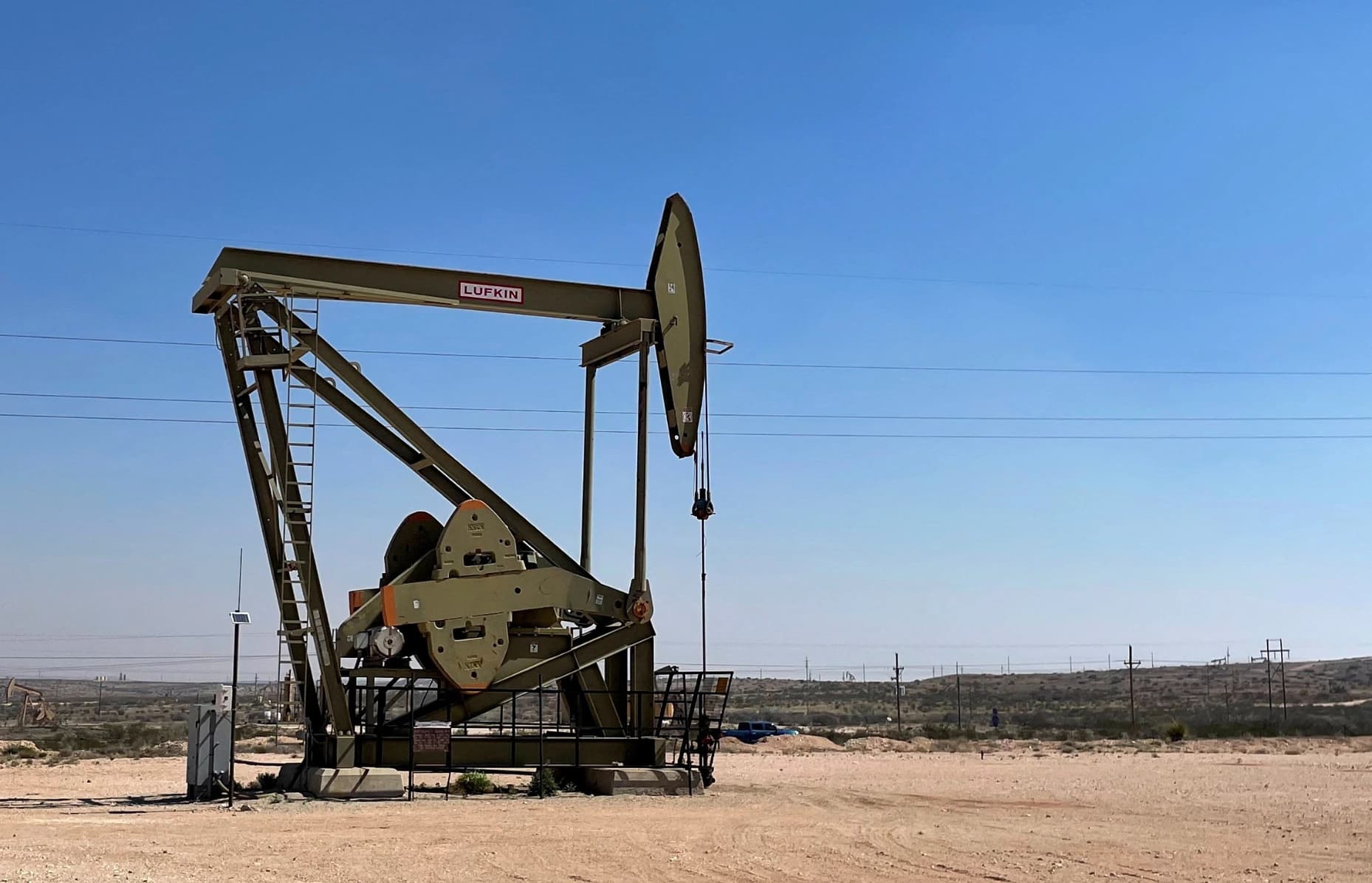

VIX Surges 8.75% as Oil Hits $96 and Gold Drops 3%
VIX jumps to 16.17 Monday as crude oil surges 4.1% to $96.20/bbl, gold craters 3.07% to $4,188, and Bitcoin falls 2.45% — classic risk-off rotation.
Key Points
- The VIX has spiked +8.75% to 16.17 while crude oil surges +4.10% to $96.20/bbl, gold falls -3.07% to $4,188.50, and Bitcoin drops -2.45% to $82,778 — a simultaneous flight from both safe havens and risk assets.
- Oil's move is the inflation catalyst: at $96/bbl heading into Wednesday's core PCE print, the Fed's rate-cut timeline extends further, pressuring equities and bonds simultaneously.
- The critical technical and fundamental watch is whether crude holds above $95 through Wednesday's GDP and PCE data — that outcome determines whether today's sector rotation into energy is a one-day trade or a multi-week repositioning.
Gold is down 3.07% to $4,188.50 this morning. Bitcoin is off 2.45% to $82,778. And crude oil is surging 4.10% to $96.20 a barrel. When the two most prominent alternative stores of value are selling off simultaneously while energy rips, the market is not rotating into risk — it is repricing inflation risk, and doing so across every asset class at once. The VIX at 16.17, up from Friday's close of 14.87, is the volatility market's confirmation that this move is not orderly.
The Oil Move Is the Story
A $3.79 single-session move in crude — from roughly $92.41 to $96.20 on the November 2026 contract — is not a rounding error. That is a supply-shock magnitude move, and it lands at the worst possible moment in the macro calendar. Wednesday brings the final Q2 GDP revision alongside core PCE — the Federal Reserve's primary inflation benchmark. With crude approaching $96 and the 10-year Treasury yield already at 5.1840%, the bond market is not positioned for a benign print. The USO oil fund is up +4.44% premarket and XLE, the energy sector ETF, is up +1.47% — the clearest sector rotation signal of the morning session.
The mechanism is straightforward and brutal: oil at $96/bbl feeds into gasoline prices within two to four weeks, transportation and logistics costs within days, and headline CPI within the next monthly print. The Fed does not target oil prices directly, but the second-order effects — consumer inflation expectations already running at 4.6% per the University of Michigan — become self-fulfilling if energy stays elevated. Households that expect 4.6% inflation negotiate wages, make spending decisions, and borrow money accordingly. The University of Michigan sentiment reading of 48.1 is already near recessionary territory; an energy-driven inflation resurgence would pressure that number further, creating a feedback loop where the Fed cannot ease even as consumer confidence deteriorates.
Energy's outperformance today is drawing capital directly from two of the most prominent alternative assets of the past two years: gold and Bitcoin. Gold's -3.07% drop to $4,188.50 is striking given that the precious metal has historically acted as an inflation hedge. The explanation is in the real yield: with the 10-year nominal yield at 5.18% and inflation expectations at 4.6%, the real yield sits just above 0.5% — positive, but barely. More importantly, if oil's surge convinces the market that the Fed stays on hold longer than priced, nominal yields could push higher still, lifting real yields and making gold's zero-coupon structure less competitive. Traders are not selling gold because inflation is going away. They are selling gold because the dollar and the yield curve are momentarily more attractive.
Bitcoin's Breakdown in a Risk-Off Tape
Bitcoin at $82,778, down -2.45% on the session, reflects a different dynamic than gold's selloff but arrives at the same conclusion. Crypto in 2026 trades with a higher correlation to risk assets — particularly Nasdaq-adjacent growth names — than to inflation hedges. When the VXX short-term volatility ETN jumps +1.58% premarket and the Polymarket probability of a higher S&P open sits at just 28%, Bitcoin's role as a high-beta speculative asset becomes a liability rather than a diversifier. The same retail and institutional flows that pushed Bitcoin higher during the Meta Muse-driven AI hardware rally earlier this month are reversing as the macro environment sours.
The contrast with Friday's session is instructive. Friday saw Microsoft surge +3.71% on its unified Copilot announcement, Meta end the week up roughly 12% following its Muse AI agent hardware releases, and broad sentiment running constructive enough for the VIX to close at 14.87. In 72 hours, oil has added more than $4, the VIX has climbed 1.30 points, and gold has shed more than $130. That is not a small shift in regime — that is a meaningful repricing of the risk environment heading into a week loaded with Fed-sensitive data.
The VXX spike of +1.58% is worth tracking specifically. The CBOE Volatility Index and its derivatives are the market's real-time insurance pricing mechanism — when VXX moves with conviction, institutional desks are buying protection, not merely observing. VIX at 16.17 is not yet at the September 10th peak of 17.84 or the September 16th reading of 17.71, but the trajectory on a Monday morning, before any macro data has printed, is directionally concerning. The VIX was at 14.21 as recently as September 22nd. A move from 14.21 to 16.17 in less than a week, while equities are still nominally green in futures, suggests the options market is pricing in event risk that the equity market has not fully digested.
Where This Rotation Goes From Here
The sector rotation underway — out of gold, crypto, and high-growth tech and into energy and consumer staples — has a clear fundamental logic if oil holds above $95. Energy companies generating free cash flow at $96 oil are not exposed to duration risk the way long-multiple tech names are. They don't care about the 10-year yield. They benefit directly from the same commodity move that is punishing everything else. The XLE trade makes sense as a hedge and as an alpha play simultaneously, which is why it's attracting capital even on a morning when the broader market is trying to rally.
The risk to this rotation is a sudden reversal in crude — either from a surprise inventory build, a geopolitical de-escalation, or a demand destruction signal in the Dallas Fed Manufacturing Index releasing today. That index will provide the first September read on factory activity and, critically, input cost pricing. If manufacturers are already signaling demand pullback at current energy prices, crude could give back a portion of today's gains quickly. But if the Dallas Fed confirms accelerating output prices — consistent with oil at $96 — the rotation deepens, and Wednesday's core PCE becomes a significantly more consequential event than the market is currently pricing.
Bitcoin, gold, and volatility data all tell the same story this morning: the market believes something is coming that current equity index levels have not yet accounted for. Whether that something is a hot PCE print Wednesday, a hawkish Bowman at 8:15 a.m. today, or simply crude oil refusing to pull back from $96, traders need a specific tripwire. That tripwire is WTI crude at $95.00. If oil fades below that level before Wednesday's close, the inflation repricing cools and the VIX likely retreats toward 15. If crude holds or extends above $96 through Wednesday's PCE release, the VIX has a clear path to retest the 17.84 September 10th peak — and the $769.97 SPY pivot becomes the most important number in the market.
The Weekly Investor
Daily market analysis for active traders. Free.