
VIX Spikes 11% at Open as Crude Hits $103 and 10Y Flirts With 5%
The VIX surged to 17.62 Friday morning as WTI crude jumped 3.52% to $103.57 and the 10-year yield pressed toward the critical 5% level again.
Key Points
- The VIX surged 11.24% to 17.62 at Friday's open, up sharply from a prior close of 15.44, as WTI crude hit $103.57 and the 10-year yield hovered just below the 5% threshold at 4.9470%.
- The simultaneous pressure from a 25 bps Fed hike Wednesday, a crude spike driven by geopolitical risk, and a resurgent vol print is compressing the window for the equity bounce to hold.
- Traders should watch for a VIX close above 20 and a 10-year yield reclaim of 5.0060% — either event individually would likely unwind Thursday's recovery bid in risk assets.
The VIX hit 17.62 at Friday's open — an 11.24% single-session surge from Wednesday's close of 15.44 — and that number alone tells you the post-Fed relief rally is on borrowed time. WTI crude is up 3.52% to $103.57, the 10-year Treasury yield is pressing at 4.9470% after touching 5.0060% earlier this week, and the Fed just delivered another 25 basis points with more hikes penciled into the dot plot. The market is not in panic mode, but the buffer between "cautious" and "hedging emergency" is thinning by the hour.
The Fed Cracked the Foundation
Wednesday's FOMC decision was not a surprise in isolation — 25 basis points was telegraphed — but the median dot plot projections were. The committee revised its inflation and GDP forecasts upward and signaled one to two additional hikes remaining in 2026. That revision reframes the entire "peak rate" narrative that had been quietly underpinning the summer rally. Traders who bought the dip in June and July on the assumption that the Fed was approaching the terminal rate are now doing math they don't like.
The immediate market response confirmed the damage. The S&P 500 fell 0.4% Wednesday and the Dow shed 631 points — a number that gets institutional attention regardless of percentage context, because it signals that blue-chip positioning is being actively unwound, not just trimmed. The Nasdaq 100 closed nearly flat that session, which on the surface looked like resilience but was in fact a narrowing of participation: a handful of mega-cap tech names absorbed selling pressure across the rest of the index.
By Thursday and into Friday morning, the stabilizing factors were real but fragile. Treasury yields pulled back from 5.0060% to 4.9470% — meaningful in basis points but not in narrative. The 5% level on the 10-year is not a technical level invented by chartists; it represents the point at which fixed income becomes a structurally competitive alternative to equities on a risk-adjusted basis for institutional allocators. Every tick toward it is a tick away from the growth bid. According to CNBC's live market coverage, traders identified a "rates backup toward 5% on the 10Y" as the principal risk to the current equity positioning, and that risk has not gone away — it has simply paused.
Oil and Geopolitics Are Writing a Separate Script
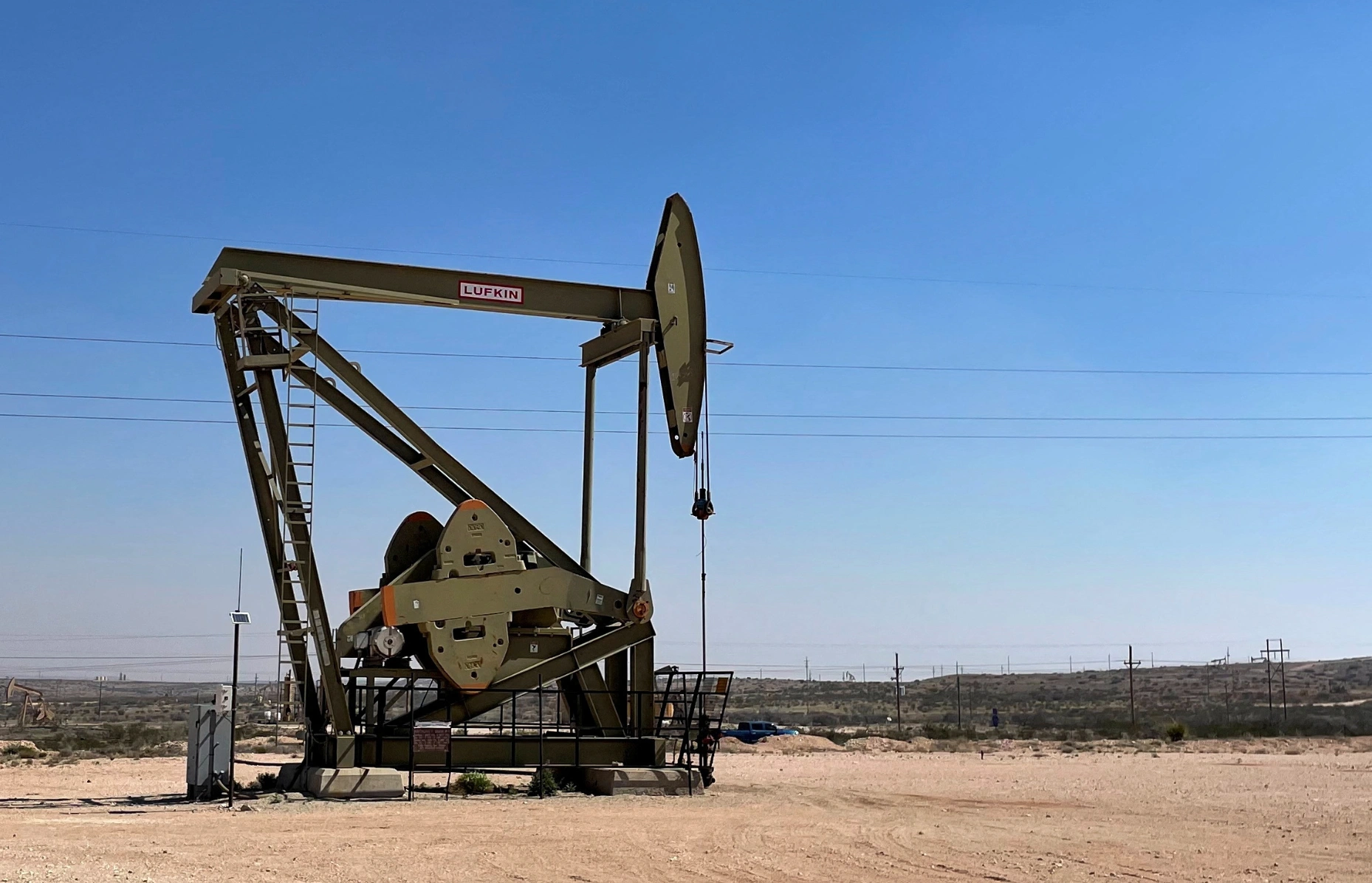
The crude move is the variable that makes this Friday particularly dangerous. WTI at $103.57 — up 3.52% on the session — is not a routine commodity fluctuation. The context is geopolitical: U.S. military strikes triggered a surge in WTI 1-month implied volatility to 68% before it partially settled at 51%. That kind of options market reaction to a commodity reflects genuine supply disruption fear, not positioning noise. Even at 51%, implied vol at that level in crude means the options market is pricing tail risk into petroleum supply chains, and that translates directly into input cost pressure for industrials, airlines, and consumer staples — sectors that were already under margin stress from the Fed's tightening cycle.
The implied-realized volatility spread in crude has compressed from a peak of 30 points to 14 currently. Ordinarily that compression signals fear abating. Here it signals something more ambiguous: the market has partially priced in disruption, but the underlying geopolitical situation hasn't resolved. If crude pushes through $105 on any fresh headline — a supply cut, an escalation, a pipeline disruption — the second-order effects on equity volatility will be fast and non-linear. Gold's move to $4,317.00, down 2.08% on the session, is worth noting in this context: a falling gold price alongside rising crude and rising VIX is unusual, and may indicate that institutional players are raising cash broadly rather than rotating into traditional safe havens.
The energy sector's volatility is already spilling into related equity markets. WTI at these levels is structurally inflationary — it directly contradicts the Fed's stated goal of returning inflation to 2%, which in turn makes the dot plot's additional hike signals more credible, which in turn pressures rate-sensitive equities further. The feedback loop between crude prices, Fed credibility, and equity multiples is tightening, and Friday's simultaneous print of crude at $103.57 and VIX at 17.62 reflects that compression in real time.
What Traders Watch Next
The divergence in today's index performance is the clearest tactical signal available. QQQ is up 0.37% at the open while SPY is down 0.07% and DIA is under modest pressure, with the Russell 2000 off 0.46% to 2,890.63. That spread between large-cap tech and everything else reflects a flight to perceived quality within equities — specifically to names with pricing power, secular AI-driven revenue streams, and balance sheets strong enough to absorb higher-for-longer rates. Arm Holdings, Intel, Marvell, and Corning are all higher Friday. The divergence is not a market bottom signal; it's a rotation signal, and rotations of this kind tend to accelerate before they reverse.
Cboe's VIX data shows the prior close at 15.44 against Friday morning's 17.62 — a 2.18-point intraday move that places the index in what analysts are calling a "yellow-to-orange warning" zone. The fear threshold at 20 remains the binary: below it, the market is repricing risk in an orderly fashion; above it, hedging becomes mandatory for most institutional mandates and the self-reinforcing vol feedback loop engages. The VIX has surged from a weekly low of approximately 15.41 to 17.62 in a compressed window, and the trajectory matters as much as the level.
The specific numbers to mark going into next week: VIX 20 on a closing basis, 10-year yield 5.0060% on any intraday print, and WTI $105 on spot. If two of those three levels are breached simultaneously, the Thursday-Friday stabilization narrative collapses and the 631-point Dow drop from Wednesday becomes the opening act rather than the full story. The next Fed meeting and any geopolitical developments in oil-producing regions before the end of September are the calendar events that will determine whether the current vol spike is a head-fake or a regime change.
The Weekly Investor
Daily market analysis for active traders. Free.