TSMC's Packaging Gambit Solves AI's Real Bottleneck
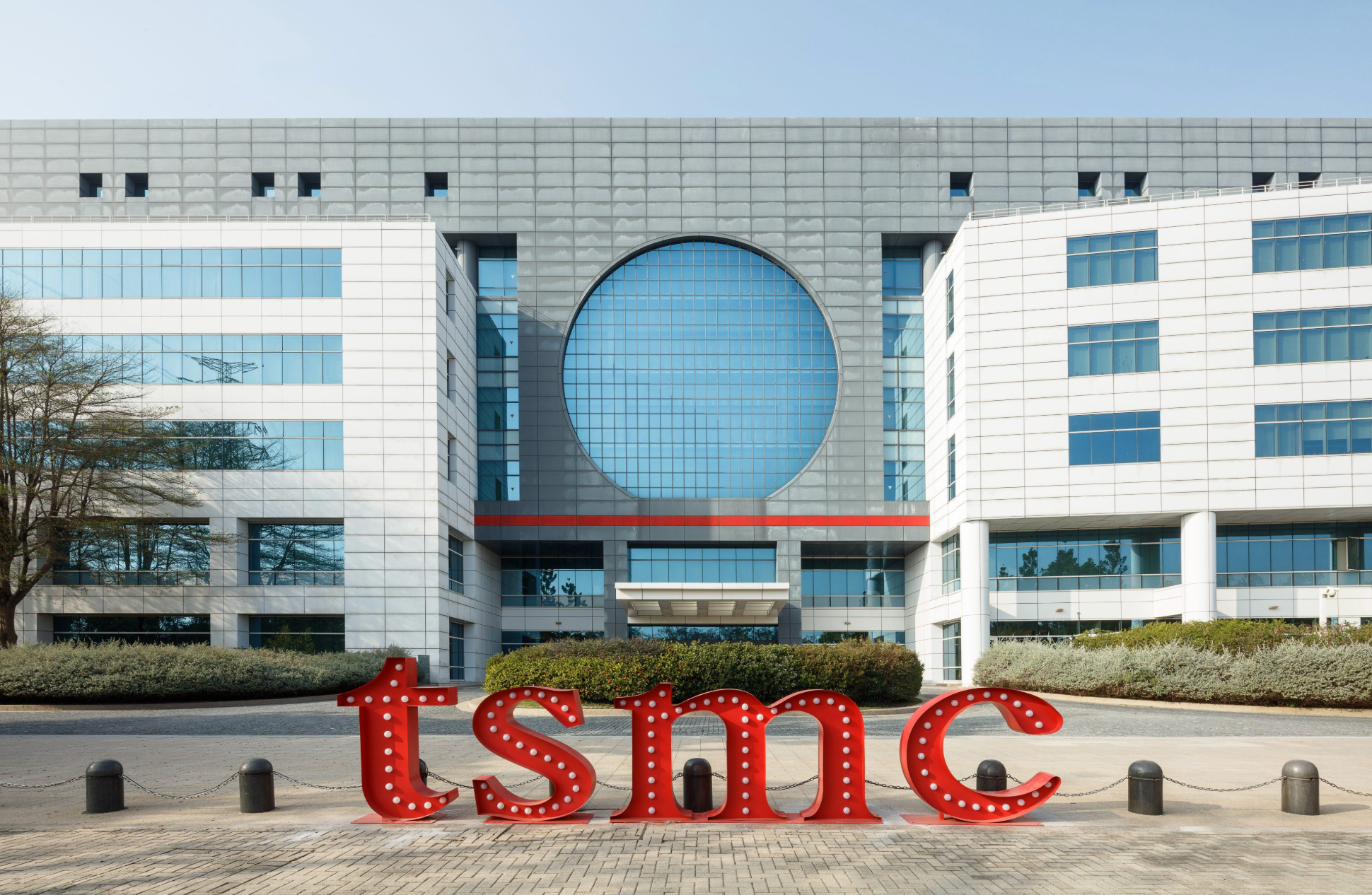
TSMC is developing EMIB-style chip packaging with Kinsus, targeting the CoWoS bottleneck throttling Nvidia and AMD AI chip delivery in H2 2026.
Key Points
- TSMC posted Q2 2026 revenue of $40.2 billion, representing 37.7% year-over-year growth that outpaced the company's own 30% annual target, with gross margin at 67.7%.
- TSMC is developing a new advanced chip-packaging technology comparable to Intel's EMIB approach in partnership with Taiwan-based Kinsus Interconnect Technology, directly targeting the CoWoS capacity constraint that is limiting AI chip delivery to Nvidia and AMD customers.
- The Nvidia August 26 earnings print will be the first hard test of whether the TSMC packaging expansion is moving fast enough to meet Blackwell shipment commitments — any shortfall is a sector event.
The most important constraint in artificial intelligence right now is not compute power, software, or capital — it is the physical process of stacking and interconnecting chips inside a package the size of a dinner plate. TSMC confirmed as much when news broke that it is developing a new advanced chip-packaging technology comparable to Intel's Embedded Multi-die Interconnect Bridge, or EMIB, in partnership with Taiwan-based Kinsus Interconnect Technology. The market moved immediately: Intel shares jumped approximately 12% on the report and TSMC gained roughly 7%, a paired reaction that tells you exactly how the semiconductor sector is pricing the packaging bottleneck.
The Constraint That Revenue Growth Cannot Hide
TSMC's Q2 2026 numbers were exceptional by any conventional measure. Revenue reached $40.2 billion, up 37.7% year over year — a pace that exceeded the company's own publicly stated 30% growth target for 2026, which was itself considered aggressive when management set it. Gross margin came in at 67.7%, near the top of the range the company has historically achieved during periods of peak demand pricing. These are the numbers of a company with genuine pricing power and genuine capacity constraints, not a company managing a cyclical recovery.
The constraint, however, is real and has been building for the better part of eighteen months. TSMC's CoWoS — Chip on Wafer on Substrate — packaging process is the dominant method for integrating high-bandwidth memory with GPU dies in the AI chips that Nvidia and AMD sell to hyperscalers. As AI data center investment has accelerated through 2025 and into 2026, CoWoS capacity has become the binding constraint on how many finished Blackwell-generation GPUs can ship in any given quarter, regardless of how many individual silicon dies TSMC can produce on its leading-edge nodes. CEO C.C. Wei acknowledged the gap directly at TSMC's June shareholder meeting, stating: "We are working very hard to build production lines in the U.S., but it is still not enough, far from enough," and confirming that the company is planning additional production sites in Japan and Germany to address the shortfall.
The EMIB-comparable packaging development changes the strategic picture for several reasons. Intel's EMIB technology achieves high-density chip-to-chip interconnects using an embedded silicon bridge approach that differs architecturally from CoWoS but targets the same core problem — how to move data between dies fast enough to make multi-chip AI accelerator packages perform as a unified compute system. If TSMC can commercialize an EMIB-style process in partnership with Kinsus, it gains a second advanced packaging technology track that could run parallel to CoWoS expansion rather than competing with it for the same fab tooling and materials. That is not a minor operational detail — it is the difference between a linear capacity expansion and a branching one.
Intel's Unexpected Position and What It Means for Traders
The 12% single-day jump in Intel shares on the TSMC-Kinsus packaging report requires explanation, because Intel's core semiconductor manufacturing business remains under structural pressure. Intel guided Q1 2026 revenue to $11.7–$12.7 billion, citing memory supply constraints, and the company's foundry ambitions have faced persistent execution challenges across multiple technology nodes. The market is not buying Intel's manufacturing recovery story — it is buying the possibility that Intel's EMIB intellectual property, which the company has spent years developing and refining, suddenly has strategic value to TSMC in a world where packaging is the primary bottleneck.
This dynamic creates an asymmetric situation for Intel investors. The company's logic chip manufacturing business is still losing ground to TSMC and Samsung on leading-edge nodes. But if TSMC's Kinsus partnership either requires EMIB licensing from Intel or motivates Intel to accelerate its own external foundry packaging services to compete, Intel's packaging IP becomes a revenue asset rather than an internal manufacturing tool. The TSMC-Kinsus development is worth monitoring specifically for any licensing or partnership language that names Intel — that disclosure, if it comes, would be a structural positive for Intel's foundry economics that is not currently priced into the stock.
The broader supply chain read-through runs through Amkor Technology, which TSMC announced a long-term partnership with in June to accelerate advanced packaging in the United States. Amkor is the largest independent semiconductor packaging and test company in the world and is now tied directly to TSMC's U.S. expansion timeline. As hyperscaler capex accelerates — the four largest are projected to spend $724 billion combined in 2026 — the physical infrastructure to package and deliver AI chips becomes the gating variable for whether that spending converts into deployed compute capacity. Amkor sits precisely at that intersection.
The August 26 Test and Where the Bottleneck Shows Up in Earnings
The SOXQ semiconductor ETF has returned over 58% in the past three months, a move driven primarily by the assumption that hyperscaler AI chip orders are large, durable, and supply-constrained. That assumption holds as long as TSMC CoWoS capacity is the binding constraint rather than end customer demand — a supply-limited market means pricing power and full order books, which is what TSMC's 67.7% gross margin reflects. The risk case is that CoWoS expansion plus the new EMIB-style packaging track adds capacity faster than hyperscaler AI revenue ramps justify, flipping the market from supply-constrained to demand-tested.
Nvidia's August 26 earnings print is the first real-time data point on which side of that line the sector is on. Nvidia has recovered 14.1% year to date after a soft first quarter, and the market is pricing Blackwell-generation GPU shipments as strong and accelerating through the second half of 2026. If Nvidia confirms that Blackwell shipments are limited by CoWoS availability — which would be consistent with TSMC's own supply commentary — the packaging development story becomes immediately investable on a multi-quarter horizon. If Nvidia guides Blackwell deliveries lower for any reason other than packaging supply, the supply-constraint thesis breaks and the 58% SOXQ run becomes the ceiling rather than the floor.
Watch TSMC's own capacity commentary on any post-August 26 analyst calls for specific language about CoWoS versus the new EMIB-comparable process timeline. The packaging expansion is the physical infrastructure decision that determines whether $950 billion of 2027 hyperscaler capex delivers its intended compute capacity — or sits in data centers waiting for chips that cannot be assembled fast enough to fill the racks.
The Weekly Investor
Daily market analysis for active traders. Free.