
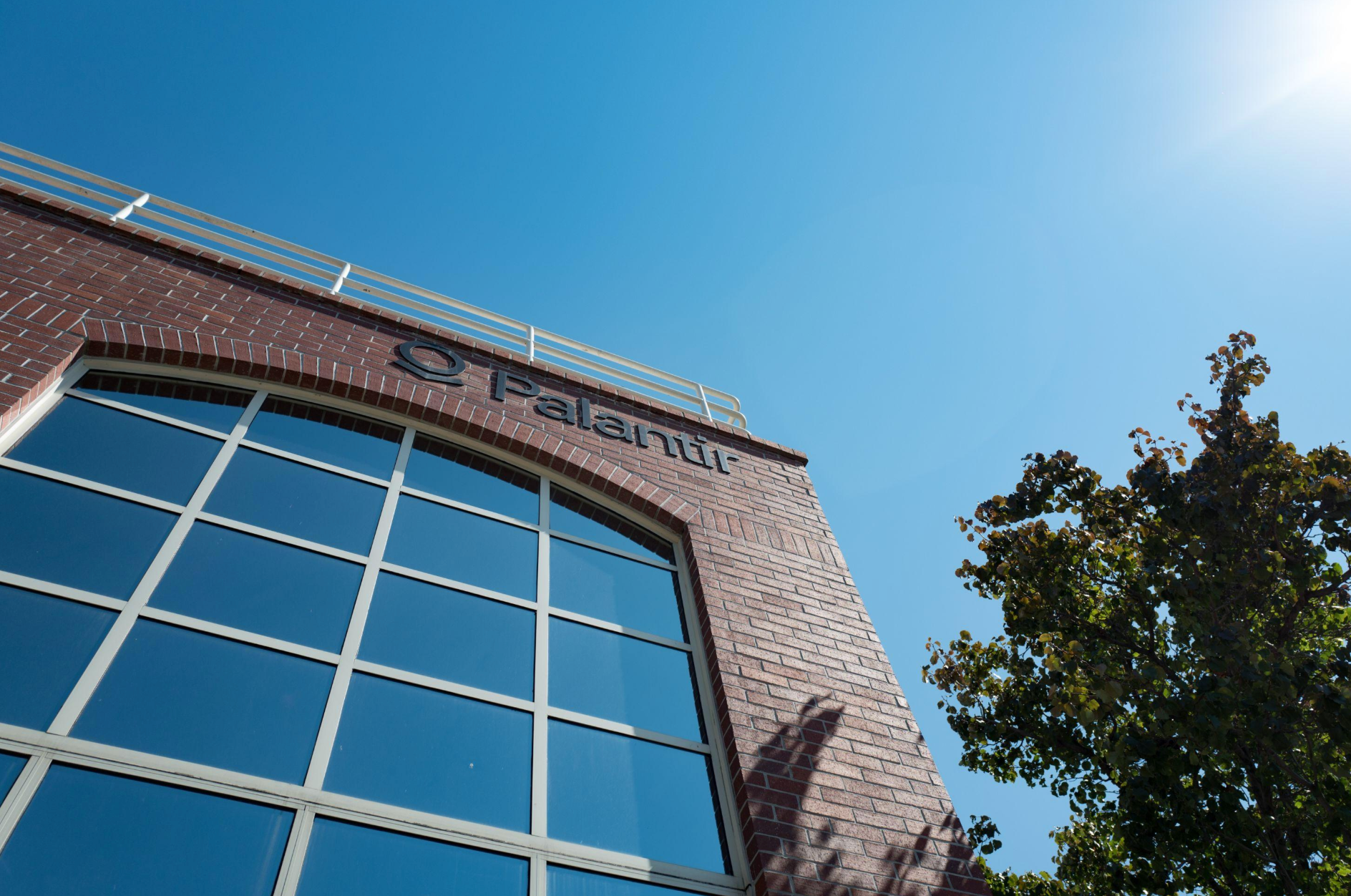
PLTR Surges 16% Pre-Market; S&P Eyes All-Time High
Palantir jumps 16% pre-market on raised guidance as S&P 500 futures hit 7,644 — within striking distance of a record after Monday's Iran-fueled rally.
Key Points
- Palantir jumped 16% in pre-market trading after raising full-year forecasts, leading a broad tech surge that pushed S&P 500 futures to 7,644.
- Monday's 1.48% S&P 500 gain was catalyzed by a 7% single-session WTI crude collapse after President Trump canceled planned Iran strikes to restart negotiations.
- Traders should watch AMD's Q2 earnings report Tuesday for confirmation that AI semiconductor demand is sustaining the rally — and for any signal that could push the S&P through its all-time high.
S&P 500 futures are sitting at 7,644.25 Tuesday morning, up 0.18% and within arm's reach of an all-time high, as Palantir's 16% pre-market explosion on raised guidance puts fresh fuel behind a tech sector that just posted its best single session in months. The setup is as clean as it gets: oil is down hard, the VIX is at 15.75, and the market is pricing in a world where the Fed holds, inflation cools, and AI demand doesn't flinch.
The Catalyst Nobody Saw Coming at Dawn Monday
The session that built Tuesday's launchpad started with a geopolitical surprise, not an earnings beat. President Trump's decision to cancel planned strikes on Iran and pursue renewed negotiations sent WTI September futures down more than 7% to $78.59 a barrel — a single-day move that ripped the inflation risk premium out of the market in real time. Brent October futures fell nearly 6% to $83.03. For context, WTI had been trading at $88.58 as recently as July 24, meaning the round-trip from geopolitical fear to diplomatic relief erased weeks of energy-market anxiety in a matter of hours.
The downstream math was immediate. Lower crude directly compresses transportation costs, input costs for manufacturers, and headline CPI pressure — all of which matter enormously in an environment where year-over-year CPI is still running at 3.5% against a Fed funds rate of 3.63%. The market's read: less oil pressure means less urgency for the Fed to tighten, which extends the current hold and keeps the yield curve — 10-year at 4.75%, 2-year at 4.28% — from inverting further in ways that would spook credit markets. The Dow closed at 53,178, up 693 points or 1.32%. Boeing led the index with a 7.93% gain, followed by Microsoft at +4.90% and Amazon at +4.64%.
Amazon's move was not incidental. The company surpassed a $3 trillion market capitalization for the first time on Monday, joining an extraordinarily thin club. Meta, Nvidia, Alphabet, and Microsoft all posted strong gains in the same session, making Monday's rally broad-based rather than a rotation into one crowded trade. That breadth is what gives Tuesday's continuation setup credibility.
Palantir's Print and What It Signals for AI Infrastructure
Palantir's 16% pre-market surge is the loudest single-stock signal on the tape this morning, and it is not just about Palantir. When a company whose entire revenue thesis is built on government and enterprise AI deployment raises its full-year forecasts, it tells you that AI spending hasn't hit a wall — it's accelerating on the demand side even as the Fed keeps rates restrictive. That's the message traders need to internalize before the open.
ON Semiconductor's 8% pre-market jump to $86.50, attributed to strong quarterly earnings driven by steady AI demand, reinforces the same read. ON filed its 10-Q on August 3, covering the quarter ended July 3, 2026. Two separate companies — one in data analytics, one in power semiconductors — reporting AI-linked demand strength in the same pre-market window is not a coincidence. It is a data point about the cycle.
The broader pre-market tape also shows Alibaba up 4% after unveiling its Qwen3.8-Max AI model, described as among the most capable in the company's portfolio. The AI narrative is now global and multi-front — US infrastructure players, Chinese model builders, and European industrial names all moving on AI-adjacent news in the same session. ArcelorMittal, the steel giant, rose more than 2% on a deepened technology partnership with Microsoft, illustrating how far the AI spending wave has propagated beyond pure-play tech.
The pharmaceutical side of the tape offered its own volatility. AstraZeneca fell more than 4% while Bristol-Myers Squibb jumped more than 5% after the Financial Times reported merger talks between the two. That kind of 9-point spread between counterparties in a reported deal is a trader's market, not an investor's — and it's happening in the background while the AI trade dominates the headline flow.
What Traders Watch Next — Levels, Events, Dates
AMD reports Tuesday, and its results carry weight that extends well beyond a single ticker. As the primary competitive foil to Nvidia in AI accelerator chips, AMD's Q2 print will either validate or complicate the narrative that Palantir and ON Semiconductor are building this morning. Consensus expectations and semiconductor demand commentary from AMD's management will be parsed for any sign of order-book softness, inventory build, or customer pushback on pricing. A beat with strong guidance could push the S&P through its all-time high before Friday. A miss, or cautious forward language, would test how much of Monday's gain was fundamental versus sentiment-driven.
Monday's equity surge also sets up a tactical question around the VIX. At 15.75, the fear gauge has collapsed from its March 2026 peak of 31.05 — a level reached when Iran tensions were at their worst and WTI was spiking. The current sub-16 reading means the options market is pricing in smooth sailing, which is fine until it isn't. The VIX doesn't give much warning before a spike; it just goes. A CPI print above 3.7%, a surprise NFP number, or any reversal in Iran diplomacy could push the index back toward 22–25 inside a week.
Caterpillar and McDonald's both report before Tuesday's open, with CAT consensus at $6.20 EPS on $19.2 billion in revenue and MCD expecting $7.13 billion in revenue against $6.84 billion a year ago. Both are proxies for different parts of the real economy — global infrastructure and construction spending for CAT, consumer discretionary resilience for MCD. June factory orders and international trade data also drop today, and with unemployment at 4.2% and core CPI at 2.6%, any softening in factory orders would immediately feed the "soft landing complete" narrative and give the S&P another push. The number to keep on your screen: 7,644 on the futures, and the all-time high just above it. That's Tuesday's tape in one level.
The Weekly Investor
Daily market analysis for active traders. Free.