OpenAI DevDay 2026: Agents API Targets SaaS
OpenAI's DevDay Tuesday unveils an Agents API and cybersecurity models — a direct assault on traditional SaaS. Here's what it means for enterprise software stocks.
Key Points
- OpenAI's DevDay Tuesday in San Francisco is expected to unveil over ten product updates, including an Agents API and Managed Agents that directly challenge the business model of legacy SaaS providers.
- The launch of cybersecurity-dedicated models for automated vulnerability management puts OpenAI in direct competition with CrowdStrike, Palo Alto Networks, and the broader enterprise security software sector.
- With GPT-6 Sol and Luna already in late-September release and Meta's Muse AI applying competitive pressure, Tuesday's event will reveal whether OpenAI can convert model leadership into durable developer platform lock-in.
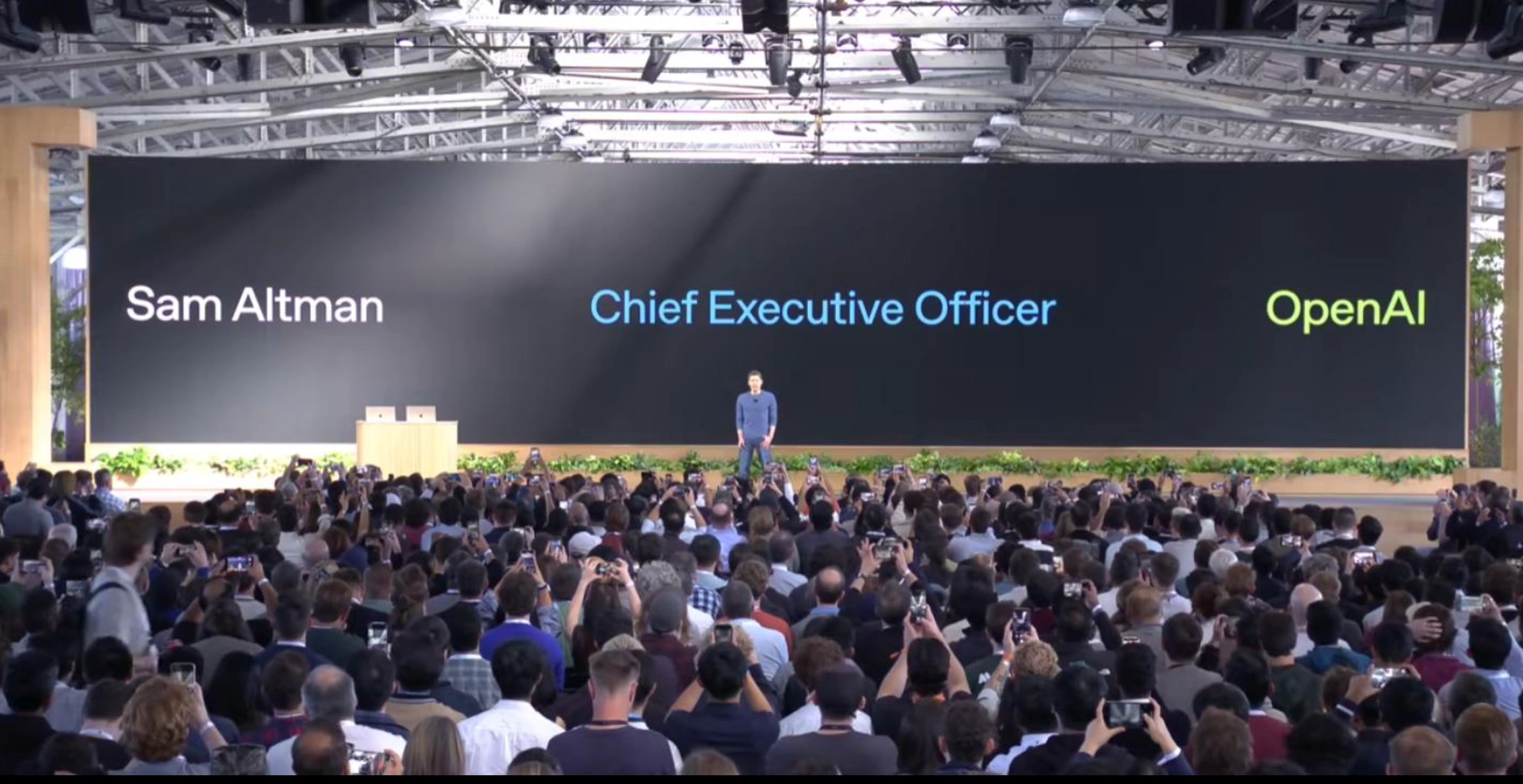
OpenAI's DevDay kicks off Tuesday in San Francisco with over ten product updates expected — and the most consequential of them isn't another language model. It's the Agents API. If the rollout lands as telegraphed, OpenAI will have moved from a model vendor to a platform layer sitting directly beneath the enterprise software stack, cutting into the recurring revenue that has underpinned SaaS multiples for the past decade. That's not a distant threat. For traders holding enterprise software names, Tuesday is a date worth clearing the calendar for.
The Agents API Is the Actual Story
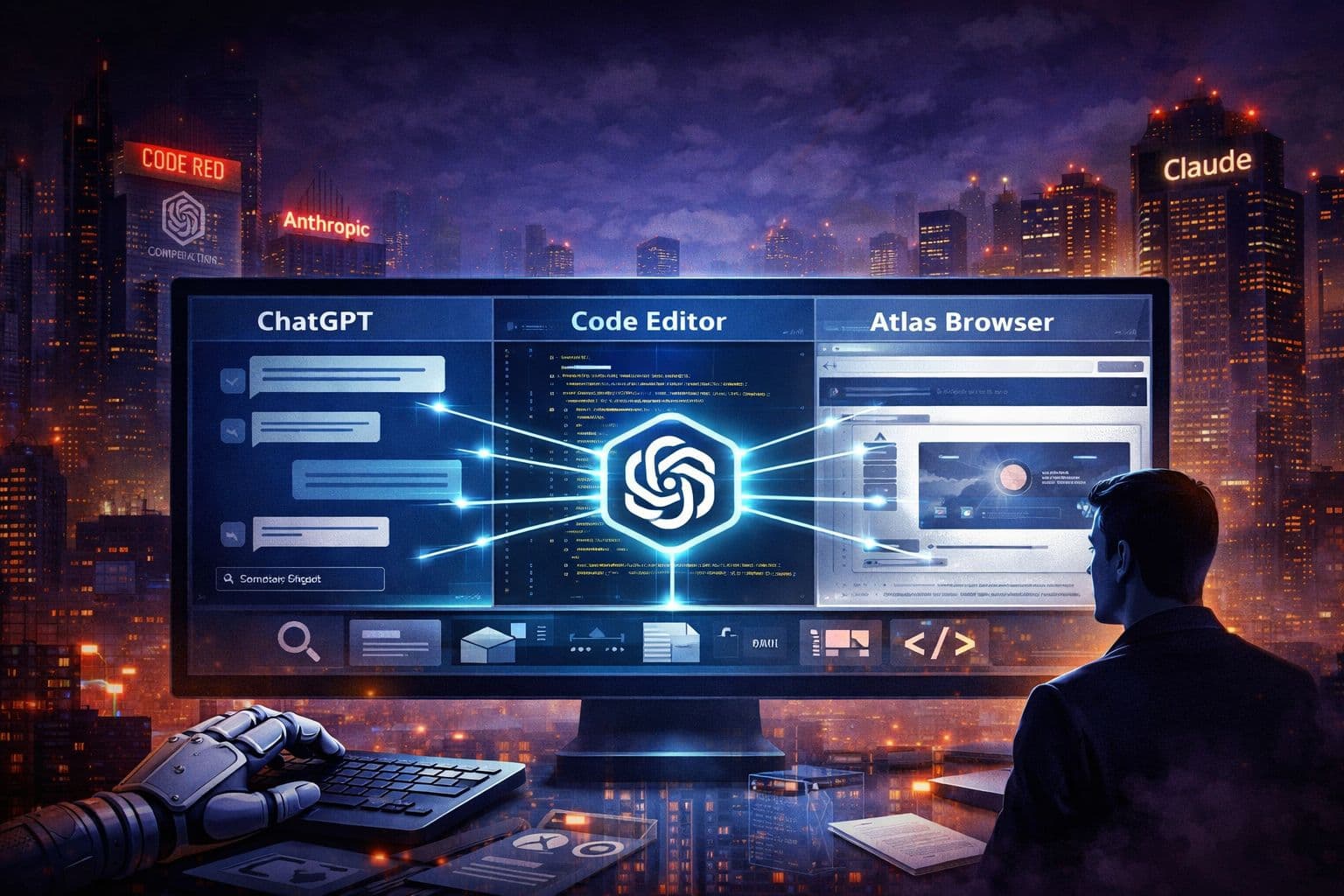
The framing around OpenAI DevDay tends to center on model capabilities — benchmark scores, context windows, multimodal performance. Tuesday's event matters for a different reason entirely. The Agents API and the Managed Agents product represent OpenAI's first serious attempt to own workflow automation at the infrastructure level, rather than simply providing the intelligence layer that other platforms orchestrate. The distinction is critical. A model API call is a commodity transaction — developers route to whatever model gives the best price-to-performance ratio that week. An Agents API that manages state, memory, tool-calling, and multi-step task execution across an enterprise environment is a platform. Platforms create switching costs. Switching costs create multiples.
The SaaS disruption thesis here is not theoretical. The specific verticals most exposed are workflow automation, low-code development, customer support software, and IT service management — categories where the underlying value proposition is "software that executes multi-step processes on your behalf." If an AI agent can execute those processes directly through a developer-accessible API, the middleware layer represented by companies like ServiceNow, Salesforce, and Zendesk faces structural margin pressure. That pressure doesn't materialize overnight, but DevDay is the moment OpenAI puts a commercial product behind the thesis that has been discussed in analyst notes for two years. The market will start repricing that risk Tuesday afternoon.
The cybersecurity component deserves equal attention. OpenAI is expected to unveil models dedicated to automated vulnerability management — a market currently dominated by CrowdStrike, Palo Alto Networks, and SentinelOne. These aren't chatbots being repurposed for security use cases. They are purpose-built models trained on threat intelligence, CVE data, and attack surface analysis, designed to automate the identification and remediation of vulnerabilities at machine speed. CrowdStrike's Falcon platform and Palo Alto's Cortex product line have both leaned aggressively into AI-native security architectures, but an OpenAI model entering the space with GPT-6 class capabilities resets the competitive baseline for the entire sector.
The Frontier Crowding Problem OpenAI Needs to Solve
DevDay is also happening against a backdrop that makes OpenAI's strategic position more complicated than its public profile suggests. September alone has seen five frontier model launches in ten days: Claude Fable 5.1, GPT-6 Astra, Gemini 3.8 Flash, Meta's Muse Spark 1.3, and DeepSeek V4.1-Flash. The late-September wave added Claude Opus 5.5, OpenAI's own GPT-6 Sol and Luna, Grok 4.7, and Cohere Command A+. That's not a market with one dominant provider — that's a market undergoing rapid commoditization at the model layer, with nine or ten credible frontier offerings competing for developer mindshare simultaneously.
OpenAI's answer to that commoditization problem is exactly what DevDay is meant to demonstrate: the Agents API and Managed Agents are an attempt to move the competition upstream, from "which model is best at the benchmark" to "which platform is most deeply embedded in enterprise workflows." Meta's Muse AI is the most direct competitive threat on Tuesday's agenda — Meta has the distribution, the open-source credibility with enterprise developers, and the capital to sustain a prolonged platform war. OpenAI's advantage is its first-mover depth in enterprise sales relationships and its existing developer ecosystem, which has been cultivated since the GPT-3 API launch in 2020.
Mistral's closed €3 billion Series D at a post-money valuation above €21 billion, announced this month, is another data point in the same story. Mistral has now secured sufficient capital to compete at the frontier for at least two to three more model generations, and its browser-integrated inference work — currently in Firefox beta in France — represents a distribution channel that bypasses the API-layer competition entirely. Browser-native inference is not a demo. It is a monetization and distribution strategy that could give Mistral direct access to consumer and enterprise users without routing through cloud provider marketplaces. If that model scales, it creates a new competitive axis that neither OpenAI nor Google fully controls.
What the Market Prices In After Tuesday
For publicly traded names, the DevDay fallout is most directly readable in enterprise software valuations and cybersecurity stocks. ServiceNow trades at a premium multiple specifically because the market has credited it with the most credible AI integration story in IT service management. If OpenAI's Managed Agents product demonstrates on Tuesday that agentic AI can replace a meaningful portion of the workflow orchestration that ServiceNow currently monetizes, that premium multiple faces a compression argument. The same logic applies to Salesforce's Agentforce product line — which the company has positioned as its primary AI monetization vehicle — if OpenAI's Agents API offers developers a more flexible, lower-cost alternative at the infrastructure level.
CrowdStrike and Palo Alto are the cybersecurity names to watch specifically on Tuesday afternoon. Both have been among the strongest performers in enterprise software over the past 18 months, with their AI-native security narratives driving premium valuations. An OpenAI cybersecurity model announcement does not immediately displace either company's installed base, but it introduces a credible new entrant into a market where the moat has been defined by proprietary threat intelligence data and deeply integrated endpoint agents — not by model capability alone. The key question Tuesday is whether OpenAI's cybersecurity offering is an API that sits alongside existing platforms or a vertically integrated solution that attempts to replace them. Management's positioning language will be the tell.
The regulatory overlay adds a layer of complexity to whatever OpenAI announces Tuesday. The FTC chair has already signaled deep skepticism toward AI industry coordination on safety, and the active antitrust probe into Microsoft — OpenAI's largest investor and Azure distribution partner — means that any DevDay announcement touching enterprise cloud infrastructure will be read through a regulatory lens as well as a commercial one. The Agents API, if it deepens Microsoft Azure's distribution advantage for OpenAI products, could accelerate antitrust scrutiny of the Microsoft-OpenAI commercial relationship.
The specific event sequence to monitor: OpenAI's keynote and developer session Tuesday, followed by the immediate reaction in enterprise software names at Wednesday's open. If the Agents API launch is perceived as genuinely disruptive — rather than incremental — the repricing in SaaS multiples could begin before Micron even reports Wednesday night, creating a two-catalyst Wednesday that traders need to sequence carefully. The $1,082 level in MU and whatever Tuesday's close prints in CrowdStrike, Palo Alto, and ServiceNow will together define whether the AI infrastructure trade broadens or consolidates heading into October.
The Weekly Investor
Daily market analysis for active traders. Free.