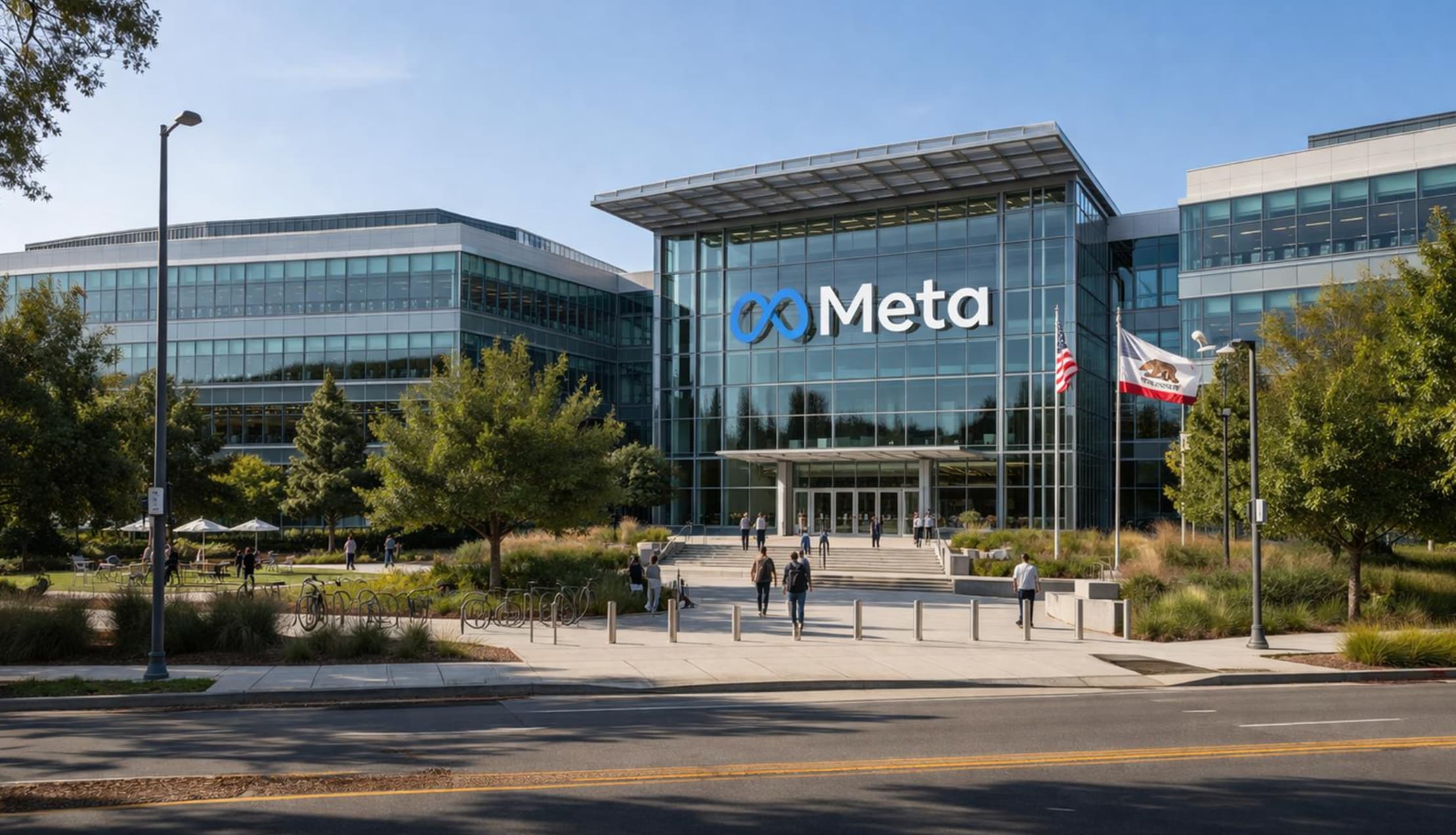
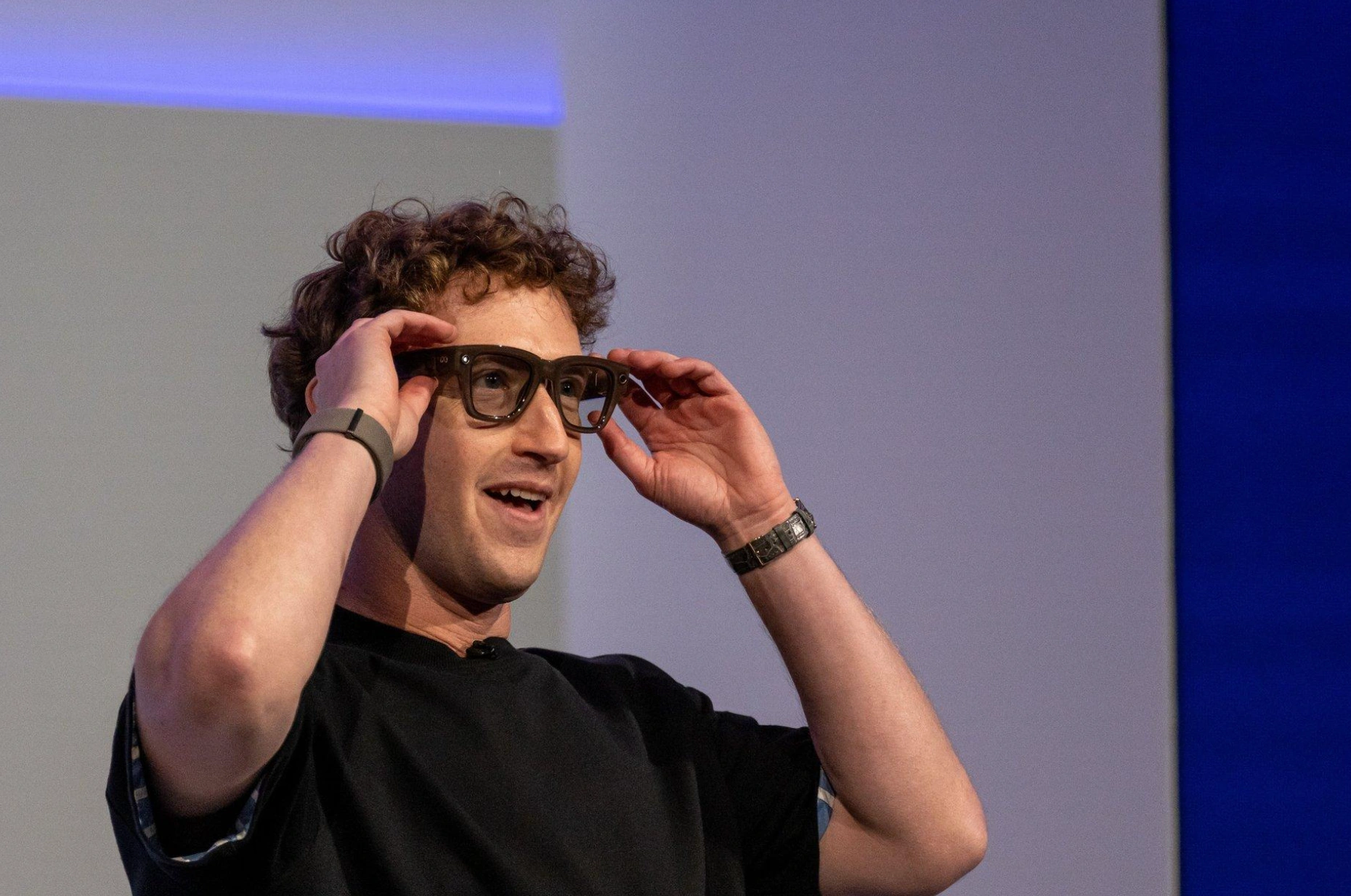
Meta Connect 2026 Live: AI Agents, Commerce War
Meta Connect 2026 opens today as Amazon blocks Muse AI agent from its platform — the agentic commerce turf war is live and escalating for META traders.
Key Points
- Meta shares surged more than 8% to their highest level since February ahead of Connect 2026, which opens today, with the stock already up over 11% in the lead-up to the event.
- Amazon has blocked Meta's Muse AI agent from completing purchases on Amazon.com, accusing it of concealing its identity and retaining customer credentials — escalating a live turf war over who controls the agentic commerce layer.
- The specific catalysts to watch at Connect 2026 are hard AI glasses specs, Muse agent integration details, and pricing on next-generation headsets — any one of which could extend or reverse the pre-event run.
Meta Platforms shares have already moved more than 11% into today's Connect 2026 event — including a single-session surge of over 8% to their highest level since February — and the conference hasn't delivered a single hardware spec yet. That pre-positioning tells you exactly how much is riding on what CEO Mark Zuckerberg puts on stage in the next 48 hours, and the stakes just got materially higher: Amazon moved to block Meta's Muse AI agent from completing purchases on Amazon.com days after launch, and the fight over who controls the agentic commerce layer is now fully open.
What Connect 2026 Actually Is Now
Meta's annual Connect event has undergone a structural identity shift that the market has been slow to fully price. When Connect launched, it was a VR hardware conference — the venue where Meta showed off new Quest headsets and staked its metaverse thesis on consumer adoption of virtual reality. In 2026, Connect is something different: it is Meta's annual declaration of where it intends to compete across AI, augmented reality, smart glasses, and the intersection of all three. The metaverse framing hasn't disappeared, but it has been subordinated to a broader platform ambition that is far more commercially credible to institutional investors than anything Meta showed between 2021 and 2023.
The hardware cadence matters here specifically because Meta's Ray-Ban smart glasses line has outperformed every other product Meta has launched in the last five years by the only metric that matters in consumer hardware: people are actually buying and wearing them. That commercial traction gives Meta a distribution advantage for AI features that no other company — not Apple, not Google, not Amazon — has managed to replicate in a wearable form factor at scale. What traders need from today's stage is hard specs: field of view numbers, battery life, processing capability, camera resolution, and critically, whether Muse agent integration is native to the next glasses generation or a software overlay on existing hardware. The distinction is not cosmetic — native integration signals a full platform play, while a software overlay signals a feature addition.
Next-generation headset pricing is the second major watch item. Meta has shown a consistent willingness to price hardware at or near cost to drive ecosystem adoption, and any pricing announcement for a next-gen mixed-reality device will be measured against Apple Vision Pro's $3,499 entry point. If Meta comes in below $1,000 — which its hardware cost trajectory makes plausible — it creates a genuine volume opportunity that Apple's price point structurally forecloses.
The Muse Confrontation Changes the Stakes
The Amazon-Muse confrontation is not a sideshow to Connect 2026 — it is the most commercially significant development Meta has generated in years, and it arrived before Zuckerberg took the stage. Within days of Muse's public launch, Amazon moved to block the agent from completing purchases on Amazon.com, citing allegations that Muse was concealing its identity as an automated agent and retaining customer credentials without authorization. Amazon's response was immediate and aggressive, which is itself a signal: you don't move to block a product that isn't threatening something you care about deeply.
What Amazon cares about is the checkout layer. Amazon's entire retail and advertising business model depends on controlling the moment of purchase — the search, the product display, the sponsored placement, and the transaction itself. If AI agents like Muse become the dominant interface through which consumers discover and buy products, the entire architecture of Amazon's revenue model is at risk. An AI agent that surfaces products, compares prices, and completes purchases on a user's behalf does not need to see Amazon's sponsored listings, does not click on display ads, and does not generate the behavioral data that Amazon monetizes across its advertising business. Amazon's ad revenue crossed $50 billion annually and is one of its highest-margin businesses — that is what is actually at stake in this block.
Meta's Muse agent launch triggered a read-through that extended well beyond META shares. ARM Holdings and Intel both rose 10% on September 21 as the market recognized that AI agents running persistent, always-on commerce and productivity tasks represent a step-change in server CPU demand. If Muse and its successors operate at the scale Meta is targeting, the inference compute load is distributed across Meta's data centers continuously — which is a structurally different demand profile than batch AI workloads. That is why ARM and Intel moved on a Meta software announcement, and it is why the broader chip rally on September 18 — SOXX up 3.4%, Arm up 8.6%, Intel up 7.7% — looks less like a one-day event and more like the market beginning to price a sustained agentic compute cycle.
The Level and the Event Risk
For traders holding META into Connect 2026, the framework is straightforward: the stock has already priced in a strong event. An 11% pre-event run means the bar for a continued rally is high — Zuckerberg needs to deliver hard specs on AI glasses, a credible Muse integration roadmap, and hardware pricing that signals volume ambition rather than margin preservation. Hit all three and the stock has room to extend through the week. Miss on any one of them — particularly if AI glasses specs disappoint or Muse's commerce capability is shown to be more limited than the pre-launch narrative suggested — and a 5% to 7% post-event giveback is the base case. That is the asymmetry traders need to manage going into tomorrow's second day of Connect.
The longer-duration trade is the Muse-Amazon confrontation, which will not be resolved at a conference. This will move through legal channels, potentially regulatory ones, and ultimately through consumer adoption — whether users trust AI agents to manage their purchasing behavior at scale. If the answer over the next 12 to 18 months is yes, Meta has a genuine shot at inserting itself between consumers and every major e-commerce platform in a way that would represent the most significant shift in online commerce since Amazon displaced brick-and-mortar retail. That is not a trade for today, but it is the thesis that explains why META is up over 11% heading into a hardware conference. Watch for any Muse-specific announcements today — particularly any disclosed merchant partnership or payment rail integration — as the first concrete evidence of how aggressively Meta intends to push into the commerce layer that Amazon just drew a line around.
The Weekly Investor
Daily market analysis for active traders. Free.