Newsom's AI Kill Switch Targets NVDA, AAPL, GOOGL
California's September 18 AI executive order directly names Nvidia, Apple, and Google — and puts the state on a collision course with federal AI policy.
Key Points
- California Governor Newsom signed an AI executive order on September 18 directly naming Nvidia, Apple, and Google — the most specific state-level regulatory action against named AI companies in U.S. history.
- The order puts California in direct conflict with a December 2025 federal executive order establishing a national AI policy framework, with the DOJ's AI task force already operational since January 2026.
- Traders should watch for federal preemption filings or DOJ challenge announcements, likely accelerated by Newsom's move, as the single most consequential near-term regulatory catalyst for the sector.
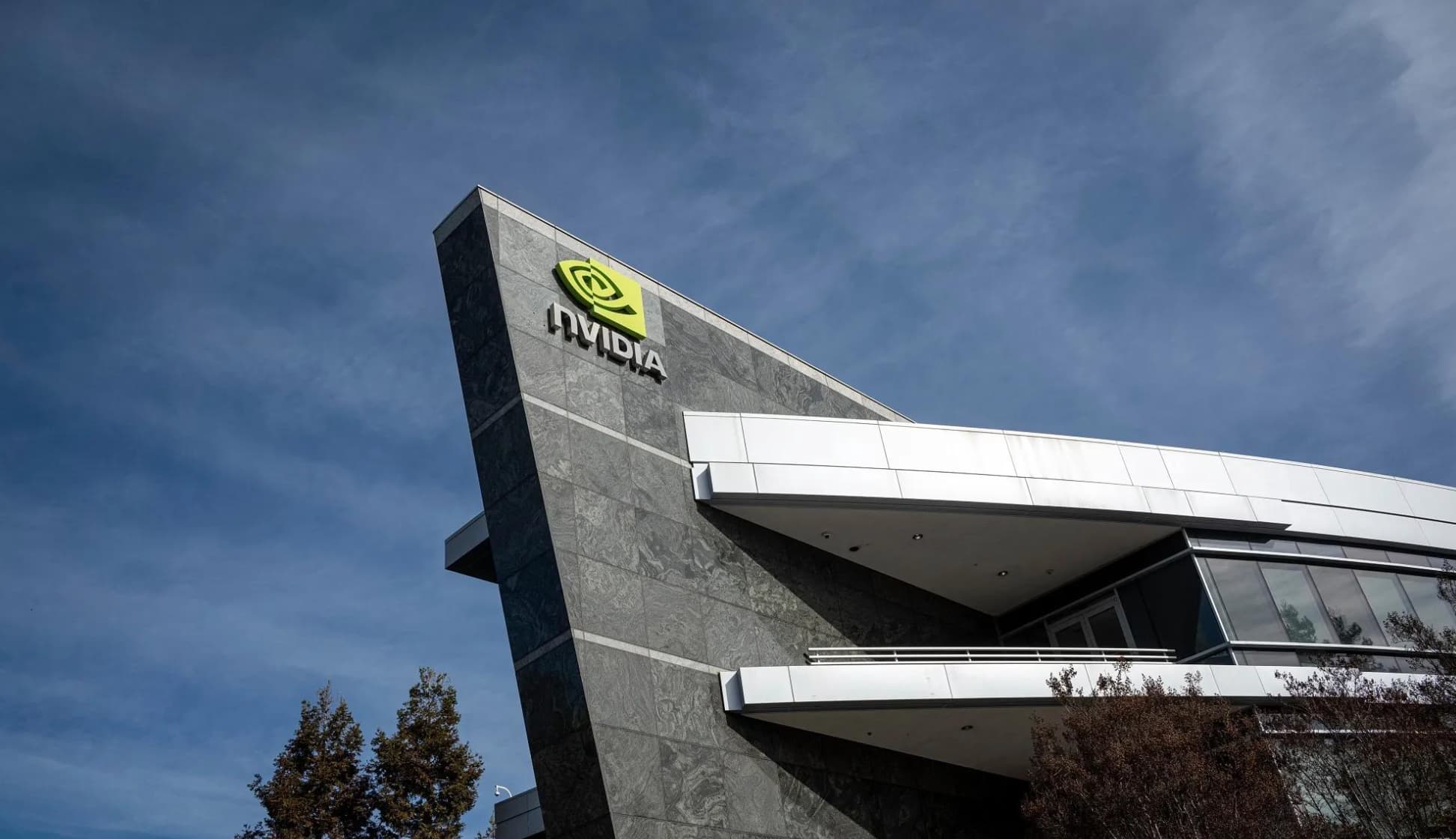
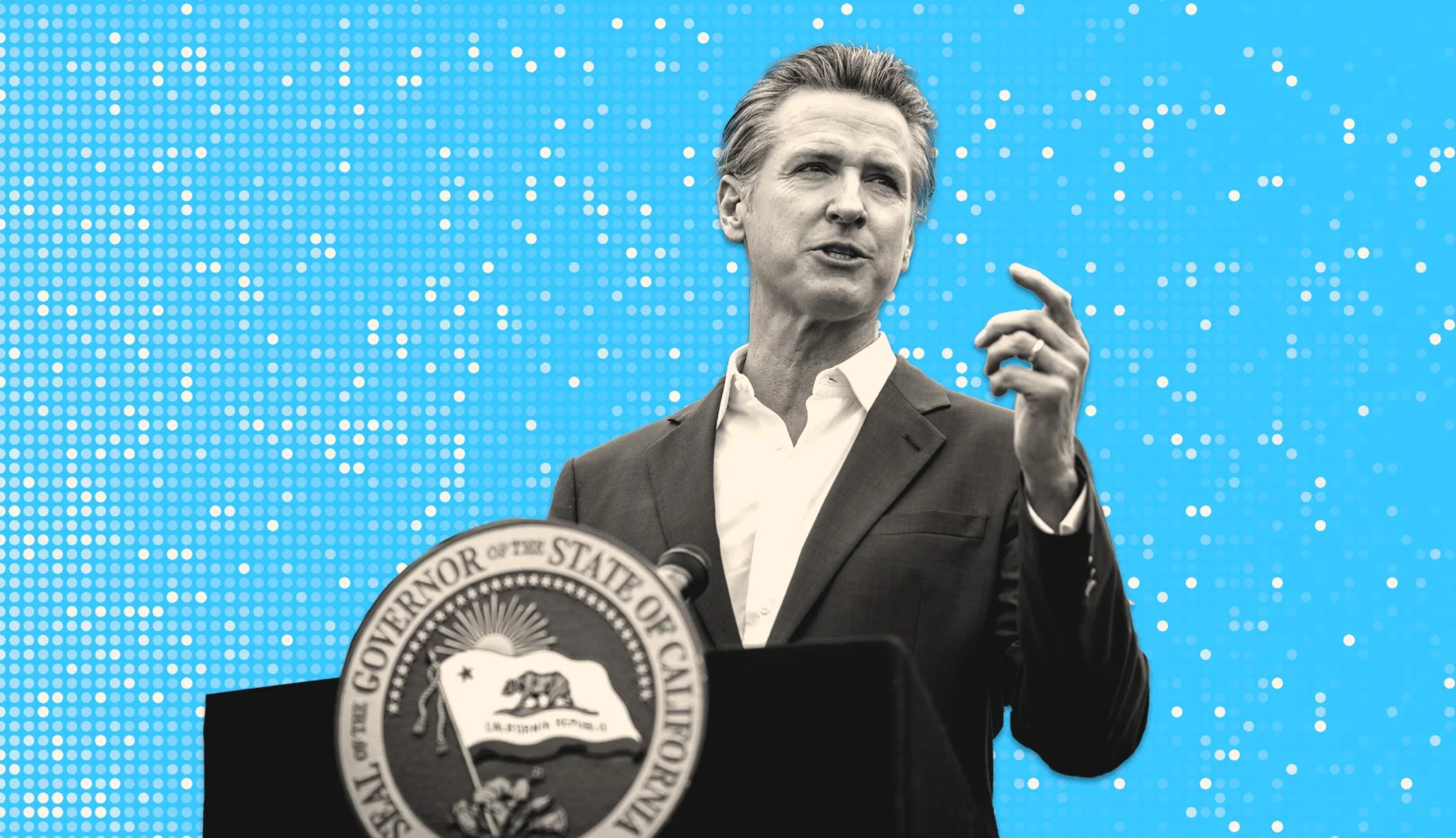
California Governor Gavin Newsom signed an executive order on September 18 that regulators, lobbyists, and tech executives are now calling an "AI kill switch" — and unlike most regulatory noise, this one names names: Nvidia, Apple, and Google are specifically flagged in a document that represents the most targeted state-level intervention in the AI industry to date. The order landed three days ago. Its aftershocks are still being mapped this Monday morning.
What the Order Actually Does
The specifics of Newsom's order matter more than the branding. Calling it a "kill switch" generates headlines, but the operative mechanism is a set of mandated controls and compliance obligations directed at companies the state has identified as systemically significant AI actors. By naming Nvidia, Apple, and Google explicitly, Sacramento is not drafting abstract guidance — it is creating a legal framework under which those three companies, and potentially others, face enforceable state obligations around AI system deployment, modification, and shutdown capability.
This is not California's first attempt to legislate AI. Newsom notably vetoed SB 1047 in 2024 — a bill that would have imposed safety requirements on large AI models — citing concerns that it would stifle innovation and disadvantage California-based companies. The reversal embedded in this September 18 order is therefore significant in its own right. The same governor who blocked a legislative AI safety bill two years ago is now using executive authority to impose what appears to be a more targeted, company-specific version of that regulatory architecture. The political logic has shifted. The economic stakes have changed. And the 2026 election cycle is not an irrelevant backdrop.
For investors, the immediate read-through is not a dramatic earnings hit — it's a litigation timeline. Compliance obligations under a state executive order don't crater quarterly revenue in the next 90 days. What they do is create legal exposure, compliance costs, and, most importantly, a new front in the federal-state conflict over who governs AI. Google closed Friday trading as a major holding in most institutional AI portfolios. Apple's AI integration across its device ecosystem — from on-device models to cloud inference — makes it directly exposed to any state control regime. Nvidia's position is more indirect but structurally important: as the dominant provider of AI compute infrastructure, any restriction on how AI systems are deployed or shut down touches Nvidia's customer base immediately.
The Federal Collision Course
The Trump administration's December 2025 executive order on AI established a national policy framework with a specific provision: federal authorities are directed to challenge state AI laws as either preempted by the FTC Act or as an unconstitutional burden on interstate commerce. That language was not passive guidance. It was a pre-authorization for the DOJ and FTC to move against states that step into AI regulation in ways inconsistent with federal priorities. Newsom's September 18 order is precisely the kind of state action that framework was designed to neutralize.
The DOJ's AI task force has been operational since January 2026, created specifically to pursue litigation against state AI laws. Prior to Newsom's order, the task force's public activity had been relatively limited — monitoring, assessment, preliminary case-building. The California order changes the calculus. A governor of the largest state economy in the country, explicitly targeting three of the highest-profile AI companies in the world, is not a soft target. It is a defining test case for whether federal AI preemption authority is real or theoretical. The DOJ's response — its speed, its legal theory, the specific grounds it chooses — will set precedent that shapes every subsequent state-level AI law for years.
Traders positioned in GOOGL, AAPL, or NVDA need to model this not as a binary pass/fail regulatory event but as a multi-year legal process with periodic catalysts. The first catalyst is the DOJ's response timeline. If the task force files a preemption challenge within 60 days — by mid-November 2026 — the market will likely read it as a federal backstop for the named companies, a short-term positive for the stocks. If the federal response is slow or ambiguous, California's order gains practical force, and compliance costs become real. The FTC's advancing probe into Microsoft's cloud and AI businesses adds a separate vector — federal antitrust scrutiny is expanding even as federal regulators prepare to block state oversight, a contradiction that reflects the genuine ideological incoherence of the current regulatory moment.
What Traders Watch Next
The Microsoft situation is instructive context. The Trump administration's FTC has advanced a broad antitrust probe into Microsoft covering cloud, AI, and software businesses — a probe initiated under Biden and continued with apparent vigor under the current administration. That continuity suggests federal antitrust interest in AI concentration is real and bipartisan at the agency level, even if the political framing differs. For traders holding positions across the AI stack, the regulatory picture is not simply "federal good, state bad" — it is a multi-front pressure environment where the specific legal theory and targeted company matters more than the headline.
Leadership instability at the DOJ Antitrust Division compounds the uncertainty. Assistant Attorney General Gail Slater departed on February 12, 2026 — less than a year into the role — following the earlier exit of a senior deputy amid reported friction with the administration over handling of specific matters. For any pending M&A transaction in the AI space, including Nvidia's Hugging Face deal, that leadership vacuum is a live risk variable. Deals that would have received predictable treatment under a stable antitrust leadership team now face review timelines and outcome probabilities that are harder to model.
The Amazon "Nessie" algorithm case — currently active in district court following a ruling in April 2025 allowing the FTC and multi-state suit to proceed — is the closest parallel to the kind of conduct-based AI regulation that Newsom's order implies. Amazon allegedly ran an algorithm that raised prices when it predicted rivals would match the increase, generating hundreds of millions of dollars in additional profit annually. The legal theory in that case, if it survives to verdict, would provide a template for how state and federal regulators construct conduct-based AI liability — not just for e-commerce pricing, but for any algorithmic system that can be characterized as market-distorting.
The specific event to watch this week is any statement from the DOJ, the FTC, or the White House responding directly to Newsom's September 18 order. That response — or the absence of one — will be the most important regulatory signal for the AI sector before the end of September. GOOGL at current levels, AAPL's AI-integrated device ecosystem, and NVDA's $12.9B Hugging Face deal all carry different but interconnected exposure to how this federal-state standoff resolves. The $189.45 level on NVDA, the 1.16% gain holding through Monday's session, reflects the market's current assumption that federal preemption prevails. That assumption is reasonable. It is not guaranteed.
The Weekly Investor
Daily market analysis for active traders. Free.