AMD Surges, NVDA's $250B OpenAI Bet: AI Trade Resets
AMD jumps 3% on AI accelerator outlook while Nvidia eyes a $250B OpenAI computing guarantee. Here's what the AI trade looks like heading into Big Tech earnings.
Key Points
- AMD is up 3.03% in premarket after last week's Analyst Day projected the AI accelerator market hitting $1.4 trillion by 2030, with anchor partnerships at both Anthropic and OpenAI confirmed.
- Nvidia is separately reported to be in talks to guarantee approximately $250 billion to help OpenAI lease computing from a SoftBank-developed data center, an AI infrastructure commitment of historic scale.
- With megacap tech earnings dominating this week's calendar, the market's ability to digest enormous AI capital expenditure commitments — not just revenue beats — is the defining risk factor for the sector.
AMD is up 3.03% in premarket trading this Monday, and the number that's driving it is $1.4 trillion. That's the AI accelerator market size AMD's management projected by 2030 at last week's Analyst Day — and with Anthropic and OpenAI partnerships announced alongside new data-center products, the company has handed analysts a credible long-duration bull case right as the sector is being stress-tested. Simultaneously, Nvidia is reported to be in talks to guarantee roughly $250 billion to help OpenAI lease computing from a SoftBank-developed data center, a capital commitment so large it reframes what "AI infrastructure spending" even means.
AMD's Analyst Day Changes the Math
AMD's Analyst Day last week was not a typical management roadshow. The $1.4 trillion total addressable market projection for AI accelerators by 2030 gave sell-side desks a new top-line framework to work with, and the Anthropic and OpenAI partnership announcements are not vague memoranda of understanding — they represent customer concentration at the hyperscaler level that directly validates AMD's multi-year capex thesis. The premarket move of 3.03% is modest given the magnitude of the announcements, which suggests either that last week's initial reaction already priced the best-case reading, or that the broader market's caution about AI spending is keeping a lid on the multiple.
That caution is real and measurable. Deutsche Bank's Parag Thatte flagged that discretionary investors have cut equity exposure to the 17th percentile of historical range — a level matching early April's lows — specifically because AI capex anxiety is overshadowing what is, by conventional metrics, a strong earnings season. The market's concern isn't that AI spending is happening; it's that the rate of spending is accelerating faster than the revenue payoff can justify to investors in the near term. AMD's job this earnings cycle is to demonstrate that its data center segment is taking share from Nvidia in a market growing fast enough for both to win, while keeping its own operating leverage intact. The company's 10-Q filed July 24 will give analysts the granular segment data to test that thesis against management's bullish projections.
Microchip Technology's 2.24% premarket gain on its signed agreement to acquire Hailo adds another M&A data point to a semiconductor sector that is consolidating rapidly around AI-adjacent architectures. Hailo specializes in edge AI inference chips — the kind of processing that sits inside devices rather than in centralized data centers — which gives Microchip a foothold in the distributed AI compute market that is still nascent but strategically critical. The deal signals that the AI infrastructure buildout is moving downstream from hyperscale clusters into edge deployments, a trend that will accelerate as latency and data-privacy requirements make centralized processing impractical for certain applications.
The Nvidia-OpenAI Deal's Scale Is Unprecedented
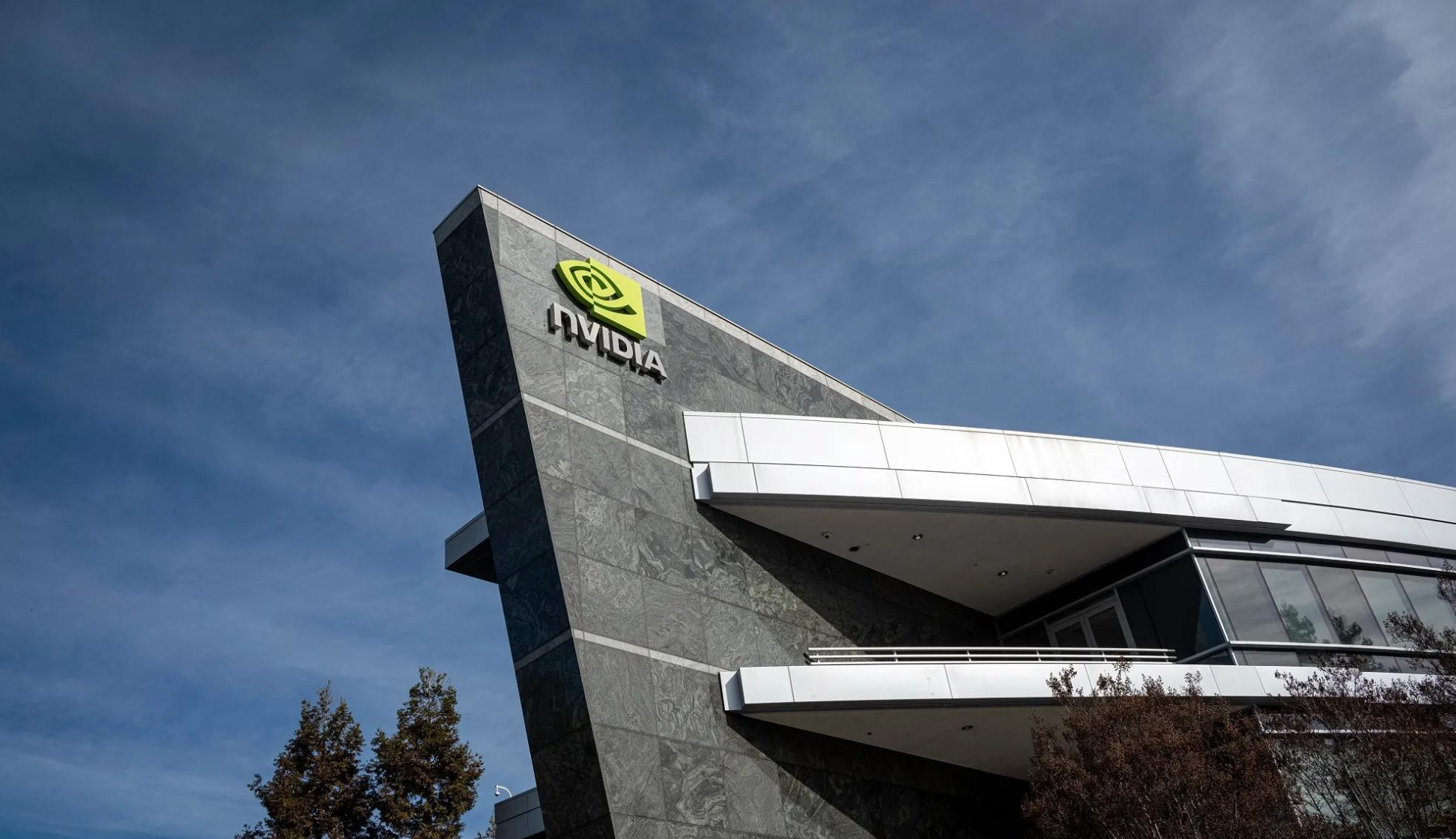
The reported Nvidia guarantee of approximately $250 billion to support OpenAI's computing lease from a SoftBank-developed data center is not a product announcement — it is a structural commitment that would make Nvidia a financial backstop for the largest AI model developer in the world. To put the number in context: $250 billion exceeds the entire annual revenue of every company in the Philadelphia Semiconductor Index combined. If the deal closes as reported, it cements a Nvidia-SoftBank-OpenAI axis at the center of AI infrastructure that would have profound competitive implications for every other player in the ecosystem, from AMD to custom silicon developers at Google and Amazon.
The market's immediate reaction to this news is complicated by the AI capex overhang problem. Investors have been rewarding AI revenue and punishing AI spending — a dynamic that played out sharply last week when the Nasdaq fell 2.1% over five sessions despite earnings beats across multiple technology names. Nvidia's $250 billion guarantee, if confirmed, is simultaneously the most powerful validation of the AI infrastructure supercycle and a potential liability that will raise questions about balance sheet risk and return on committed capital. The stock is not yet publicly moving on a confirmed deal announcement, but Nvidia's role in Amkor Technology's surge last week provides a useful precedent: Amkor popped more than 11% after announcing a multiyear $1.5 billion agreement with Nvidia for advanced semiconductor packaging and testing technologies for AI, demonstrating that the market still rewards companies entering Nvidia's supply chain at scale.
Separately, Nvidia's reported $1 billion investment in Naver — South Korea's dominant internet company and an emerging player in large-language model development — underscores that its capital deployment strategy extends well beyond US borders. Naver has been building Korean-language AI models and cloud infrastructure, and a $1 billion Nvidia investment would effectively anchor its GPU supply chain while giving Nvidia a strategic position in one of Asia's most advanced technology ecosystems. Yahoo Finance flagged this morning that Nvidia remains the central nexus of nearly every major AI infrastructure transaction currently in motion, a position that is both its greatest competitive advantage and a concentration risk that regulators on multiple continents are watching closely.
What the Earnings Week Actually Tests
This week's megacap technology earnings parade is less a referendum on last quarter's numbers and more a live stress test of the market's tolerance for AI capital expenditure. The pattern that's emerged this season is specific: companies beat on EPS, miss on revenue by thin margins, and guide cautiously while committing to accelerating capex — and the market punishes the spending more than it rewards the beat. American Express illustrated a version of this dynamic on Friday, dipping 3% on a revenue miss of just $70 million against a $19.71 billion consensus, even as its underlying credit metrics remained healthy. MaxLinear tumbled more than 9% despite beating estimates, simply because the stock had already surged more than 400% in 2026 heading into the print — a reminder that in a momentum-driven market, the earnings event is often a sell-the-news trigger regardless of the actual result.
For the AI semiconductor trade specifically, the question heading into this week is whether the Nvidia-OpenAI-SoftBank news acts as a sector re-rating catalyst or gets absorbed as "more spending, not enough near-term revenue." The Iran ceasefire giving the broader market a risk-on open this morning is helpful — it lifts all boats and reduces the probability that macro anxiety overshadows a strong chip earnings print. But the VIX at 17.58, with term structure in contango and skew elevated at 147.28, tells you the options market is not declaring all-clear. CNBC noted that AI capex concerns are the dominant risk factor overlaying what would otherwise be a straightforward earnings-season rally.
The specific event sequence traders should map for the AI trade runs as follows: today's gap open tests whether the sector can hold intraday gains when the broader risk-on catalyst is oil-driven rather than tech-fundamental; Wednesday's Fed decision determines whether the rate environment tightens or relaxes around the spending narrative; and the individual megacap earnings prints — each carrying its own AI capex disclosure — will either confirm or crack the $1.4 trillion TAM story AMD's management put on the table last week. AMD's stock needs to defend the 3% premarket gain through Wednesday's close to signal that institutional buyers are re-engaging with the AI accelerator thesis at current levels rather than using the open as an exit. A fade back to flat by Wednesday would be a technically bearish signal for the entire sector heading into the heart of earnings week.
The Weekly Investor
Daily market analysis for active traders. Free.