Intel EMIB Lands Nvidia Interest, TSMC Fires Back
INTC surges 12% as Nvidia eyes Intel's EMIB packaging for next-gen GPUs. TSMC develops a rival approach. The advanced packaging arms race is the chip trade of 2026.
Key Points
- Intel surged 12% and TSMC gained 7% Thursday after a report that TSMC is developing an EMIB-like packaging technology while Nvidia is separately evaluating Intel's EMIB for a next-generation processor combining four graphics chips in a single package.
- Advanced packaging has become the primary production constraint across the entire AI semiconductor supply chain, making EMIB and CoWoS competitive positioning as strategically significant as process node leadership.
- AMD's earnings report next week is the immediate catalyst to watch — any commentary on advanced packaging capacity or Helios chip timelines will move the entire sector.
Intel stock jumped 12% on Thursday on a report that Nvidia is evaluating Intel's EMIB chip-packaging technology for a future processor — a potential foundry win that would be the most consequential customer acquisition in Intel Foundry's history. TSMC gained 7% in the same session after a separate report that it is developing an EMIB-like competing approach, underscoring that the real battleground in semiconductors right now is not process nodes but how chips are physically assembled at the package level.
Why Packaging Became the Constraint
The shift in competitive focus from fabrication process to advanced packaging is not accidental — it is a direct consequence of AI workload architecture. Training and inference at scale require moving enormous volumes of data between compute dies at speeds that conventional chip-to-chip interconnects cannot sustain at acceptable power budgets. Intel's Embedded Multi-die Interconnect Bridge, or EMIB, addresses this by using silicon bridges embedded in a package substrate to connect multiple chip components, enabling larger, more complex processors while improving efficiency and reducing the manufacturing cost of integrating heterogeneous chiplets into a single package.
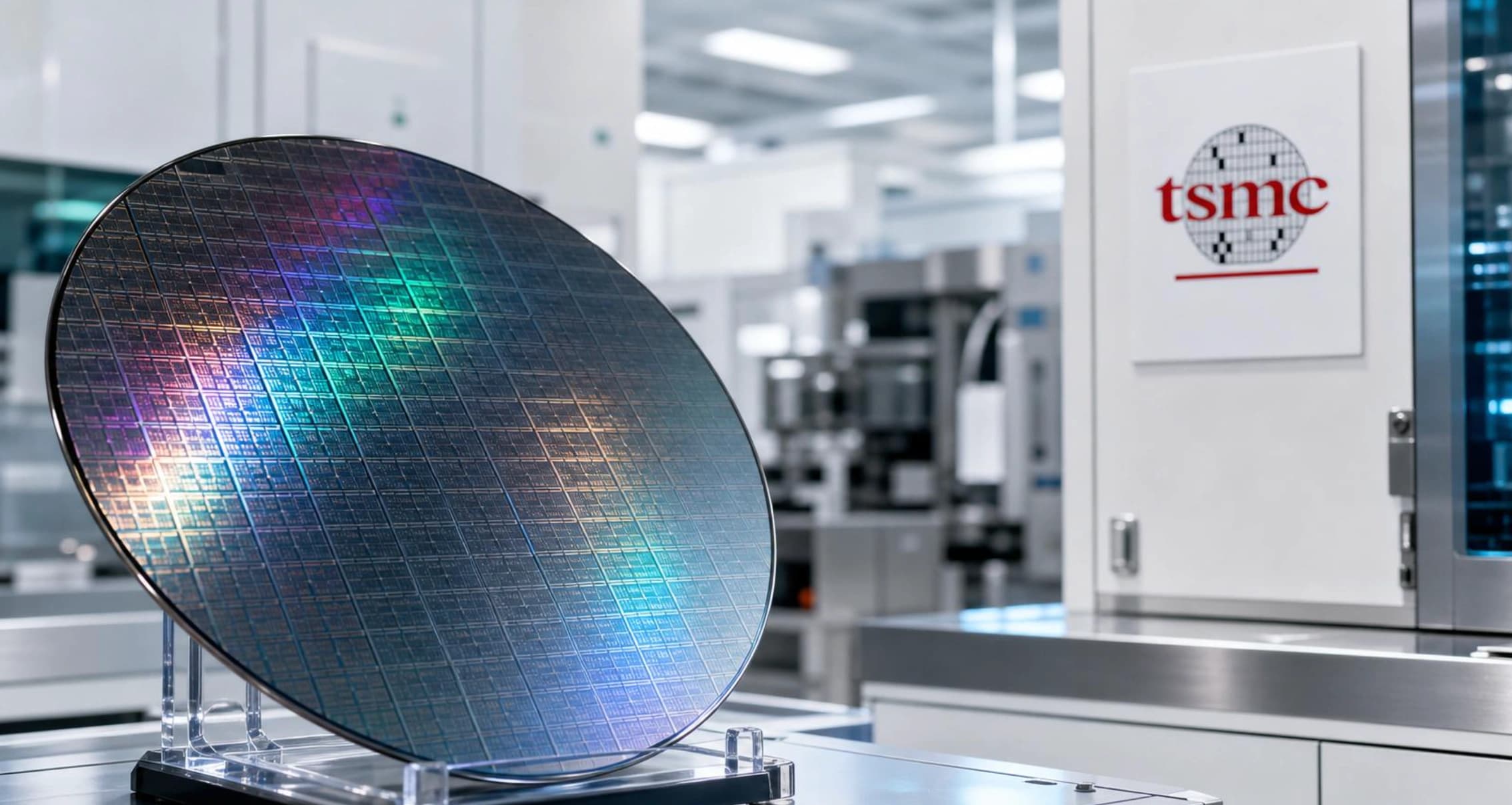
Per a report in The Information, TSMC is developing an EMIB-like packaging method in partnership with Taiwan-based Kinsus Interconnect Technology. TSMC currently deploys its CoWoS — Chip on Wafer on Substrate — process as the advanced packaging backbone for Nvidia and AMD's highest-end AI accelerators, and CoWoS capacity constraints were a cited bottleneck for Nvidia's H100 and H200 supply chains throughout 2024 and 2025. The move toward an EMIB-like alternative suggests TSMC is not satisfied with CoWoS as a long-term answer and is investing to maintain packaging leadership even as Intel attempts to use EMIB as a foundry differentiator. If TSMC launches a credible competing capability, it neutralizes the most specific technical advantage Intel Foundry has used in customer conversations — but the fact that TSMC feels compelled to develop a rival approach is itself a validation of EMIB's architecture.
The Nvidia Variable
The most tradeable element of Thursday's move in INTC is the Nvidia angle, and it needs to be treated with precision. The report indicates that Nvidia is *evaluating* Intel's EMIB for a future processor that would combine four graphics chips in a single package — it is not a confirmed design win, and there is no announced production timeline. The distinction matters because INTC's 12% single-session rally has already priced in a substantial probability of that win materializing. If Nvidia formally selects EMIB and commits to a production volume, the re-rating has a structural foundation. If the evaluation concludes in favor of TSMC's CoWoS or its forthcoming EMIB-like process, the 12% move becomes a position to exit, not hold.
Intel's 18A fabrication technology is expected to reach high-volume production in 2026, which provides the manufacturing backbone that any EMIB-based Nvidia product would need. The sequencing matters: Intel cannot credibly pitch EMIB packaging to a customer like Nvidia without a proven, high-yield production process running underneath it. The 18A milestone, if it lands on schedule, closes the loop between Intel's packaging pitch and its ability to actually deliver at volume. That is the technical dependency traders need to track alongside any further Nvidia-Intel packaging headlines.
Intel also recently announced a strategic partnership with China's Lens Technology to develop glass substrate-based advanced packaging for AI and data center chips. Glass substrates offer lower signal loss, higher density interconnects, and better thermal performance than organic substrates — and they represent the next generation of packaging architecture beyond where EMIB and CoWoS currently compete. The Lens Technology partnership positions Intel to develop IP across both the near-term EMIB generation and the longer-duration glass substrate transition simultaneously, which is a more aggressive foundry strategy than the company was executing eighteen months ago.
The Sector Setup Heading Into AMD
Deloitte's 2026 Semiconductor Industry Outlook projects global semiconductor annual sales will reach a historic peak of $975 billion this year, and advanced packaging is one of the primary capacity constraints preventing that number from being higher. That macro backdrop gives context to why both INTC and TSM moved together on Thursday rather than against each other — the market is reading the EMIB competition not as a zero-sum fight for a fixed pool of revenue, but as evidence that demand for advanced packaging is large enough to support multiple competing architectures at scale.
Nvidia currently trades at approximately 43x forward earnings and an EV/Sales multiple of 21.5x. At those multiples, any packaging development that could constrain Nvidia's ability to ship next-generation GPU configurations in volume is a material risk to estimates — and any development that accelerates packaging capacity, whether through Intel EMIB, TSMC's competing process, or glass substrates, is a demand-side catalyst for the broader semiconductor equipment and materials ecosystem. Applied Materials, Lam Research, and ASE Technology Group are all exposed to advanced packaging volume in ways that Thursday's INTC and TSM moves do not yet fully reflect.
The immediate catalyst to monitor is AMD's earnings report next week. Core Scientific's stock surged 5% after sealing a 2.5 gigawatt AMD data center deal, and Mizuho raised its AMD price target ahead of the print, citing upside from the Helios and Venice chip launches. Any commentary AMD management provides on advanced packaging capacity — specifically whether CoWoS or alternative packaging is a constraint on Helios production ramp — will either confirm or complicate the thesis that Thursday's INTC and TSM moves represent a durable re-rating of the packaging supply chain. The specific level to watch on INTC is whether it can hold above its post-earnings opening print through the AMD report: a failure to hold that level on strong AMD packaging commentary would signal the 12% move was a news-cycle trade rather than the beginning of a foundry re-rating.
The Weekly Investor
Daily market analysis for active traders. Free.