
Fed Blackout Ends July 29: What Powell Must Deliver
The Fed holds 3.50–3.75% into its July 29 FOMC decision with no dot plot, no SEP. Statement language is the only policy signal traders get.
Key Points
- The Fed enters its July 29 decision with the funds rate at 3.50–3.75% and no Summary of Economic Projections scheduled — the statement and Powell's Q&A are the sole policy signals available.
- CPI running at 3.5% year-over-year against a 2% target, combined with the 10-year Treasury at 4.67%, means the bond market is already pricing a longer hold than the Fed's June language implied.
- Traders must watch for any modification to the phrase "elevated uncertainty that owes, in part, to the conflict in the Middle East" — a softening there would be the clearest opening for a September cut signal.
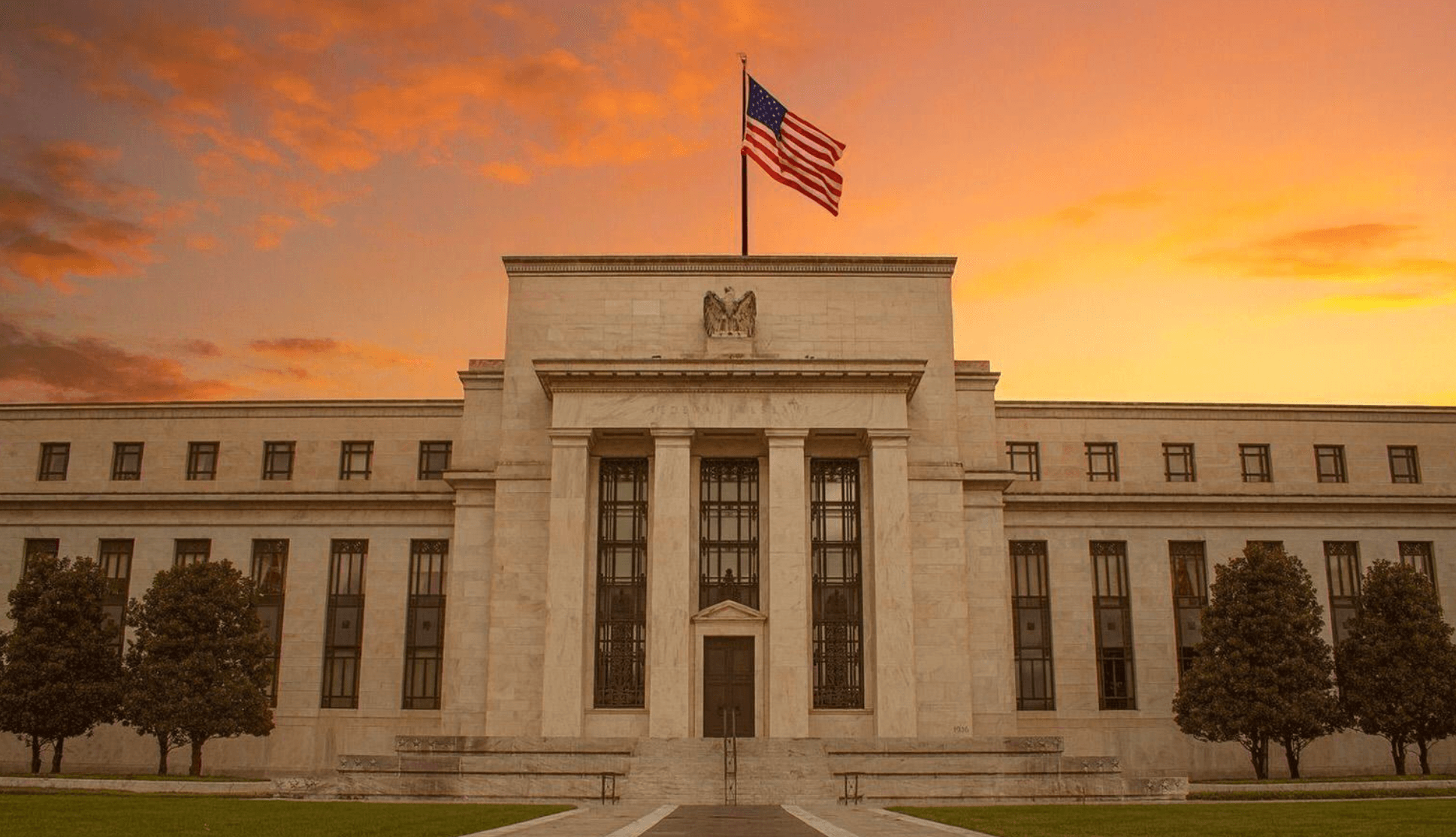
The Federal Reserve's July 29 policy decision arrives in five days with one critical structural feature that sets it apart from every other 2026 meeting: there is no dot plot. No Summary of Economic Projections. No median rate path. What Powell says from the podium at 2:30 p.m. ET — and what the two-sentence inflation characterization in the official statement reads — is the entire information set the market gets.
The Stripped-Down Meeting
Strip away the SEP and you strip away the Fed's most powerful communication tool. The four dot-plot meetings in 2026 are March, June, September, and December. July is not one of them. That means no updated projections on GDP, unemployment, or the rate path from 19 individual policymakers. What the market gets instead is a policy statement that will be dissected word-for-word and a 45-minute press conference where Powell will face direct questions about whether September is live for a cut — or whether the inflation arithmetic simply doesn't allow it yet.
The arithmetic is uncomfortable. CPI is running at 3.5% year-over-year as of June 1, against the Fed's 2% target. Core CPI is 2.6% — closer, but still above target by 60 basis points and sticky enough to preclude any urgency. The Fed funds effective rate sits at 3.63%, with SOFR at 3.62%, meaning the real policy rate — measured against headline CPI — is approximately positive 13 basis points. That is not a restrictive posture by historical standards. It is barely above neutral in real terms, which constrains the committee's ability to claim its current stance is actively fighting inflation rather than simply not adding to it.
The Bond Market's Verdict
The 10-year Treasury yield closed Wednesday at 4.67%, and the 2-year yield at 4.31%. That 36-basis-point positive spread — with the long end decisively higher — reflects a market that believes the Fed stays on hold longer than the June dot plot's median implied and that the terminal rate risk is tilted upward, not down. A normal bull-steepening, where short rates fall and long rates stay anchored, would signal that traders are confident in cuts coming. That is not what the curve is showing. The curve is steepening from the long end, which is a term premium story: bond vigilantes are demanding more compensation to hold duration in a world where Middle East energy disruption keeps headline inflation volatile.
WTI crude is at $80.77 per barrel as of July 17, and Brent at $82.93. Henry Hub natural gas is at $2.79 per MMBTU — relatively contained on the gas side, but oil is the transmission mechanism to CPI that the Fed flagged directly in the June statement. The June 17 language specifically cited "supply shocks that have driven price increases in certain sectors, including energy" as a partial explanation for why inflation remains elevated relative to target. If oil holds above $80 into the July 29 meeting, Powell has limited cover to soften the inflation characterization.
What the Statement Language Will Signal
The June 17 statement described the economy as "expanding at a solid pace despite elevated uncertainty that owes, in part, to the conflict in the Middle East." That clause — "in part, to the conflict in the Middle East" — is load-bearing. It provides the Fed with a geopolitical escape hatch: if and when the Middle East situation de-escalates, the supply-shock rationale for elevated inflation fades, and the committee can pivot toward cuts without admitting that its prior rate path was wrong. Watch whether that clause is retained, strengthened, or softened on July 29.
Today's flash PMI releases — U.S. Manufacturing and Services PMI for July, due at 11:45 a.m. ET — are the final significant data inputs the market receives before the blackout ends. S&P Global's flash PMI series has been a reliable leading indicator of the services sector, which drives roughly 70% of U.S. economic activity. A services PMI print below 50 — contraction territory — would immediately reprice the probability of a September cut higher and push the 2-year yield lower. A beat above 52 would do the opposite, reinforcing the hold-for-longer narrative and putting downward pressure on the front end of the curve. New home sales for June, due at noon ET, are a secondary input: the 30-year fixed mortgage at 6.54% has been suppressing demand, and a sequential decline in new home sales would add to the growth-slowing data points the doves on the committee will cite in deliberations.
The unemployment rate at 4.2% as of June 1 remains the committee's primary justification for not cutting aggressively. The dual mandate requires the Fed to balance price stability against maximum employment. At 4.2%, unemployment is elevated relative to the 3.4% cycle low but not deteriorating fast enough to trigger emergency action. The Fed's own longer-run neutral estimate for unemployment has historically been cited near 4.0–4.1%, meaning the labor market is slightly soft but not broken. That reading gives the committee permission to prioritize the inflation side of the mandate for at least one more meeting.
For traders positioned in rate-sensitive names — regional banks, homebuilders like D.R. Horton (DHI, which filed its 10-Q yesterday), and REITs — the July 29 statement is binary. Either Powell signals that September is actively being considered as a cut meeting, in which case the 2-year drops toward 4.10% and the curve bull-steepens, or he leaves the language largely unchanged and the front end stays pinned near 4.31%. The specific date to anchor: September 15–16 is the next dot-plot meeting, the first opportunity for the committee to formally revise the rate path lower. If Powell's July 29 press conference plants that seed — even obliquely — the Treasury market will move on it within minutes.
The Weekly Investor
Daily market analysis for active traders. Free.