
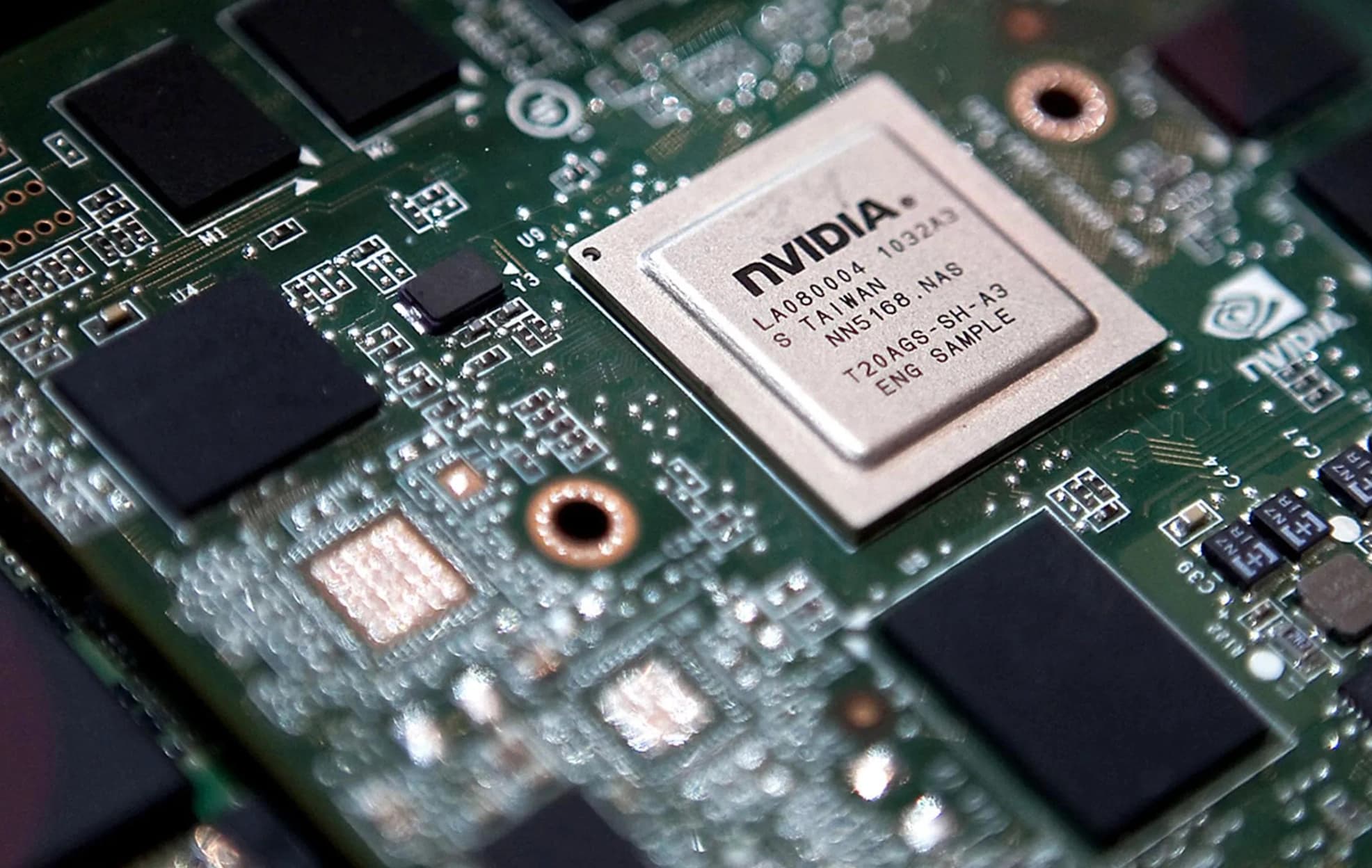
Chip Rout Drags Nasdaq as Bank Earnings Take Center Stage
Nasdaq 100 futures fall 0.52% as chipmakers selloff on China competition fears, while Dow futures surge 0.61% ahead of JPMorgan, Goldman earnings.
Key Points
- Nasdaq 100 futures are down 0.52% while Dow futures surge 0.61%, a 113-basis-point intraday spread that is the sharpest expression of institutional rotation away from tech this month.
- China's ChangXin Memory Technologies IPO in Shanghai is the proximate catalyst, stoking fears that the next phase of the memory price cycle will be shaped by state-backed Chinese competition rather than U.S. AI demand.
- Watch JPMorgan's Q3 results at the open — a beat on net interest income above $23 billion would be the single most likely trigger for a broader market reversal today.
Micron is down 3.88% in premarket trading, AMD is off 2.0%, and the 113-basis-point gap between Dow futures (+0.61%) and Nasdaq 100 futures (-0.52%) is not noise — it is institutions executing a deliberate, high-conviction rotation out of semiconductors and into financials ahead of the most consequential earnings morning of the third quarter.
The CXMT Shock and What It Actually Means
The proximate catalyst is the blockbuster Shanghai IPO of ChangXin Memory Technologies, China's state-backed DRAM challenger, which priced overnight and immediately rattled the global memory complex. CXMT disclosed material progress on a new chip structure that analysts say could accelerate its timeline to cost-competitive production against Micron, Samsung, and SK Hynix by 12 to 18 months. That compression in competitive runway is what traders are pricing into Micron this morning — not a quarterly miss, not a guidance cut, but a structural re-rating of the long-term margin story.
Micron's premarket decline of 3.88% is the largest single-stock drag on the Nasdaq 100 this morning, but the contagion is broad. AMD is off 2.0%, Intel is down 1.0%, and NVIDIA has shed 0.8% despite having no direct memory exposure. That last data point matters: NVIDIA's sympathy decline tells you this is a sector-sentiment trade, not a fundamental earnings trade. When investors sell NVDA because Micron is down on a Chinese IPO, they are reducing overall AI-infrastructure exposure as a theme, not making a specific judgment about NVIDIA's data center demand. The AI infrastructure premium that has been priced into the entire Philadelphia Semiconductor Index for the better part of 18 months is what is being questioned today.
The Asian session made the damage vivid. A benchmark index for Asian chipmakers fell to its lowest level since August, pulled down by Samsung Electronics and SK Hynix, both of which are directly exposed to CXMT's DRAM ambitions. South Korean memory stocks have now given back roughly six weeks of gains in two sessions. Europe's Stoxx 600 managed a 0.3% gain by leaning on economically sensitive cyclicals that benefited from falling oil prices and slightly softer bond yields — a useful reminder that the chip rout is not a macro panic but a sector-specific derating.
The Rotation Trade Is Real, and the Dow Proves It
Monday's session established the template: the Dow rose 195.60 points, or 0.38%, to close at 51,850.55, while the Nasdaq fell 0.44% to 27,245.90 and the S&P 500 slipped 0.06% to 7,807.24. This morning's futures are extending that divergence, not reversing it. Dow futures at 52,426 are implying an open roughly 575 points above Monday's close. Nasdaq futures at 30,738.50 are pointing to additional losses. The equal-weight S&P 500 has been quietly lagging the cap-weighted index for three consecutive sessions — a reliable early signal that the rotation is broad rather than confined to a handful of mega-cap swaps.
Salesforce is the clearest evidence that capital is finding new homes rather than leaving the market. CRM surged 4% in early trading after Bank of America issued a double upgrade — from underperform all the way to buy — a reversal dramatic enough to add meaningful points to the Dow on its own. Biogen is up 3.78% premarket at $234.24. Medtronic is up 2.80%. Bristol-Myers Squibb is up 2.79%. The gainers list reads like a defensive and value screen, not a growth screen. Healthcare, enterprise software with durable cash flows, and defense-adjacent industrials are absorbing the dollars coming out of semiconductor names. This is textbook late-cycle repositioning inside a bull market that, by the numbers, remains intact — the S&P 500 is up 17.37% year-over-year and has gained 2.34% over the past month.
The VIX at 15.30, up 2.36% in the past 24 hours, is consistent with increased hedging demand but not with fear. A VIX in the mid-teens during an earnings week with genuine macro uncertainty is, historically, a sign that the options market is pricing single-stock event risk rather than systemic stress. The vol desk's read is instructive: among 142 S&P 500 names tracked, 43% have realized volatility near one-year lows while 27% have implied volatility near highs, which means the market is bracing for individual earnings bombs rather than a tape-wide drawdown.
What Traders Watch Next: JPMorgan Opens the Verdict
JPMorgan Chase reports this morning alongside Goldman Sachs, Wells Fargo, Citigroup, UnitedHealth Group, Johnson & Johnson, and Domino's Pizza. This is the single most loaded earnings morning of Q3 season, and the banks are the variable that could override everything happening in semiconductors. The broader market is watching for confirmation that net interest income held up through September, that credit quality has not deteriorated materially despite elevated rates, and that investment banking fee pipelines — which began recovering in the first half — continued to build in the third quarter.
The crowd is skeptical. According to the October 13 Polymarket contract, there is only a 37% probability of a higher close on the S&P 500 today, and the CNN Fear/Greed Index sits at 46, squarely neutral. The October 12 contract resolved down. Federal Reserve officials Christopher Waller, Tom Barkin, and Susan Collins are all scheduled to speak today, and Waller's recent posture — pushing back against forward guidance and maintaining a hawkish tone at odds with some colleagues — means any commentary on rates will move bonds and, by extension, financials. September existing home sales also drop today, adding a real-estate data point to a session already crowded with catalysts.
The structural level to monitor on the S&P 500 is the call wall near 7,900. The index closed Monday at 7,807.24, and a JPMorgan beat that sends financials surging could push the tape toward that resistance level before options positioning creates a natural ceiling. Conversely, a disappointment from JPM on net interest income — anything that signals the rate tailwind for banks is fading faster than expected — combined with the ongoing chip selloff, could test support toward 7,700 before the session closes. The next major data point after today's bank prints is October 15, when additional Q3 reports begin layering in and the market gets its first look at whether the 17.37% year-over-year S&P gain can survive contact with actual third-quarter reality. JPMorgan at the open is where that verdict begins.
The Weekly Investor
Daily market analysis for active traders. Free.