Gemini 4 Argon vs. OpenAI Dots: The API Wars Heat Up
Google's Gemini 4 Argon launch and OpenAI DevDay 2026 agents reshape the AI API market. Pricing, positioning, and what it means for GOOGL traders today.
Key Points
- Google launched Gemini 4 Argon today — its most powerful model yet — pushing GOOGL shares approximately +2% in early trading while simultaneously repricing Gemini 3.8 Flash at $75/M tokens on its API.
- OpenAI's DevDay 2026 introduced "Dots," persistent AI agents with cross-device continuity, alongside aggressive API pricing at $2/M input and $10/M output tokens — a direct assault on enterprise developer wallet share.
- The Anthropic IPO S-1, expected in early-to-mid October ahead of a November Nasdaq listing, will force the market to formally value the third major frontier lab just as the model wars reach peak competitive intensity.
Google pushed Gemini 4 Argon into the market today, driving GOOGL shares up approximately 2% in early trading — and the timing was not accidental. With OpenAI's DevDay 2026 announcements still reverberating through the developer community and Anthropic's IPO S-1 expected within days, the three-way race for frontier AI dominance just compressed into a single October week that will define enterprise AI vendor relationships for the next 12 to 18 months.
Google's Dual-Track Offensive
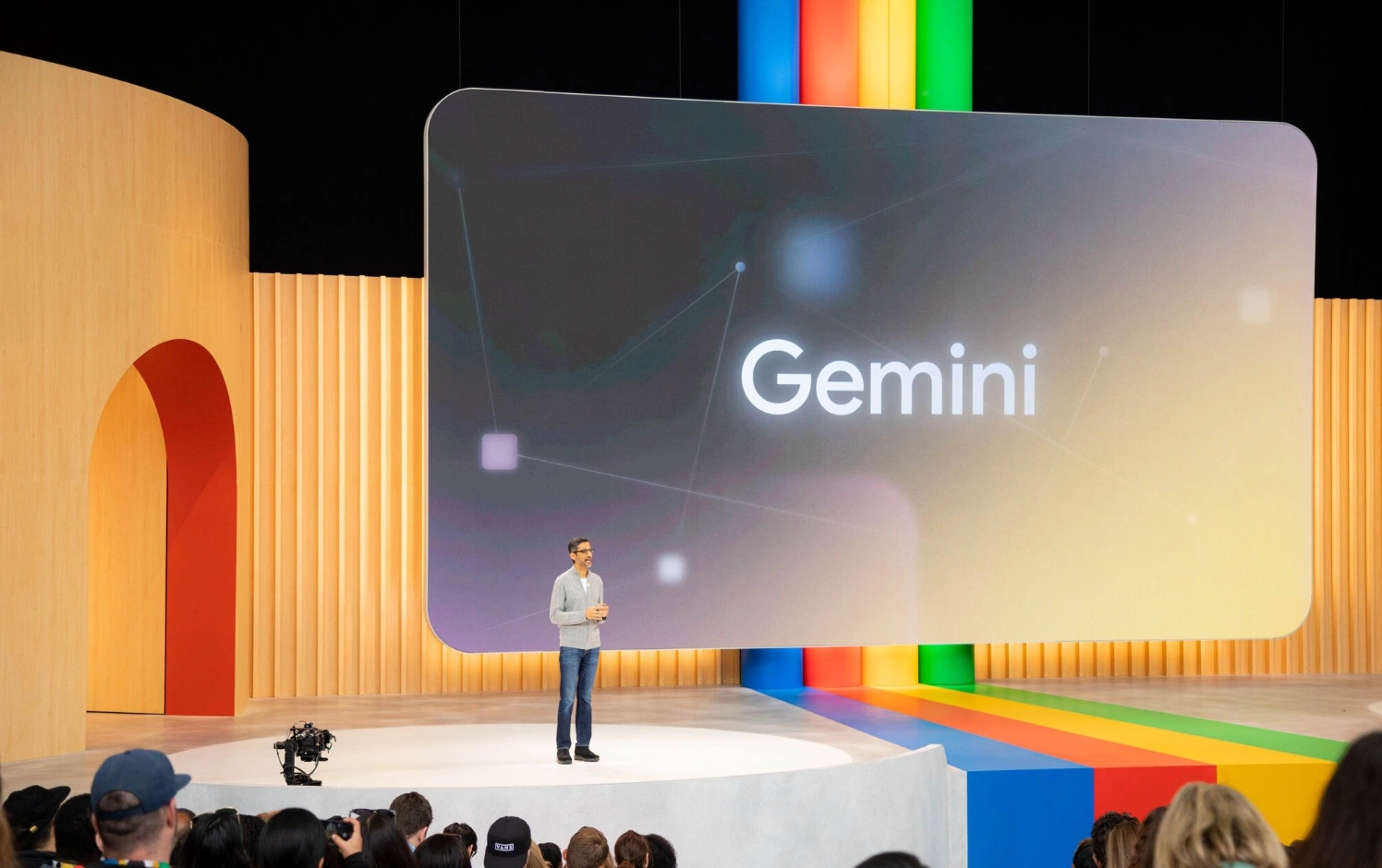
Gemini 4 Argon is Google's headline move, positioned as its most capable model to date and the direct answer to OpenAI's o-series reasoning architecture. The +2% move in GOOGL on the launch is modest by headline standards but meaningful in context: the stock has been navigating the Google Search antitrust remedies — which now extend coverage to qualified AI firms — and any model launch that reinforces Google's AI credibility has an outsized reputational value beyond the immediate revenue contribution.
The more strategically interesting pricing decision is Gemini 3.8 Flash at $75.00 per million tokens. That figure positions Flash as a premium mid-tier product — well above commodity model pricing, which has collapsed toward $0.10 to $0.50 per million tokens on the low end of the market, but below the frontier-tier pricing that Gemini 4 Argon will command. Google is executing a classic product-line bracketing strategy: capture enterprise developers with Flash's speed and cost efficiency, then upsell to Argon for the highest-stakes workloads. The approach mirrors what Google has done in cloud infrastructure for years — a tiered service architecture designed to maximize developer lock-in at multiple price points simultaneously.
Google's timing also carries a defensive dimension. The FTC and DOJ antitrust enforcement actions targeting cloud compute bundling, accelerator gating, and ecosystem lock-in have placed hyperscalers under regulatory scrutiny that did not exist 18 months ago. Launching a new frontier model with transparent, published API pricing is not just a commercial decision — it is a posture signal to regulators that Google is competing on merit, not on proprietary gating. The EU AI Act's binding rules took effect August 2, 2026, with fines up to €35M or 7% of global annual turnover, and the UK's Digital Security and AI Bill came into statutory force this month with penalties up to £18M or 10% of global turnover. Every major model launch now carries a compliance dimension that did not exist in 2024.
OpenAI's DevDay Agent Bet
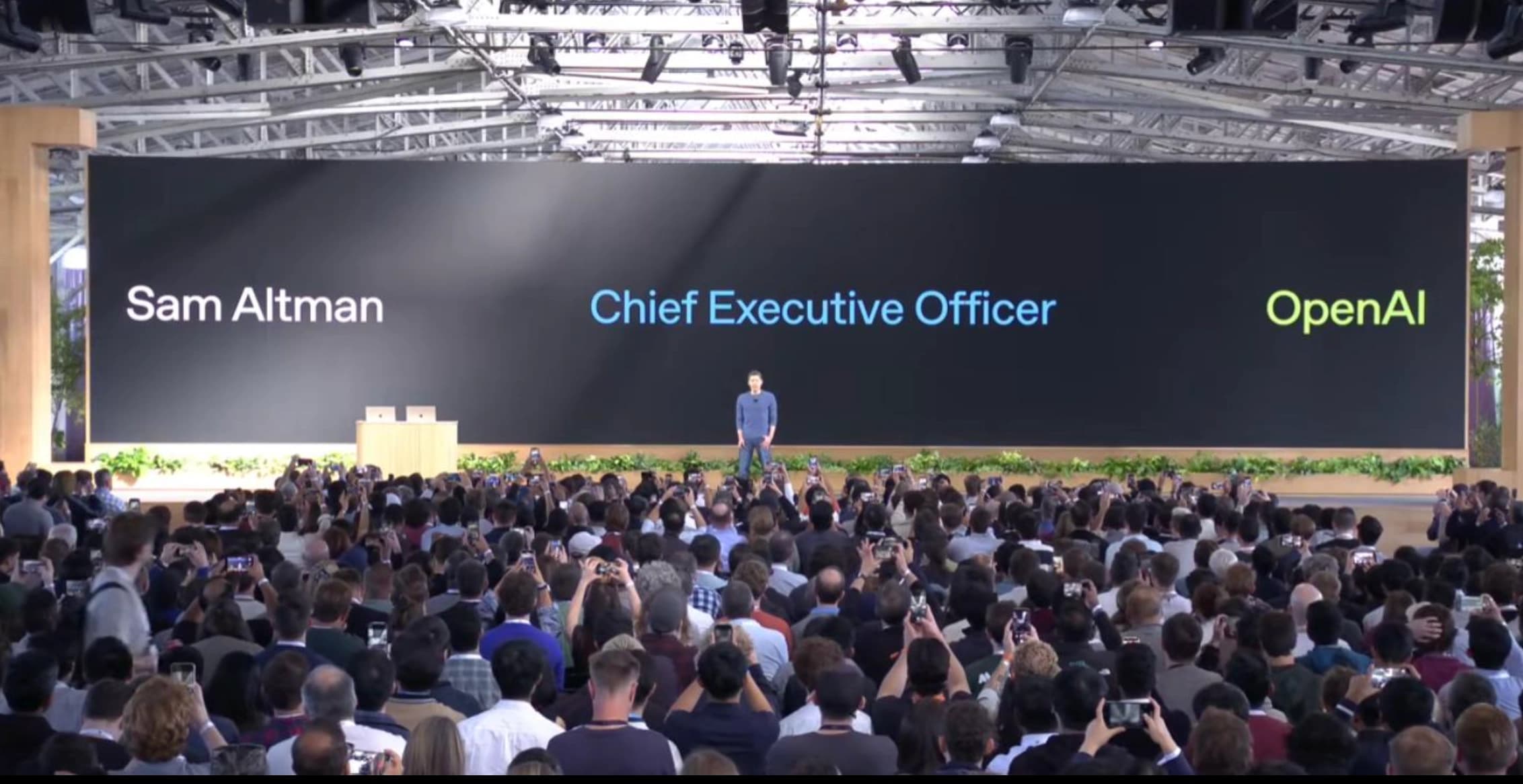
OpenAI's DevDay 2026 was the company's largest yet — more than 20 major announcements spanning ChatGPT, Codex, and its model lineup — and the strategic center of gravity was not a new model benchmark. It was "Dots": persistent AI agents with synced Work tasks and ChatGPT Space enabling cross-device continuity and multi-user collaboration. The pivot from single-session AI interactions to ongoing agentic responsibilities is the most consequential product direction shift OpenAI has made since the original ChatGPT launch, and it directly threatens the project management, CRM, and enterprise software categories in ways that episodic chatbot interactions never did.
The API pricing OpenAI published — $2.00 per million input tokens, $0.10 per million cached input tokens, and $10.00 per million output tokens — reflects a deliberate positioning above the commodity tier but below what a closed, frontier-only strategy would support. The cached input pricing at $0.10 per million is the number developers are paying attention to, because agent architectures by definition involve repeated context retrieval. An agent that reads the same project context 50 times per day generates massive cached token volume. At $0.10 per million cached, OpenAI is effectively subsidizing the infrastructure cost of persistent agents to accelerate developer adoption. That is a land-grab strategy dressed in a pricing sheet.
Yahoo Finance's chip and tech coverage has noted that the AI infrastructure buildout supporting these model launches is increasingly bifurcating the semiconductor sector — with TSMC and memory players directly benefiting while legacy chipmakers struggle to find their position. Every incremental model launch from Google and OpenAI translates into additional inference compute demand, which cycles back to the HBM and GPU supply chain. Micron's $34B quarterly data center revenue is the downstream consequence of exactly the kind of enterprise AI adoption that Dots and Gemini 4 Argon are designed to accelerate.
The Anthropic Variable Changes Everything
The third actor in this week's market structure is the one without a public stock — yet. Anthropic's S-1 is expected in early-to-mid October, with the roadshow targeting mid-October and a Nasdaq listing targeted for November 2026. The company's annualized revenue run-rate passed $65B by late July, up from $47B in May — roughly $5.4B per month in incremental growth — and Q2 2026 produced approximately $10.9B in revenue with a $559M operating profit excluding stock-based compensation. That was Anthropic's first profitable quarter, and management has told investors it expects a second consecutive profitable quarter in Q3.
Morgan Stanley, Goldman Sachs, JPMorgan, and Citigroup are leading the underwriting. The prospectus must go public at least 15 days before the roadshow, making the next ten days the critical filing window. When the S-1 drops, it will force a formal public market valuation on the third major frontier lab at exactly the moment Google and OpenAI are both making aggressive competitive moves. The Anthropic Claude model family competes directly with Gemini 4 Argon and OpenAI's o-series on enterprise reasoning benchmarks — and a public market comp will reshape how institutional investors price GOOGL's AI business and OpenAI's rumored 2027 IPO timeline simultaneously.
Apple and NVIDIA's foundry and supply chain positioning per Yahoo Finance underscores that the infrastructure enabling all three frontier labs is itself a constrained resource. TSMC's 2nm ramp, potentially reaching 120,000 wafers per month by year-end, is the physical ceiling on how fast any of these companies can scale model capability. The lab that secures the best TSMC allocation — and the most HBM supply — wins the next 18 months of model competition regardless of benchmark scores.
Watch October 15 as the practical deadline for Anthropic's S-1 filing if the mid-October roadshow target holds. For GOOGL, the critical level to monitor is whether the +2% Gemini 4 Argon pop holds through the week or fades into the broader tech multiple compression that pushed the S&P 500 down 0.5% in September. If GOOGL sustains the move and closes above its September high, it signals that the market is pricing frontier AI leadership as a durable revenue driver — not just a product cycle catalyst.
The Weekly Investor
Daily market analysis for active traders. Free.