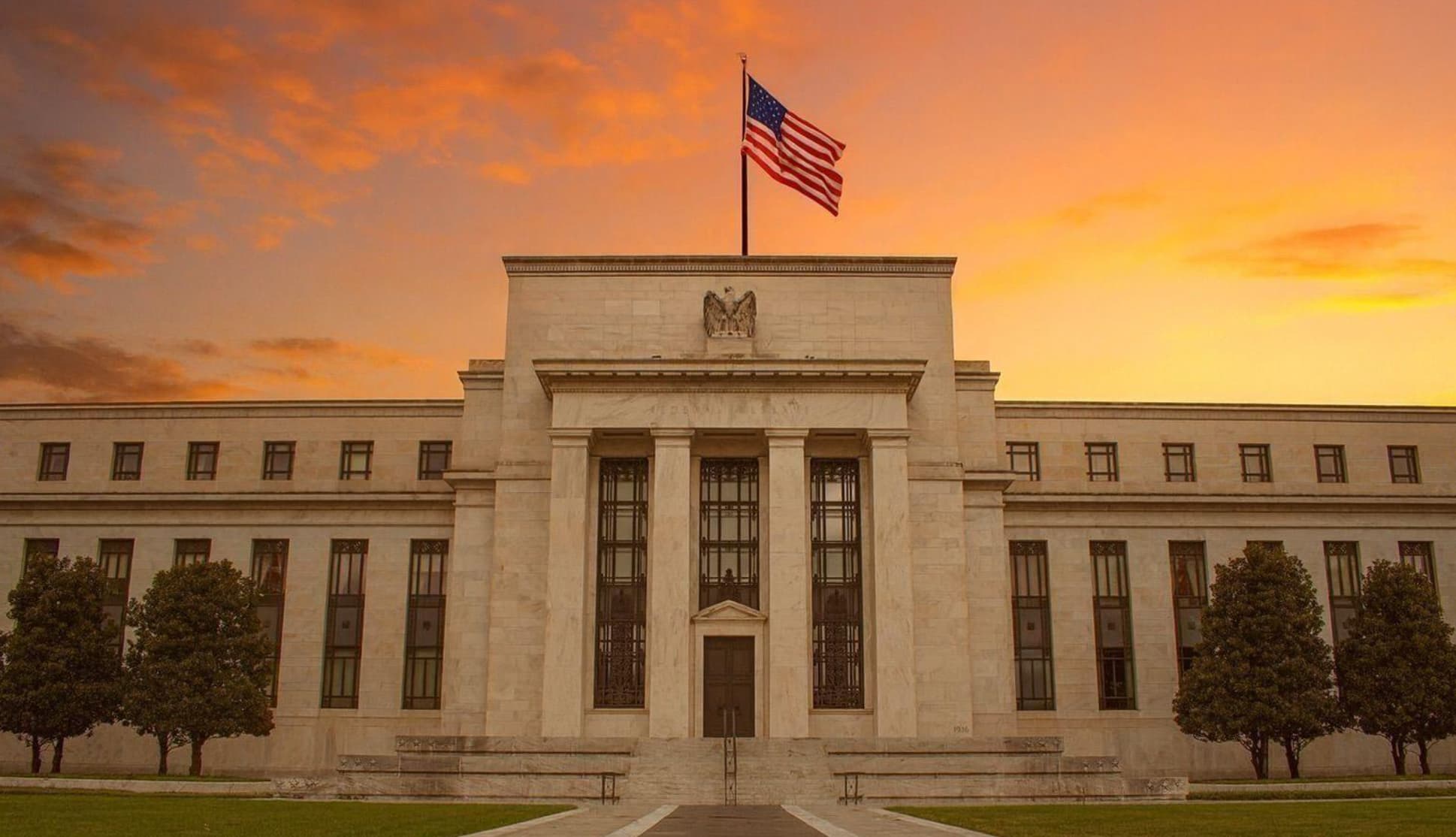
Fed Hold Locked In — But July 29 Statement Is the Trade
The FOMC meets July 28-29 with a hold at 3.50-3.75% near-certain. The real trade is in the statement language on inflation and the Middle East.
Key Points
- The Fed funds effective rate sits at 3.63% heading into the July 28-29 FOMC meeting, with a hold at 3.50-3.75% the near-unanimous base case among dealers.
- With no dot plot and no press conference scheduled for this meeting, the entire market reaction hinges on a single variable: whether the statement language on inflation hardens or softens.
- Traders should have their positioning set before the blackout window closes — the statement drops July 29, and any shift in the phrase structure around "elevated" inflation or Middle East supply shocks moves the 10-year immediately.
Seven days from now, the Federal Reserve will release a roughly 500-word statement that carries more market weight than any dot plot produced this year. The FOMC meets July 28-29, Chair Kevin Warsh holds no press conference, and no Summary of Economic Projections will be published — which means the statement itself is the only signal the market gets, and every clause in it will be traded.
The Hold Is Priced — The Language Isn't
A hold at 3.50-3.75% is not the trade. The effective fed funds rate printed at 3.63% on July 20, SOFR sits at 3.57%, and not a single major dealer has a live hike call for this meeting. That consensus is correct. The June FOMC statement cited "elevated uncertainty" tied to the Middle East conflict, flagged "supply shocks that have driven price increases in certain sectors, including energy," and explicitly acknowledged that inflation "remains elevated relative to the Committee's 2 percent goal." None of that language has been officially revised. None of it will be discarded lightly.
What can shift — and what the rates market will reprice in real time — is the tone around that inflation language. The June SEP produced a notable internal contradiction: the Fed revised its PCE inflation forecast sharply higher, from 2.7% to 3.6%, while simultaneously trimming its unemployment forecast to 4.3% for 2026. That combination — hotter inflation, tighter labor market — is textbook hawkish. Yet the median funds rate forecast for 2026 increased only modestly, implying at most one additional hike before year-end. The Committee is balancing a geopolitical inflation shock against genuinely uncertain demand conditions, and the July 29 statement is where that balance gets re-expressed in public language.
The 10-year Treasury yield is at 4.60% as of July 20, against a 2-year at 4.21%. That 39-basis-point spread reflects a curve that has steepened meaningfully from inversion but remains historically compressed. The market is not pricing a recession, but it is not pricing aggressive Fed tightening either. A statement that removes or softens references to Middle East supply shocks — signaling the Committee believes the energy inflation impulse is fading — would likely push the 2-year lower faster than the 10-year, flattening the curve and sending rate-sensitive equities higher. The opposite scenario, in which language is upgraded to signal that inflation risks have broadened beyond energy, compresses equity multiples and adds to the already substantial pressure on long-duration assets.
What the Data Is Actually Telling the Fed
The incoming data picture is not clean. CPI for June came in at 3.5% year-over-year, with core CPI at 2.6% — the latter is the number Warsh's Fed is most focused on, and at 2.6% it sits 60 basis points above target. The June FOMC statement's attribution of elevated inflation primarily to supply shocks and Middle East energy pressures was partly an attempt to frame the overshoot as temporary and externally driven. Core CPI at 2.6%, however, includes shelter, services, and other components that have nothing to do with Brent crude trading at $73.33 a barrel.
WTI crude closed at $72.26 on July 10, and natural gas at Henry Hub is $3.09 per MMBTU — neither of those prints suggests an imminent energy re-acceleration. If anything, oil has softened, which gives the Committee some cover to describe energy price pressures as contained. But that argument cuts both ways: if the Middle East risk premium in energy is not driving inflation, then the remaining 3.5% headline and 2.6% core must be coming from somewhere structural, which raises uncomfortable questions about whether the current 3.50-3.75% policy rate is actually restrictive enough.
Unemployment at 4.2% — last reported June 1 — is nearly exactly at the Fed's revised median forecast of 4.3% for the full year, meaning the labor market has not given Warsh's Committee any incremental reason to ease. GDP expanded at 2.1% annualized in Q1 2026. A 2.1% growth rate against a 3.5% CPI print is not the stagflation scenario some feared at the start of the year, but it is also not the soft-landing narrative the market was writing in early 2025. Productivity growth and capital investment are running strong, per the June statement — which is the argument that prevents the Committee from declaring victory on inflation and moving toward cuts.
What Traders Should Watch July 29
The blackout period effectively closes the communication window between now and the July 29 statement release. There will be no Fed speakers walking traders through the Committee's current thinking — which means any positioning adjustment needs to happen in the next 24 to 48 hours, before liquidity thins ahead of the decision. Wells Fargo's read — that a growing number of FOMC members favor a neutral-to-hawkish bias — is consistent with a statement that holds rates steady but upgrades inflation risk language or removes any implicit easing bias.
Two specific language markers are worth tracking when the statement hits the tape on July 29. First, watch whether the phrase "elevated uncertainty" tied to the Middle East is maintained, softened, or expanded. Expanding the uncertainty language to include domestic demand factors would be a hawkish signal. Removing or softening it would be read as dovish. Second, watch whether the characterization of inflation as driven by "supply shocks" survives intact. If the statement shifts to describing inflation as more broadly based — acknowledging that core at 2.6% cannot be fully attributed to energy — that is the clearest possible signal that the one projected hike for 2026 remains live for September or November.
The next confirmed inflation data point is the August 12 CPI release, and the BLS CPI release page is the primary source to bookmark. A July CPI print above 3.5% year-over-year on August 12 — roughly five weeks before the September FOMC meeting — would transform the September 16-17 decision from a near-certain hold into a genuine live meeting. The 10-year at 4.60% is the level to watch: a statement-driven move above 4.75% signals the market is repricing the September hike probability sharply higher. A drift below 4.40% signals the opposite — the market reading Warsh's Committee as quietly comfortable with where policy sits.
The Weekly Investor
Daily market analysis for active traders. Free.