AMD Buys World Labs for $8.2B, Lands Fei-Fei Li
AMD closes its $8.2B all-stock acquisition of World Labs today, bringing AI pioneer Fei-Fei Li in as Chief Scientist in a direct challenge to Nvidia's AI dominance.
Key Points
- AMD is closing its $8.2 billion all-stock acquisition of World Labs today, the company's second-largest deal ever, at a 62% premium to World Labs' February valuation.
- The deal is a direct intelligence play — World Labs' frontier model research gives AMD years of advance visibility into future AI workload demands before it commits silicon to production.
- Wednesday's Micron Q4 print and today's OpenAI DevDay announcements are the next catalysts that will determine whether AMD's tape holds its M&A premium or gives it back.
AMD is paying $8.2 billion in stock to own the future of AI compute planning — and it is closing that deal today. Fei-Fei Li, the Stanford professor and AI pioneer who co-founded World Labs and built the ImageNet dataset that ignited the deep learning era, joins AMD as Executive Vice President and Chief Scientist, reporting directly to CEO Lisa Su. The premium is 62% above the $5 billion valuation AMD itself helped establish in February, and it lands as the second-largest acquisition in the company's history, trailing only the roughly $50 billion Xilinx purchase in 2022.
What AMD Actually Bought
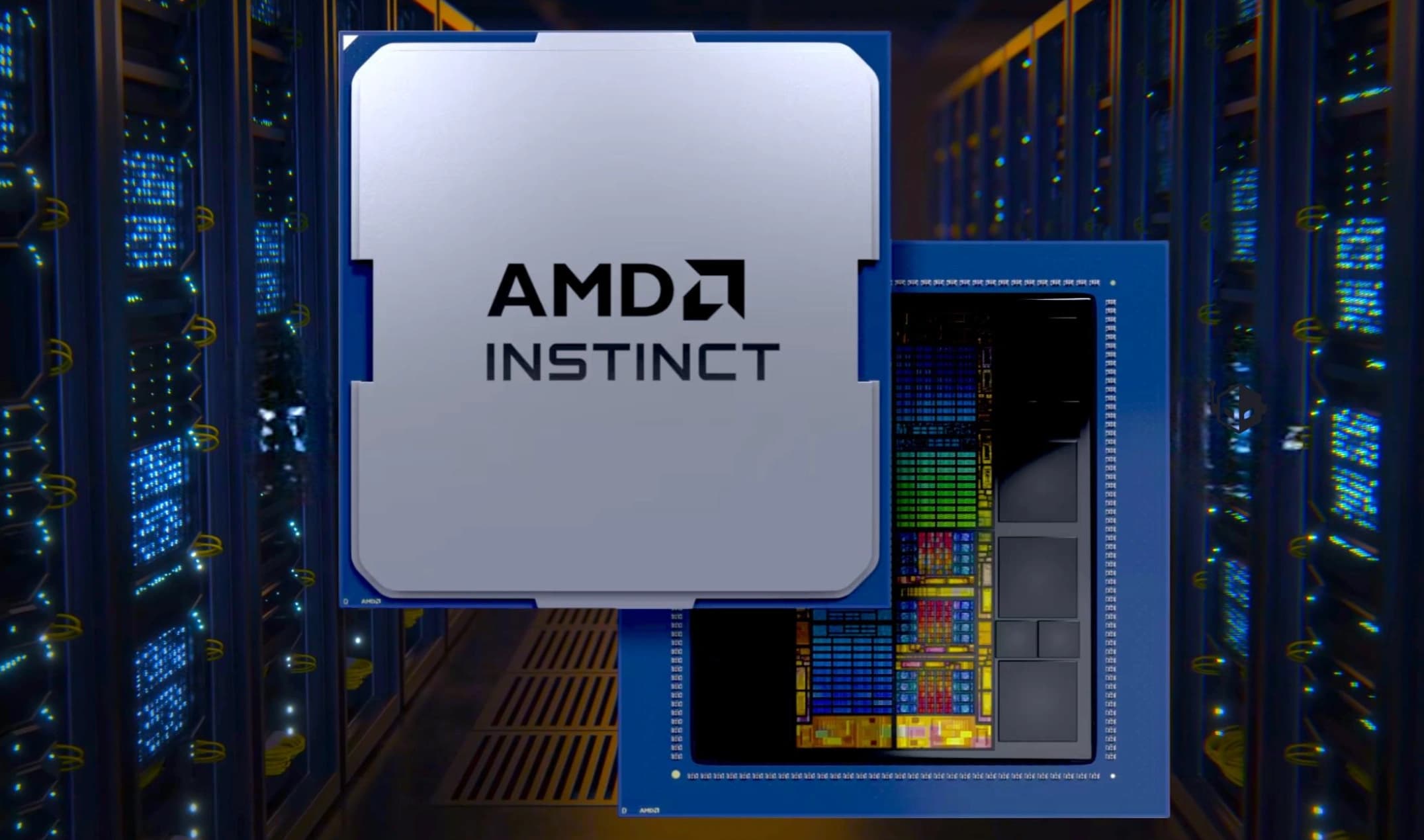
Strip away the headline number and the strategic logic is clean: AMD is buying a research organization that builds next-generation AI models, not to compete with OpenAI or Anthropic in the foundation model market, but to see around corners on chip architecture. The central challenge in designing AI silicon is that the workloads the chips must run three to five years from now are not yet fully defined. Inference patterns for today's large language models look different from those for reasoning models, which look different again from multimodal and physical AI systems. By embedding World Labs' researchers directly into AMD's product pipeline, Su is purchasing early-warning intelligence on where compute demands are heading — before tape-out decisions are locked.
That framing matters because it reframes the 62% premium. AMD's deal with World Labs is not a defensive acquihire to keep Li off a competitor's payroll, though that outcome is hardly unwelcome. It is a structural bet that the value of model-level insight will compound across multiple chip generations. World Labs had been working on spatial intelligence and next-generation reasoning architectures — precisely the workload categories that are driving the most uncertainty in accelerator design. As AI expands into robotics, simulation, and physical AI systems, the memory bandwidth, interconnect, and precision requirements diverge sharply from the transformer-dominated inference workloads that defined 2023 and 2024.
There is also a competitive intelligence dimension that the press releases do not mention. Nvidia was a World Labs investor, meaning Nvidia now receives AMD stock as consideration for its stake. That is not a trivial detail. Jensen Huang's company helped fund the research operation that Lisa Su just absorbed into her product roadmap. The resulting dynamic — Nvidia as AMD shareholder, AMD owning Nvidia's former research investment — is the kind of structural irony that only happens at the top of a technology supercycle.
The Dilution Math and the Risk Case
All-stock deals at a 62% premium create an immediate question for AMD shareholders: what does the dilution cost, and does the strategic benefit justify it? AMD has not disclosed the exact share count issued, but at AMD's recent trading levels the deal represents a meaningful addition to the float. The near-term risk is straightforward — AMD shares face selling pressure from World Labs' existing investors, including Nvidia, who receive AMD stock and have no obvious reason to hold it. Any large block sales in the first 30 to 60 days post-close will show up in volume and short-term price action.
The bull case requires believing two things simultaneously: that Li and her team will accelerate AMD's chip roadmap in ways that produce measurable incremental revenue, and that AMD's stock can absorb the dilution while the MI350 and MI400 accelerator ramp gains market share against Nvidia's Blackwell and Rubin architectures. Neither is guaranteed. AMD's GPU market share in AI data centers remains well below Nvidia's, and the MI300X, while competitive on memory bandwidth, has not displaced Nvidia as the default choice for hyperscale AI training. SOXX, the iShares Semiconductor ETF that best captures the sector's institutional positioning, gained 7.4% last week — the tape is pricing in a favorable outcome, which means the margin for disappointment is thin.
The regulatory picture is cleaner than most M&A at this scale. An all-stock deal between a chip designer and an AI research lab is unlikely to draw the kind of antitrust scrutiny that a vertical integration play would attract, particularly given the current administration's posture. The FTC's bandwidth is currently occupied with the broader Microsoft cloud and AI probe. AMD and World Labs operate in adjacent but distinct markets, and the combined entity does not create an obvious choke point in any supply chain that regulators have flagged.
What Traders Watch Next
The immediate tape test is today's session. AMD entered Monday with the deal close as a known catalyst, which means the market has had the weekend to digest the headline. Pre-market weakness in the broader semiconductor complex — Micron was flagged as falling before the open — adds a headwind that has nothing to do with World Labs and everything to do with positioning ahead of Wednesday's Micron Q4 print. MU's results will provide the most current read on HBM memory demand and AI server build rates, two variables that directly affect AMD's accelerator revenue outlook. A strong MU print with bullish HBM guidance is the single fastest route to AMD recovering any M&A discount the market assigns today.
OpenAI's DevDay keynote, live at 10:00 AM PDT in San Francisco, is the second variable. Any announcement of new agentic infrastructure, expanded API capabilities, or GPT-6 Cyber would accelerate enterprise AI deployment timelines — which is ultimately what AMD is betting on with this acquisition. Faster deployment means earlier demand for next-generation silicon, and earlier demand for next-generation silicon is exactly what World Labs' research is designed to anticipate. The feedback loop between model capability announcements and chip roadmap urgency is tightening, and AMD just paid $8.2 billion to sit closer to the source. The level to watch on AMD is its 52-week high; a close above that level in the next five sessions would signal the market is treating World Labs as accretive rather than dilutive to AMD's long-term positioning.
The Weekly Investor
Daily market analysis for active traders. Free.