S&P 500 Futures Surge 1% as US-Iran Ceasefire Crushes Oil
S&P 500 futures jump 1% and Brent crude crashes 9% after the US suspends Iran airstrikes. Here's what traders need to know before the open.
Key Points
- S&P 500 futures are up 1.0% and Nasdaq-100 futures are up 1.7% in premarket trading Monday as Brent crude crashes 9.2% following a US-Iran ceasefire pause announced over the weekend.
- The geopolitical risk premium that drove last week's equity losses is unwinding fast, with lower oil prices directly reducing near-term inflation pressure ahead of Wednesday's Fed decision.
- Traders should watch whether SPY can reclaim its 50-day moving average near $747 on the open and whether the Fed on Wednesday signals any shift in its rate path given the sudden easing in energy costs.
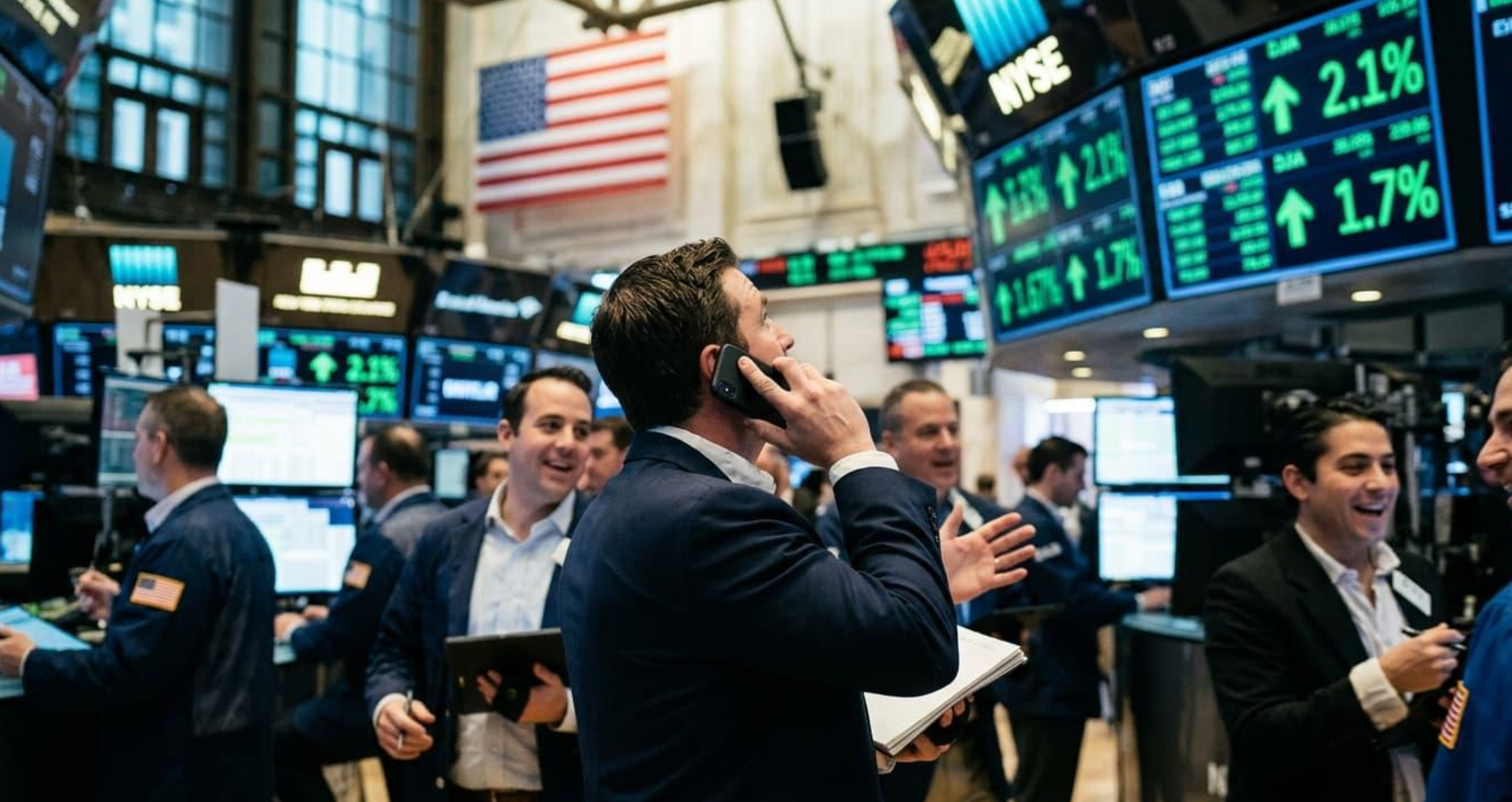
Brent crude is down 9.2% to roughly $87.89 a barrel this morning — and that single number is rewriting the week's entire macro setup. The US suspended its 13-night airstrike campaign against Iran over the weekend to allow for diplomacy, and Tehran confirmed a reciprocal halt on retaliatory strikes. The result: S&P 500 futures are up 1.0%, Nasdaq-100 futures are up 1.7%, and the Dow is pointing to a gap open of roughly 550 points — a near-complete reversal of the risk-off sentiment that pushed stocks to back-to-back weekly losses.
The Geopolitical Unwind
The geopolitical risk premium that had been baked into equity prices for two weeks is now evaporating in real time. According to CNBC, WTI crude dropped more than 7% to $82.46 a barrel on the news, while Yahoo Finance's latest check shows Brent trading below $86 — a level that, just last Thursday, looked unreachable without a formal treaty. The Cboe's WTI one-month implied volatility had surged as high as 68% last week before closing Friday at 51%; the implied-to-realized vol spread has since nearly halved, from 30 points down to 14, signaling that options markets are aggressively repricing the tail risk that dominated last week's trading.
For equity traders, the arithmetic is straightforward: lower oil means lower near-term headline CPI pressure, which gives the Federal Reserve more breathing room at Wednesday's meeting. CME FedWatch currently prices a 68.5% probability the Fed holds rates unchanged at the July meeting, a figure unlikely to shift dramatically before Wednesday unless this morning's 8:30 AM Durable Goods print surprises materially to the upside. The 10-year Treasury yield, which sat at 4.71% as recently as July 23, is now trading at 4.64% in the premarket — a meaningful 7-basis-point move that tells you bond traders are already adjusting their inflation calculus.
The VIX is at 17.58, down 1.00 point or 5.38% on the session, though Saxo Bank's morning read has it slightly higher at 18.58. Term structure remains in contango and skew is elevated at 147.28 — the options market's regime classification is still "NEUTRAL/CHOP," not outright bullish. That's an important nuance: the fear is coming out of the market, but conviction hasn't fully returned. Prediction market Polymarket is pricing an 88% probability of an up open on the S&P today, a 38-percentage-point surge in positive sentiment from Friday's close — but sentiment indicators of that kind tend to front-run moves more than they sustain them.
The Fed Factor Complicates Everything
The ceasefire rally arrives at a delicate moment in the Fed's tightening cycle. The Fed Funds Effective Rate stands at 3.63% and SOFR is at 3.64%, while CPI sits at 3.5% year-over-year and Core CPI at 2.6% — both still above the Fed's 2% target. With the 10-year yield at 4.64% and the 2-year at 4.30%, the yield curve has been steepening into positive territory, a development that reflects the market's growing belief that the Fed will need to keep the short end anchored longer than previously expected.
A sustained drop in oil prices changes that calculus at the margin. WTI crude's move from last week's elevated levels back toward the low $80s represents a meaningful disinflationary impulse. With unemployment at 4.2% as of June and the economy still generating jobs, the Fed is not under immediate pressure to cut — but a 7%-to-9% single-session collapse in crude gives Chair Powell a softer tone to work with on Wednesday without abandoning the inflation fight. The critical question is whether he takes it. Markets will parse every word of Wednesday's statement for any shift in the dot-plot trajectory or the balance of risks language, particularly given that equities are walking into the press conference on a news-driven gap rather than a fundamental re-rating.
Deutsche Bank strategist Parag Thatte put the positioning picture bluntly: AI capex concerns are overshadowing what is otherwise a strong earnings season, with equity positioning having fallen to neutral. Discretionary investors are at just the 17th percentile of historical exposure — a level last seen during early April's drawdown lows. That's a double-edged signal. It means the pain trade is higher, which supports the morning's gap; but it also means the smart money hasn't been buying this dip with conviction, and a single hawkish Fed statement Wednesday could rapidly drain whatever goodwill the ceasefire generates today.
What Traders Watch Next
The technical setup for the S&P 500 entering today is precise and consequential. The index fell back below its 50-day moving average on Thursday, with that average now sitting near 7,470. SPY, which closed Friday around $738, is indicated to open near $745.85 — essentially right at that 50-day moving average in ETF terms. Whether the index closes above or below that level today is the single most important technical data point of the session. A close above 7,470 on the cash index would technically negate last week's breakdown and reset the near-term trend to neutral. A fade back below it by the close — particularly if Durable Goods disappoint at 8:30 AM — would confirm that the ceasefire bounce is just that: a bounce.
AMD is up 3.03% in premarket, extending momentum from last week's Analyst Day where management projected the AI accelerator market reaching $1.4 trillion by 2030 and announced large-scale partnerships with both Anthropic and OpenAI. Nvidia is separately reported to be in talks to guarantee approximately $250 billion to help OpenAI lease computing from a SoftBank-developed data center, and will invest $1 billion in Naver — AI capex headlines that cut both ways for the sector. On one hand, hyperscaler spend is accelerating; on the other, the market has been penalizing companies for ballooning capital expenditure commitments. Microchip Technology is up 2.24% after announcing a signed agreement to acquire Hailo, adding another M&A catalyst to the semiconductor space.
Gold, notably, is not selling off on the risk-on open. Prices have pushed back above $4,100 an ounce — a signal that while traders are willing to buy equities on the ceasefire, they haven't abandoned the hard-asset hedge entirely. That combination of rising equities, falling oil, and firm gold is consistent with a market that believes geopolitical risk has been reduced but not eliminated. A resumption of US airstrikes — or any breakdown in the diplomatic pause — would reverse this morning's entire move within minutes. The ceasefire is explicitly described as a pause, not a deal.
For traders, the actionable framework through Wednesday is layered: watch SPY hold above $745 intraday; watch whether the 10-year yield stays below 4.65% as equities rally (a sell signal if yields rise with stocks); and treat Wednesday's 2:00 PM Fed statement as the event that either validates today's gap or punishes anyone who chased it. The specific level to mark is 7,470 on the S&P 500 cash — above it, bulls are in control through earnings season; below it, last week's 0.6% loss becomes the opening chapter of a deeper correction.
The Weekly Investor
Daily market analysis for active traders. Free.