
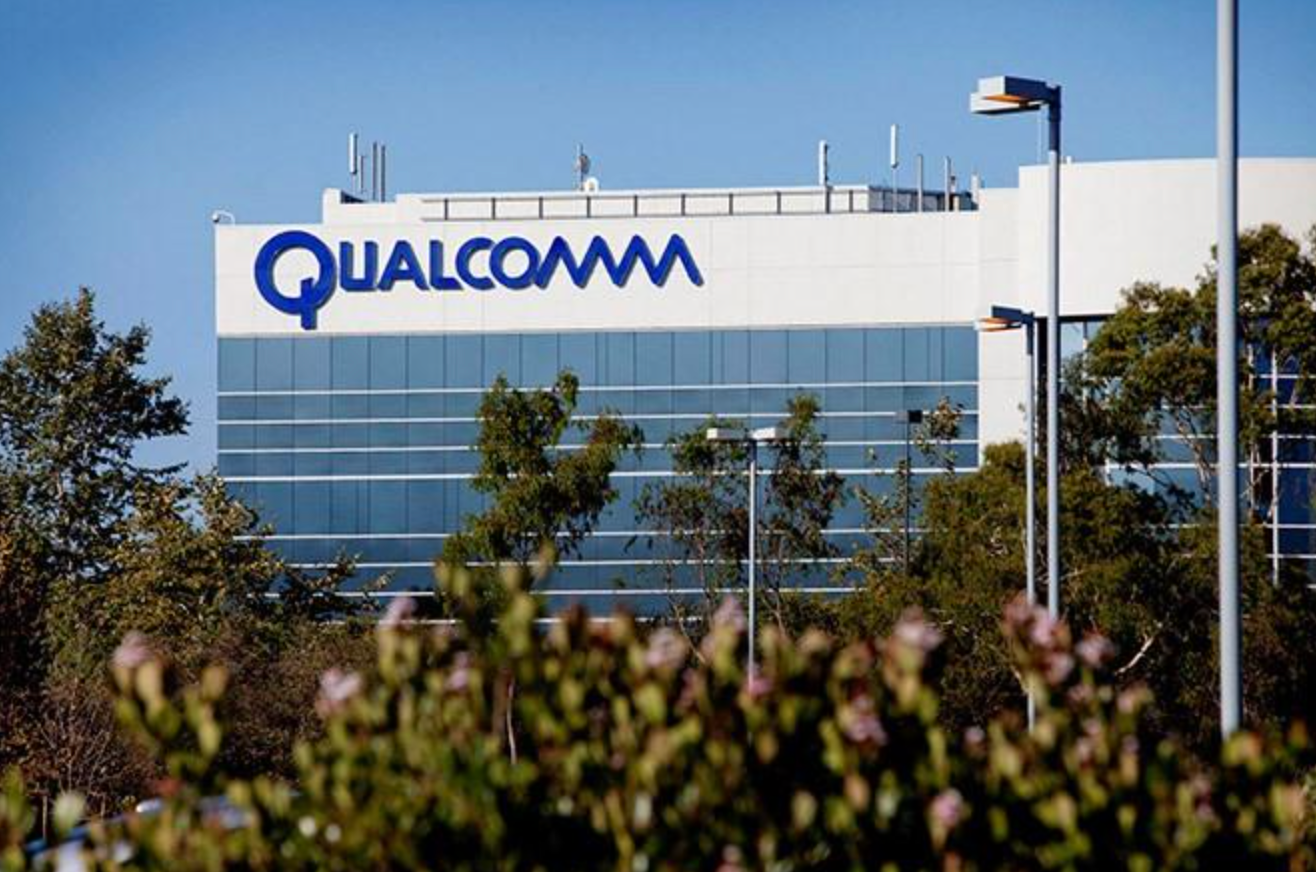
Qualcomm Eyes $10B Tenstorrent Bid to Challenge Nvidia
Qualcomm is in early talks to acquire AI chip designer Tenstorrent for $8–10B, targeting Nvidia's inference dominance using RISC-V architecture.
Key Points
- Qualcomm is in early-stage talks to acquire AI chip designer Tenstorrent for $8–10 billion, a move that would immediately give it RISC-V-based AI hardware competitive against Nvidia's inference stack.
- The deal is driven by Qualcomm's need to escape dependence on Nvidia's ecosystem and establish a credible position in the data center AI inference market, where Microsoft's Maia 200 and Google's TPUs are also mounting challenges.
- Traders should watch QCOM — already down 3.29% heading into Thursday — for stabilization above the $190 level, with any deal confirmation likely to trigger a re-rating debate on valuation.
Qualcomm is in early-stage discussions to acquire Tenstorrent, the RISC-V AI chip designer backed by chip legend Jim Keller, for a price between $8 billion and $10 billion — a transaction that would represent Qualcomm's most aggressive move yet into data center AI hardware and a direct challenge to Nvidia's grip on the inference market. The news lands as QCOM already sits under pressure, having fallen 3.29% to $197.41 in Tuesday's broad semiconductor sell-off, giving traders a deteriorating technical setup against which to weigh a potentially transformative strategic pivot.
Why Qualcomm Needs This Deal
Qualcomm's core business — selling Snapdragon processors to smartphone manufacturers and automotive OEMs — generates substantial cash flow but offers no credible path to the data center AI market that is now consuming $720 billion in annual capex across Meta, Amazon, Google, and Microsoft combined. The company has watched Nvidia's data center revenue compound at rates that make its own growth look pedestrian, and its existing AI chip efforts, while competent for edge inference on mobile devices, have not positioned it to compete for the hyperscaler rack-level contracts that are defining the decade's most important revenue pool.
Tenstorrent changes that calculus in two specific ways. First, it brings Jim Keller — the engineer who designed AMD's Zen architecture and Apple's A-series chip pipeline — whose presence on any chip project commands genuine credibility in the engineering community and with institutional investors evaluating semiconductor M&A. Second, Tenstorrent's RISC-V-based architecture is structurally distinct from the CUDA ecosystem that has made Nvidia's competitive position so difficult to dislodge. RISC-V is an open instruction set, meaning hardware built around it is not subject to Nvidia's proprietary software lock-in. Hyperscalers that have spent billions on CUDA-dependent workloads are acutely aware of that dependency and have active internal programs — Google's TPU, Amazon's Trainium and Inferentia, Microsoft's Maia 200 — designed specifically to reduce it.
At $8–10 billion, Tenstorrent would be Qualcomm's largest acquisition since the $1.4 billion NXP deal attempt collapsed in 2018. The price implies Qualcomm's board believes the strategic value of breaking into AI data center hardware justifies paying a premium that will not be earnings-accretive in the near term. With QCOM trading at roughly 14x forward earnings — a significant discount to the Nasdaq-100's 26x — the stock already reflects skepticism about Qualcomm's growth runway. A deal announcement would almost certainly trigger an initial negative reaction on acquisition premium and integration risk concerns before any longer-term re-rating can occur.
The Competitive Landscape Qualcomm Is Entering
The AI chip market Qualcomm is targeting is simultaneously the most lucrative and the most contested in semiconductor history. Nvidia's data center segment generated revenues that have compounded at triple-digit rates for six consecutive quarters, and the company's Vera Rubin VR200 NVL72 rack — priced at approximately $7.8 million per unit for hyperscale customers — represents the current pinnacle of AI training hardware. But the inference market, where Tenstorrent's architecture is specifically designed to compete, is structurally different from training and is evolving faster.
Inference workloads — running a trained model to generate outputs at scale — have different optimization requirements than training. They prioritize energy efficiency, latency, and cost per token over raw floating-point throughput. This is precisely the space where Nvidia's H100 and B200 architectures are arguably overbuilt and overpriced, and where custom silicon from Microsoft's Maia 200 (built on TSMC's 3nm process and launched in January 2026), Google's TPU v5, and Amazon's Trainium 2 are already taking meaningful share. Anthropic's reported early-stage discussions with Microsoft to run Claude inference workloads on Maia 200 chips via Azure — a direct defection from Nvidia infrastructure — illustrates how quickly the inference revenue base is fragmenting.
Qualcomm's existing edge inference expertise in Snapdragon — where it has optimized neural processing units for on-device AI at extremely low power envelopes — is genuinely relevant to the inference challenge at the rack level. The technical translation is not automatic, but it is closer than Qualcomm's mobile-only reputation suggests. Tenstorrent's team, combined with Qualcomm's manufacturing relationships and TSMC access, could produce a competitive inference chip within 18–24 months of a deal close — a timeline that matters because the inference market is expected to account for an increasing share of AI chip spending as model deployment scales globally through 2027 and 2028.
What the Deal Means for QCOM Shareholders Today
The immediate trading question is whether the Tenstorrent news is a catalyst or a distraction for QCOM at current levels. The stock entered Thursday already damaged: Tuesday's 3.29% decline to $197.41 was part of a sector-wide compression that hit Intel for 7.6% and Micron for 8.5% before Micron's earnings reversed the narrative overnight. QCOM's 52-week range and valuation context matter here — at roughly 14x forward earnings with a balance sheet that can absorb an $8–10 billion acquisition without distress, the technical damage from Tuesday is a setup question, not a fundamental one.
The risk is that early-stage M&A talks — and the reporting explicitly uses that qualifier — frequently collapse. Qualcomm has a specific history of high-profile acquisition failures: the NXP deal died after Chinese regulatory approval was withheld, and the aborted attempt to acquire the entirety of NXP illustrated how exposed large Qualcomm deals are to geopolitical friction. A Tenstorrent deal, involving a U.S.-based RISC-V chip designer with no obvious national security complications, faces a cleaner regulatory path — but the price gap between buyer and seller expectations in early-stage talks of this size is frequently unbridgeable. Tenstorrent's backers, which include Samsung and Hyundai among its investors alongside venture capital, have their own valuation anchors.
For traders, the actionable framework is straightforward. QCOM at $197 is trading at a level that already discounts significant skepticism about its AI hardware strategy. If a Tenstorrent deal is confirmed at a price below $9 billion with a credible integration roadmap articulated by management, the stock's compressed multiple provides room for expansion. If talks collapse — or if the deal is announced at $10 billion or above with no clear revenue timeline — expect the initial reaction to be negative, with $185 as the next meaningful technical support level. Watch QCOM's behavior at the open Thursday relative to the sector: if Micron's earnings-driven reversal lifts AMD and NVDA but QCOM lags, the M&A uncertainty is weighing on institutional positioning. The next hard catalyst is any formal announcement or confirmation of deal termination, which based on the early-stage characterization could be weeks to months away.
The Weekly Investor
Daily market analysis for active traders. Free.