PWRX Launches on TXSE as Power Grid ETFs Enter New Era
Westwood's PWRX ETF debuts on the new Texas Stock Exchange, targeting AI-driven power demand. Three Themes ETFs close today. What traders need to know.
Key Points
- PWRX, the first ETF to launch directly on the Texas Stock Exchange, debuted September 17-18 as an actively managed fund targeting the AI-driven power infrastructure buildout across utilities, grid, and data center energy.
- Today is the last clean exit window for holders of LGCF, SMCF, and LIMI — three Themes ETFs ceasing operations due to lack of assets, with trading restricted after September 21 and full closure by September 25.
- Watch PWRX's opening-week asset gathering as a test of whether the power infrastructure thesis — and TXSE's viability as a listings venue — can attract institutional capital beyond its anchor backers.
The Texas Stock Exchange claimed its first original ETF listing this week with the launch of PWRX, an actively managed power infrastructure fund from Westwood Salient that targets the intersection of AI compute demand, grid modernization, and industrial energy consumption — and in the same 24-hour window, three other ETFs are preparing to go dark permanently.
PWRX and the TXSE Structural Shift
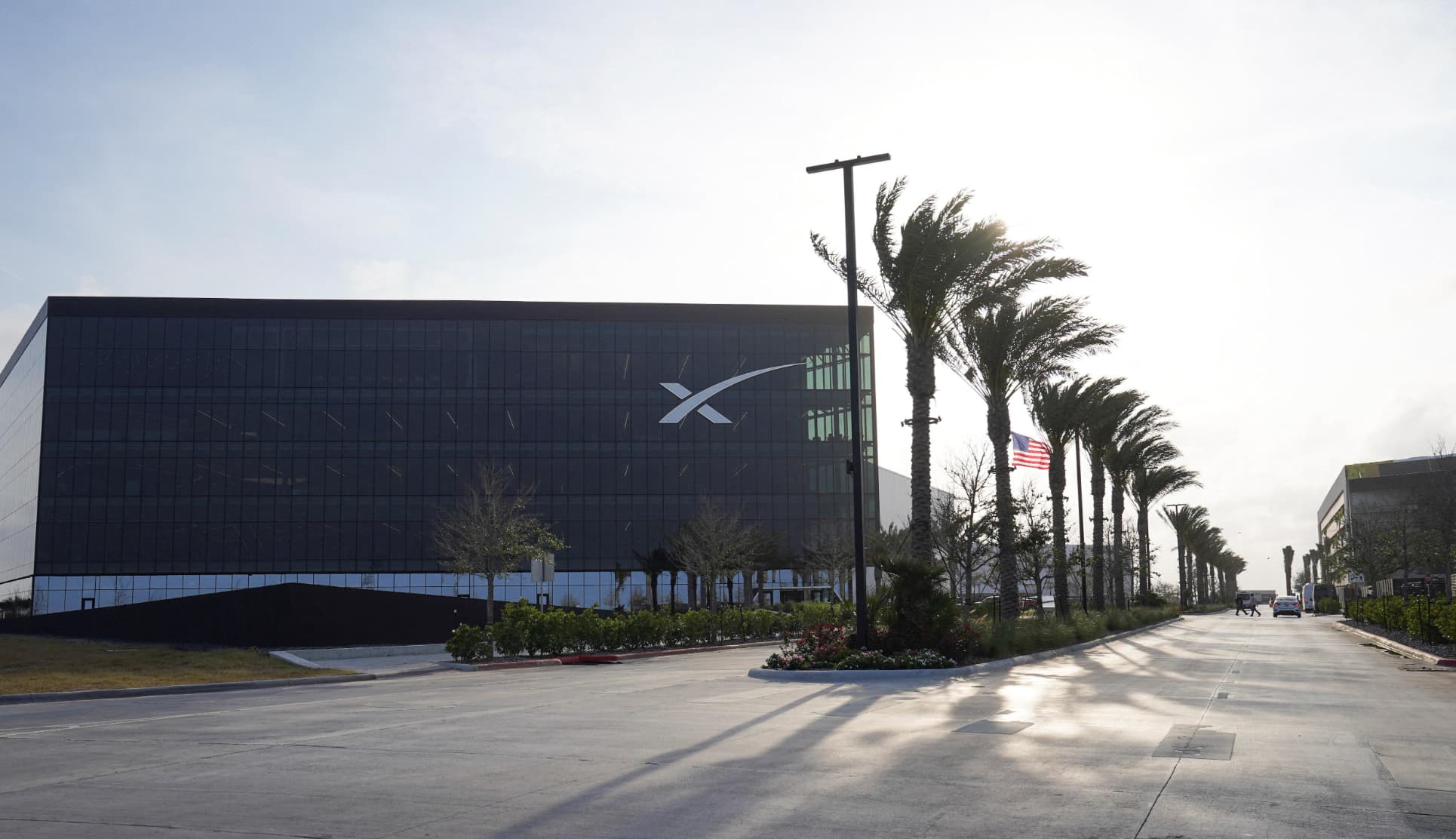
TXSE opened for business on September 9, 2026, and spent its first week establishing credentials by accepting transfer listings rather than original debuts. Texas Capital moved its Texas Equity Index ETF (TXS) and Texas Oil Index ETF (OILT) from NYSE Arca to TXSE on Wednesday, September 16 — giving the new exchange its first primary ETF listings without requiring fund managers to take a leap of faith on an unproven venue. Both funds, which launched in 2023, continue trading under identical ticker symbols with no operational disruption for existing shareholders.
PWRX changes the equation. Westwood Salient's decision to launch a brand-new fund directly on TXSE — rather than choosing the established infrastructure of NYSE Arca or Nasdaq — is a deliberate statement about the exchange's readiness to compete for original listings. The fund's investment thesis is built around what its managers are calling the modern power renaissance: after nearly two decades in which U.S. electricity demand grew at essentially flat rates, the combination of AI data center construction, industrial reshoring, and electrification of transportation is generating a demand inflection that the existing grid was not designed to absorb. The portfolio spans traditional utilities, grid infrastructure, data-center energy systems, and next-generation power generation — a mandate broad enough to capture multiple vectors of the theme without being locked into any single sub-sector.
The structural timing is deliberate. Direxion's Daily Semiconductor Bull 3X ETF (SOXL) pulled in $240.1 million in flows on Friday alone, reflecting the market's ongoing obsession with the AI-semiconductor complex — but the power infrastructure layer of that trade remains less efficiently priced in ETF form. Industrials have been drawing Schwab analyst support through 2026 on the thesis that AI infrastructure capital spending is a multi-year spending cycle, and PWRX is positioning itself as the cleaner, more direct expression of that thesis than a broad industrials or utilities fund. The non-traditional and leveraged ETF category absorbed $898.2 million in flows on Friday, signaling that traders are actively seeking targeted exposure rather than vanilla index products.
Three Funds Going Dark — Exit Now
While PWRX opens, three funds from Themes ETF Trust are closing. Today, September 18, is the final day to exit LGCF and SMCF — both listed on Nasdaq — and LIMI, listed on Cboe, without facing liquidity restrictions. After today, the funds will not accept creation or redemption orders. Trading halts at the close of regular trading on September 21, and from September 21 through September 25, shareholders may only be able to sell shares to certain broker-dealers with no guarantee of a functioning market during that window.
The language in Themes ETF Trust's closure notice deserves to be read literally: "no assurance that there will be a market for shares during that period." That is not boilerplate. It is a direct warning that shareholders who fail to exit through normal exchange mechanisms today could face significant illiquidity for up to four trading days. Any position in LGCF, SMCF, or LIMI held after Friday's close is a liquidity risk, not an investment thesis. The reason cited is straightforward — lack of assets — which places all three in a category of fund that simply never achieved the critical mass required for economic viability.
These three closures are not isolated events. More than 217 ETFs have liquidated through late August 2026, nearly double the 119 liquidations recorded at the same point in 2025. The acceleration is concentrated in the hyper-competitive leveraged, inverse, and single-stock categories, where over 73 specialized strategies have shut down after failing to build meaningful asset bases. The economics are unforgiving: a fund below roughly $30-50 million in assets struggles to cover operational costs while also trading at tight spreads, and the proliferation of competing products — the ETF industry has now launched more than 1,000 new funds in 2026 alone — means shelf space is finite and investor attention is not.
What Traders Watch Next
The TXSE story has a concrete next test: whether PWRX can gather assets at a pace that validates the exchange's viability as a primary listings venue for fund issuers. A fund that launches on a new exchange and fails to attract institutional capital sends a different signal than one that quietly gathers $100 million in its first month. The power infrastructure thesis itself has tailwinds — AI-driven electricity demand is a consensus macro theme in 2026, supported by data center construction spending that shows no sign of deceleration — but themes alone do not build ETF assets. Distribution relationships, advisor adoption, and fee competitiveness all determine whether a fund survives its first year.
For the broader ETF landscape, the simultaneous launch of PWRX and the closure of three Themes funds on the same calendar day is a compressed illustration of what is happening industry-wide: massive structural demand at the top of the market (the $1.43 trillion YTD inflow total, record-breaking flows into large-cap equity and active fixed income) coexisting with brutal Darwinian selection at the fund level. State Street's SPDR UC Investments 90/10 Endowment Strategy Index ETF (UCBG) launched this year with a $2.5 billion anchor allocation from the University of California — the largest-seeded ETF debut in history — at a 0.06% expense ratio. ARK's Active Autocallable Income ETF (ARKY) is targeting a 17.5% distribution yield. The competitive bar for new fund survival has never been higher, and the graveyard has never filled faster.
Watch PWRX's reported assets under management at the 30-day mark — mid-October 2026 — as the first meaningful signal of whether TXSE can sustain its original-listing ambitions and whether the power infrastructure sub-theme commands dedicated ETF capital or gets absorbed into broader AI infrastructure plays.
The Weekly Investor
Daily market analysis for active traders. Free.