Micron Obliterates Q3 Estimates, Guides $50B Q4
Micron's Q3 revenue hit $41.46B — up 346% YoY — crushing estimates. Q4 guidance of $49–$51B sent MU surging 17% pre-market Thursday.
Key Points
- Micron posted Q3 revenue of $41.46B — up 346% year-over-year — and non-GAAP EPS of $25.11 against a $20.20 consensus estimate, the largest earnings beat in the company's history.
- Insatiable data center demand for high-bandwidth memory, locked in by 16 long-term Strategic Customer Agreements totaling $22 billion in binding purchase commitments, is driving Micron's vertical revenue trajectory.
- Watch for analyst price target revisions over the next 48 hours and whether MU's +17% pre-market move pulls AMD and NVDA off Tuesday's lows ahead of today's open.
Micron's fiscal Q3 revenue came in at $41.46 billion — against a Wall Street consensus of $35.84 billion and a mere $9.30 billion in the same quarter a year ago — marking a 346% year-over-year surge that makes every other earnings beat this quarter look incremental. Non-GAAP EPS of $25.11 crushed the $20.20 estimate by 24%, and the company's Q4 guidance of $49–$51 billion landed roughly $7 billion above what analysts had modeled. MU was quoted at $1,228.00, up $180.08, or +17.18%, in Thursday pre-market trading.
The Numbers Behind the Blowout
The scale of Micron's Q3 result demands context, not just celebration. A single quarter ago — fiscal Q2 — Micron reported revenue of $23.86 billion. The jump to $41.46 billion in Q3 represents a sequential increase of roughly 74%, and the GAAP net income figure of $28.24 billion, or $24.67 per diluted share, confirms this is not a revenue-recognition trick. Operating leverage is real: the company is converting AI-driven memory demand into bottom-line cash at a rate that no analyst model fully anticipated six months ago.
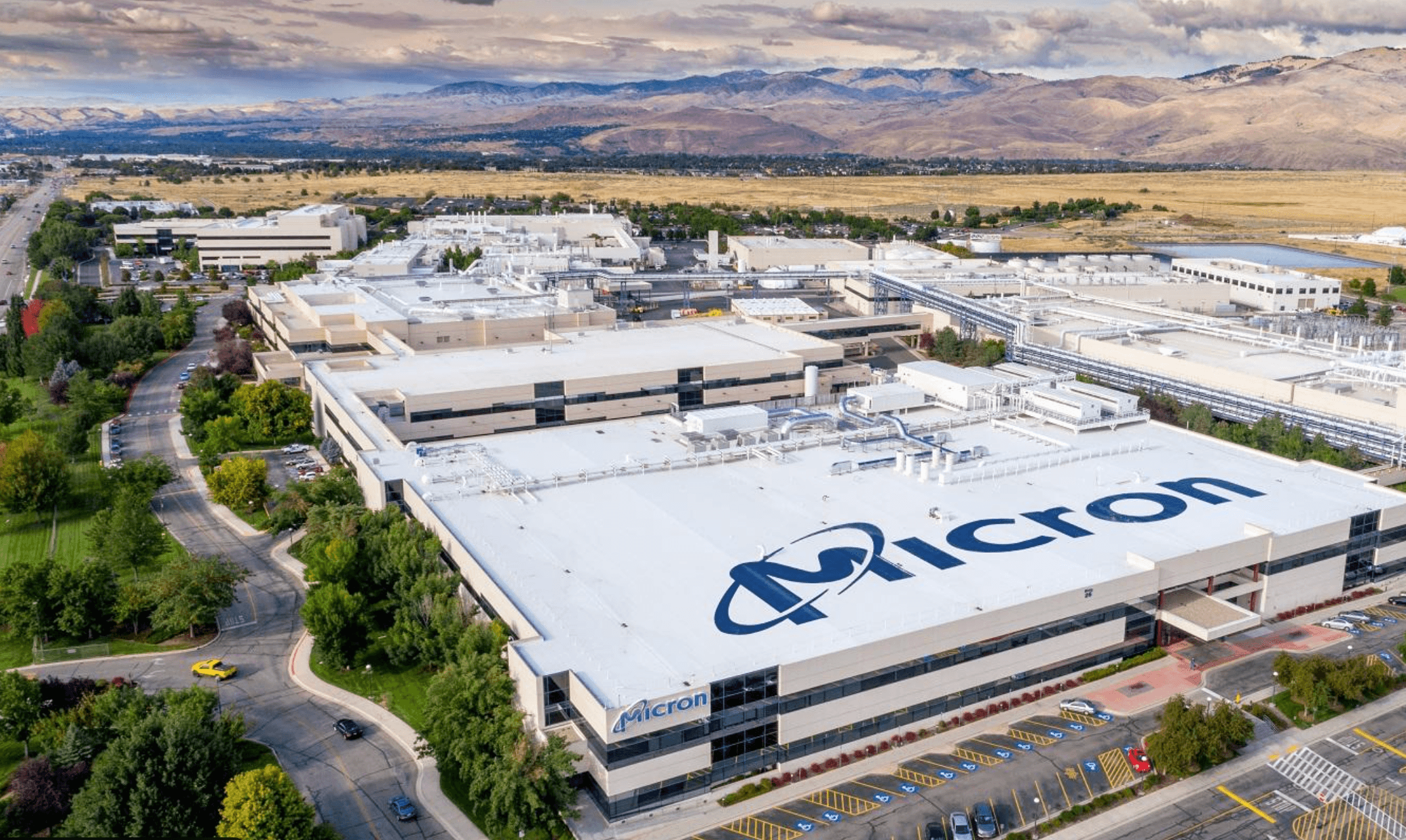
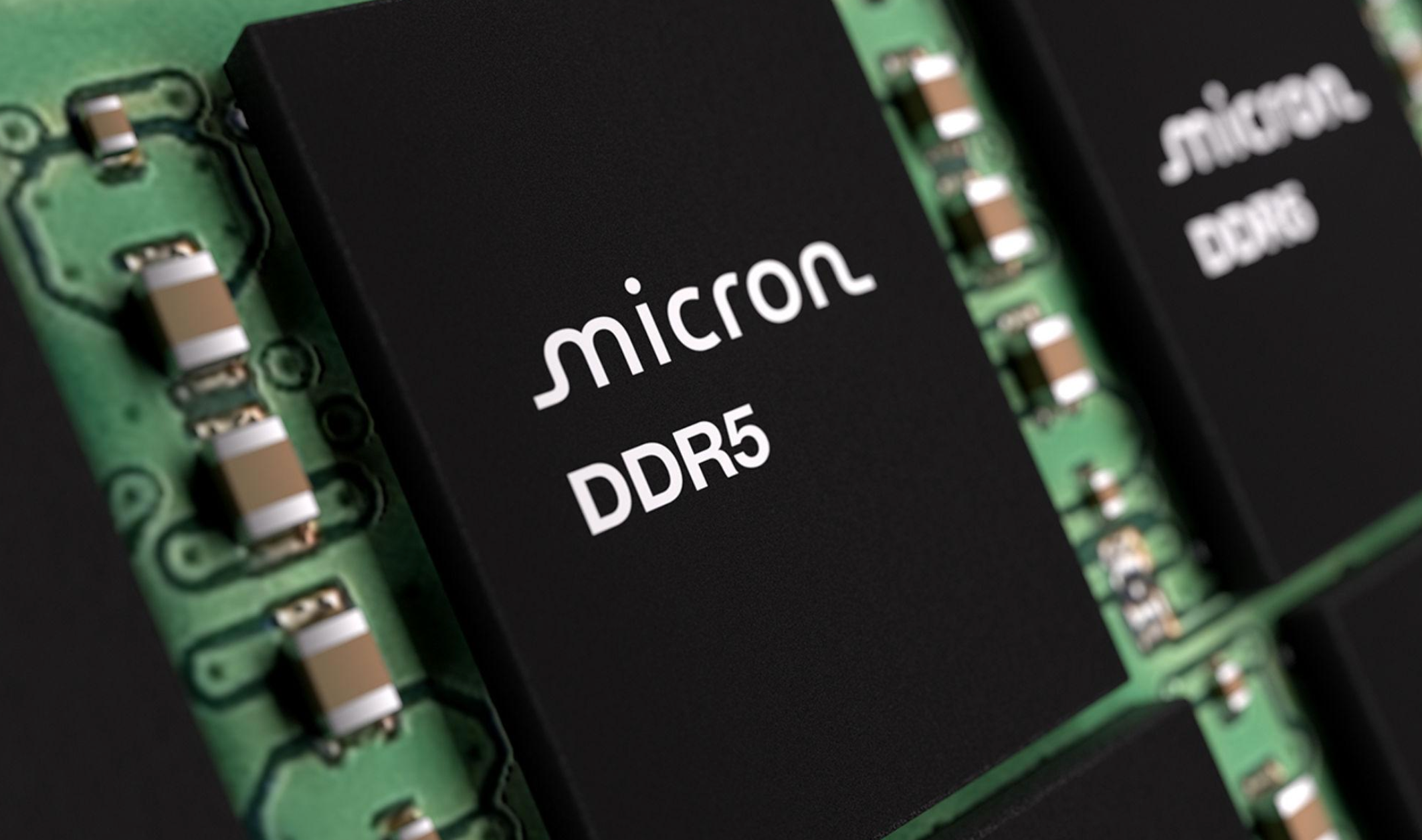
The primary engine is high-bandwidth memory. Data center operators building out AI training and inference clusters require HBM at a scale that is structurally different from the DRAM cycles of prior decades. Micron is one of only three companies in the world — alongside SK Hynix and Samsung — capable of manufacturing HBM at commercial scale, and it is the only one doing so on U.S. soil. That domestic manufacturing position is no longer just a geopolitical talking point: it is a revenue moat. With Arizona capacity sold out well into next year and CHIPS Act funding of $6.44 billion already secured, Micron's $200 billion U.S. facility investment program is translating directly into contracted revenue that competitors cannot easily replicate.
The gross margin trajectory supports a structural — not cyclical — read on these results. Memory pricing has historically been the cruelest input in semiconductor economics, collapsing 30–50% in downturns and wrecking balance sheets. Micron's Q4 guidance of $49–$51 billion, set against a backdrop of locked-in long-term agreements, suggests the company's management believes the pricing environment is insulated from the kind of spot-market volatility that defined prior up-cycles. Whether that holds through 2027 is the central risk to the bull thesis, but for this quarter and the next, the numbers are unambiguous.
The SCA Architecture Changes Everything
The most strategically significant disclosure in Micron's Q3 earnings report is not the revenue figure — it is the architecture of how that revenue is now being contracted. Micron has signed 16 Strategic Customer Agreements with data center operators and automakers, structured around binding multi-year purchase commitments with 3-to-5 year terms. CEO Sanjay Mehrotra disclosed that the total financial obligations under these SCAs reach $22 billion, and that "approximately half or more" of company revenue will eventually operate under this framework.
That is a fundamental change in Micron's business model. The company is not simply riding a demand wave — it is converting that wave into a recurring, contractually obligated revenue stream that provides visibility no prior memory cycle has offered. For investors, the implication is a potential re-rating of the multiple. Memory companies have historically traded at compressed valuations because of their exposure to commodity pricing cycles. If half or more of Micron's revenue base is locked in at negotiated terms for three to five years, the cyclical discount applied to the stock deserves scrutiny.
The counterargument is execution risk. Sixteen agreements across diverse customers — hyperscalers, automotive OEMs, and others — require Micron to ramp production at a pace that matches committed volumes. Any yield issue, manufacturing setback, or delay at a new U.S. fab could create a gap between what is promised and what is delivered. The company's $200 billion U.S. facility investment program is the largest capital commitment in its history, and construction timelines are notoriously difficult to compress. TSMC's Arizona experience — where full production ramp ran 18 months behind schedule — is a cautionary precedent the market will keep in mind.
Sector Reversal and What Traders Watch Next
Tuesday's semiconductor sell-off, which sent the broader sector down sharply with Intel falling 7.6%, Micron losing 8.5%, and AMD dropping 6.2%, now reads as a violent but short-lived capitulation event. Micron was, paradoxically, among the hardest hit in the session immediately preceding its own earnings release — a dynamic that compressed the entry price for any trader willing to hold through the print. The stock's +17% pre-market reversal erases Tuesday's loss and then doubles it.
The more important question for Thursday's session is whether Micron's results function as a sector catalyst or an idiosyncratic event. The bear case for the Tuesday sell-off centered on macro demand concerns and TSMC's announced price hikes across 74% of its wafer business — cost increases that affect Nvidia, AMD, Apple, and Qualcomm simultaneously. Micron's beat does not resolve the TSMC cost issue for its peers, but it does powerfully reaffirm that end-market demand for AI infrastructure components remains intact and is accelerating, not decelerating. Nvidia and AMD, both under pressure from Tuesday's session, are the names to watch at the open.
CNBC's coverage of the earnings release noted that Micron's market cap has crossed $1 trillion following the pre-market move, placing it alongside Nvidia and TSMC as the only pure-play semiconductor companies at that valuation threshold. Analyst price target revisions are expected to hit the tape over the next 24–48 hours, and given the magnitude of the Q4 guidance raise — $49–$51 billion versus a $43.2 billion consensus — upward revisions will be substantial. The prior high-water mark for sell-side MU targets was in the $1,150–$1,200 range; targets north of $1,400 are now a reasonable expectation based on Q4 implied earnings power. Traders holding MU should watch the $1,150 level as the first meaningful technical support on any post-earnings fade, with the $49 billion midpoint of Q4 guidance as the fundamental anchor for the next re-rating debate.
The Weekly Investor
Daily market analysis for active traders. Free.