
JOLTS August Forecast: 6.9M Openings Signal Labor Crack
August JOLTS job openings are forecast at 6.9 million vs. July's 7.3 million actual. A 400K drop would be the sharpest single-month slide in over a year.
Key Points
- August JOLTS job openings are forecast at 6.900 million, versus July's actual 7.3 million — a prospective 400,000-vacancy decline that would mark a significant acceleration in labor market cooling.
- July's report was described as "little changed," but June was revised down 177,000 to 7.2 million, and hires dropped further month-over-month — the underlying trend is weaker than the headline suggested.
- A print at or below consensus today strengthens the soft-landing narrative but also reduces the pressure on the Fed to hike again in October; a beat above 7.1 million reopens the hawkish case.
The number that matters most this morning crosses at 10:00 AM ET: August JOLTS job openings, forecast at 6.900 million against July's actual read of 7.3 million. A 400,000-vacancy drop in a single month would be the most consequential labor market data point since the Fed's September hike, and it lands at the worst possible time for traders trying to handicap October 28. The spread between the consensus and the prior print is not noise — it is the difference between a labor market that is cooling on schedule and one that is cracking.
What the Data Actually Shows
The July JOLTS report was officially described as "little changed," but that characterization required ignoring the revision history underneath it. June openings were revised down 177,000 to 7.2 million — not a rounding error. June hires were revised down 16,000 to 5.3 million. Total separations for June were also cut, to 5.3 million. Quits — the Fed's preferred real-time read on worker confidence — were revised down to 3.2 million in June, and layoffs and discharges were revised up 19,000 to 1.8 million. Read the revisions, not the headlines: the labor market in the summer of 2026 was measurably softer than the initial prints suggested.
July itself showed hires flat at 5.1 million and total separations flat at 5.1 million. Quits held at 3.1 million, which sounds stable until you notice that June was revised down to 3.2 million — meaning quits have been running in a narrow but declining band. The quits rate is the canary. Workers quit when they are confident they can find something better. A sustained decline in quits, even from historically healthy levels, is the precursor to slower wage growth, slower consumer spending, and eventually a cooler inflation profile. That is the sequence the Fed needs to see before it can credibly stop hiking. The question is whether August's data accelerates that sequence or reverses it.
The Fed Reads This Number in Real Time
Today's JOLTS print is not just a labor market data point — it is direct input into the October 28 FOMC calculus. The dot plot from September showed 16 of 18 participants projecting at least one more hike this year, but dots are projections, not commitments. They are conditioned on the data. A JOLTS print at 6.9 million or below — a 400,000 decline — gives the committee's more data-sensitive members, particularly Austan Goolsbee, a concrete reason to argue that the September hike is already doing its job and that October should be a hold. A print above 7.1 million, by contrast, would validate the hawks and put the October move back on the table as base case rather than tail risk.
The Fed's messaging around the September hike cited robust labor markets as one of the conditions that justified tightening. Chair Warsh specifically referenced domestic spending strength. If job openings fall sharply today, those two pillars — labor and spending — are at least partially undermined. That does not mean the committee reverses course in four weeks. It means the internal debate becomes genuinely contested, which is exactly the kind of uncertainty that creates volatility in rate-sensitive assets. According to BLS.gov, the JOLTS release is published with a two-month lag, which means today's August data reflects conditions as of the last business day of August — before the Fed's September 17 hike even occurred. The committee will be digesting a labor market snapshot from before its own policy action, which makes interpretation more art than science.
What Traders Watch Next
Beyond the JOLTS headline, two other data points compete for attention today. The Chicago PMI is forecast at 54.5, a reading that would signal continued expansion in Midwest manufacturing — a region that has been a relative bright spot even as services activity has shown more mixed signals. A print above 54.5 would be the third consecutive month above 50, which constitutes a genuine trend, not a one-month bounce. A miss below 52 would raise questions about whether the Fed's rate increase is already biting into industrial activity faster than expected. The S&P/Case-Shiller Home Price Index is also due today; with mortgage rates having risen in sympathy with the Fed's September move, any deceleration in home price appreciation would add to the picture of a rate-sensitive economy beginning to respond.
The week's data trajectory matters as much as today's individual prints. Wednesday brings ADP at 8:15 AM, GDP third release at 8:30 AM, and — most critically — Personal Income and the PCE deflator at 8:30 AM. PCE is the Fed's preferred inflation gauge. If it comes in above the 2.0% target by a meaningful margin, the JOLTS softness today gets overridden in the committee's reaction function. The sequence is this: JOLTS today sets the labor narrative, PCE Wednesday sets the inflation narrative, and NFP Friday either confirms or scrambles both. Traders who position on JOLTS alone without accounting for the PCE and NFP inputs are solving a three-variable equation with one data point.
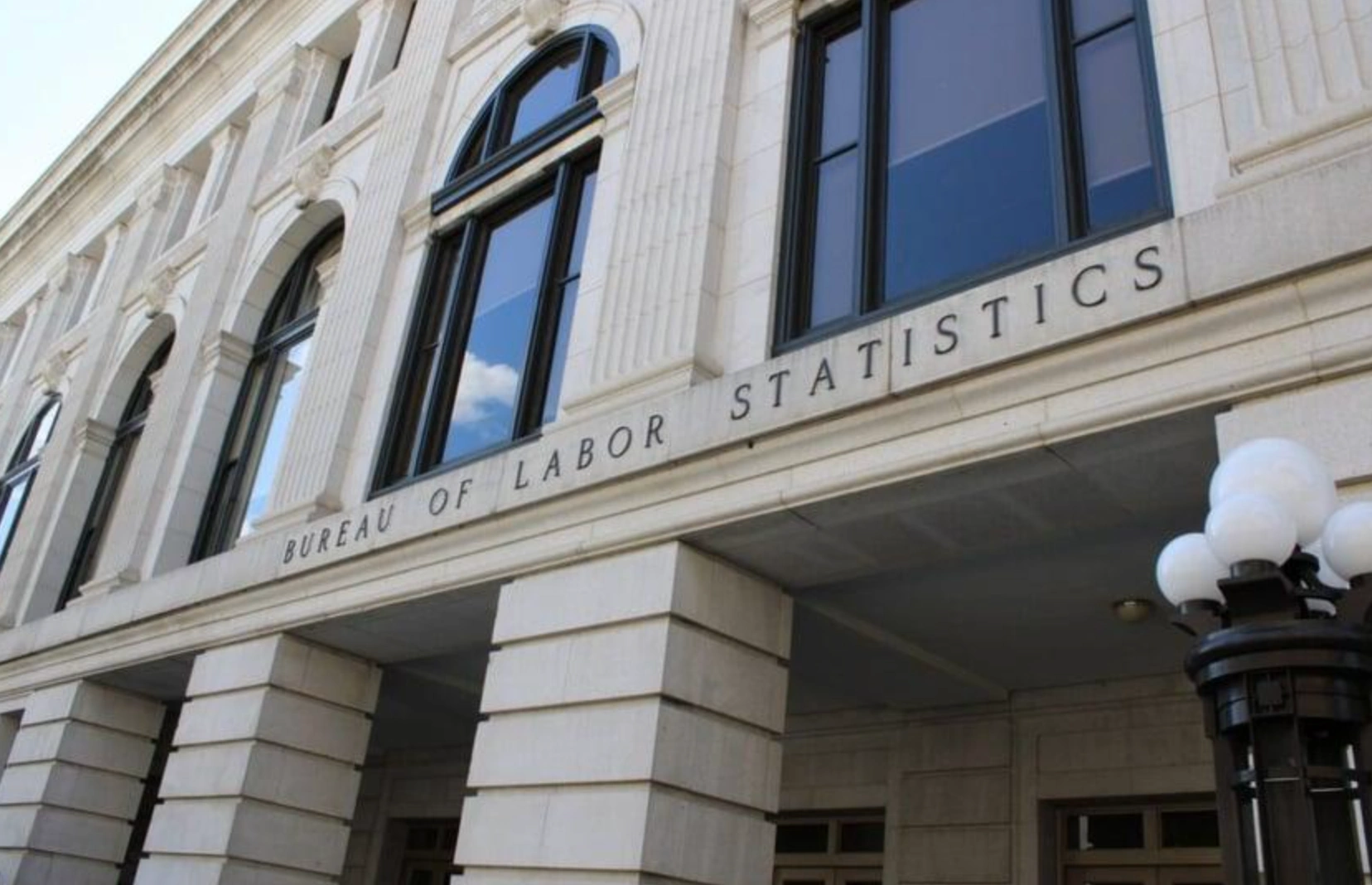
The 10-year Treasury yield is the instrument to watch. A soft JOLTS print at or below 6.9 million, followed by a benign PCE, could push the 10-year back toward 4.20% from current levels — a meaningful rally for TLT and a tailwind for rate-sensitive equity sectors including utilities and REITs. A beat on JOLTS combined with a hot PCE would be the scenario that puts 4.60% back in play on the 10-year, validates the four-dot scenario for two more 2026 hikes, and forces a reassessment of equity valuations that have been implicitly pricing a pause. The Bureau of Labor Statistics releases JOLTS at exactly 10:00 AM ET. Be at your terminal.
The Weekly Investor
Daily market analysis for active traders. Free.