Intel's $20B Offering Closes Today: What the Dilution Buys
Intel's upsized $20B stock offering closes August 12. Here's what the capital raise means for chip manufacturing, CapEx, and INTC's 175% YTD run.
Key Points
- Intel's upsized $20B common stock offering closes today, August 12, generating an estimated $19.7B in net proceeds — the largest single capital event in the chip sector this week — with a $2.25B greenshoe option still outstanding.
- The raise funds manufacturing CapEx at a moment when TSMC has already lifted its 2026 capex guidance to $60B–$64B and SK Hynix announced $38B in new plant investment, signaling an industry-wide infrastructure arms race.
- Traders should watch whether Intel's post-offering stock behavior holds above its pre-announcement base, given the stock has surged 175% year-to-date and dilution at this scale historically tests momentum names.
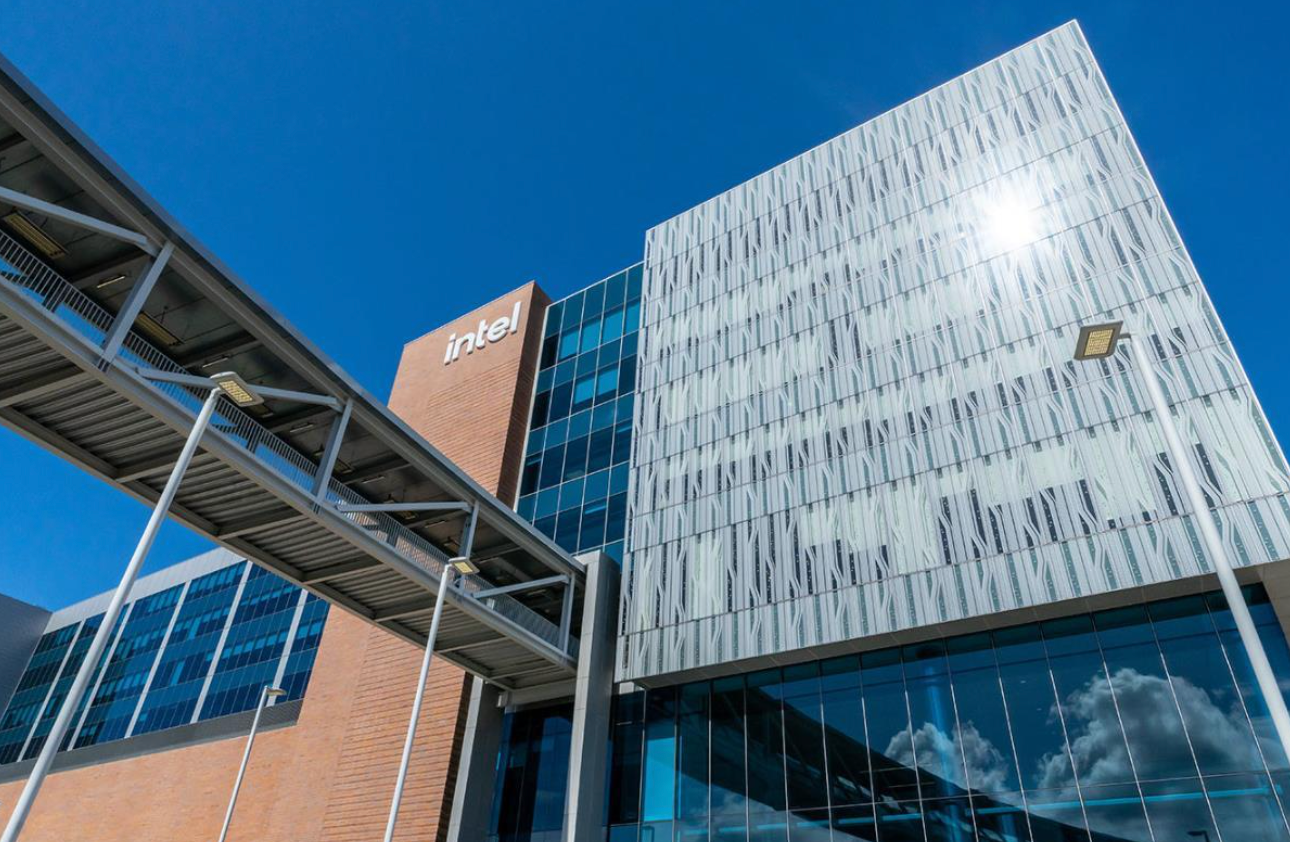
Intel's biggest capital raise in its history closes today, and the $19.7B in net proceeds is only the first number that matters. The second is 175% — Intel's year-to-date stock gain heading into an offering that upsized from $15B to $20B on the back of demand that oversubscribed the original deal. The greenshoe gives underwriters the right to purchase an additional $2.25B in shares within 30 days, bringing the maximum potential raise to roughly $22.25B. What Intel does with that capital, and whether the manufacturing buildout it finances can actually close the gap with TSMC, is the question that defines the stock's next leg.
Why Intel Needed This Much Capital
The short answer is that semiconductor manufacturing at the leading edge is now a capital sport with no off-season. Intel's foundry ambitions require fab construction timelines measured in years and cost overruns measured in billions. The company disclosed it will use proceeds to finance capital expenditures and expand its manufacturing footprint — language that is deliberately broad but operationally specific. Intel Foundry Services, the unit competing directly with TSMC for external customer wafer starts, requires sustained investment in extreme ultraviolet lithography equipment, advanced packaging infrastructure, and the power delivery systems that modern AI chips demand. None of that is cheap, and none of it can be financed purely through operating cash flow when you are simultaneously running a legacy x86 business, an AI accelerator development program, and a foundry services ramp.
The U.S. government's 10% equity stake in Intel adds a strategic dimension to the capital raise that pure-play investors cannot ignore. Federal backing — financial and political — insulates Intel from some of the margin-of-error risk that would otherwise follow a 175% YTD run into a $20B dilution event. The CHIPS Act framework means that Intel's fab construction in Ohio and Arizona carries both federal subsidy support and an implicit national-security mandate that makes the company difficult to simply short on valuation grounds. That political backstop is real, but it is not a substitute for execution. Fabs must produce chips that customers want to buy at yields that make the economics work, and Intel's foundry yield track record at the most advanced nodes remains a point of ongoing scrutiny among institutional investors.
The Sector Arms Race Intel Is Joining
Intel's $20B raise does not occur in a vacuum. TSMC raised its 2026 CapEx guidance to $60.0B–$64.0B and reported July revenue up 45% year-over-year — numbers that confirm AI chip demand is still accelerating, not plateauing. SK Hynix announced $38B in new memory chip plant investment. The Invesco PHLX Semiconductor ETF (SOXQ) is up approximately 100% year-to-date, a pace that reflects genuine demand expansion rather than simple multiple expansion. Deloitte's 2026 Semiconductor Industry Outlook projects global semiconductor annual sales will reach a historic $975B this year, driven overwhelmingly by AI infrastructure spending. In that context, Intel's $20B raise is not aggressive — it is arguably table stakes for a company that wants to remain relevant in the foundry business through the end of the decade.
The competitive dynamic is worth spelling out precisely. TSMC controls 72% of the global chip foundry market and fabricates chips for virtually every AI-linked company of consequence, from Nvidia to Apple to AMD. Intel Foundry Services currently holds a fraction of that market. Closing even a portion of that gap requires manufacturing nodes that can compete on yield, on power efficiency, and on the specialized packaging techniques — chiplets, 3D stacking — that modern AI accelerators depend on. As CNBC reported, Intel's stock has benefited from the AI infrastructure build-out narrative and government support, but the offering itself is a bet that the company can convert capital into competitive manufacturing capacity before the AI spending cycle peaks. That is not a guarantee. It is a multi-year execution wager backed by $20B in fresh equity.
The offering's upsizing from $15B to $20B is itself a market signal. Underwriters do not upsize deals into investor resistance. The fact that demand supported a one-third increase in offering size tells you that institutional buyers — likely a mix of sovereign wealth funds, long-only tech funds, and quant strategies riding momentum — believe Intel's manufacturing narrative has a credible runway. Whether those buyers are right or simply momentum-chasing at the tail end of a 175% run is a question the next two quarters of foundry customer announcements and yield disclosures will begin to answer.
What Dilution at This Scale Actually Does
The arithmetic of a $20B offering matters. Intel's market cap heading into this offering was roughly in the range where $20B in new shares represents meaningful dilution — not catastrophic, but not trivial. The stock absorbed the announcement without collapsing, which is the first test any dilutive offering must pass. The greenshoe window — 30 days from today's close — means underwriters can stabilize the stock by purchasing additional shares if it trades below the offering price, providing a technical floor in the near term. But that stabilization mechanism expires, and when it does, the stock's ability to hold its post-offering level will depend entirely on what Intel reports operationally.
The macro context adds a layer of complexity. With the 10-year Treasury at 4.72% and the Fed Funds Rate at 3.63%, the cost of capital for capital-intensive businesses remains elevated relative to the zero-rate era that funded the last great semiconductor buildout. Intel's CapEx is now largely equity-financed through this offering rather than debt-financed, which reduces interest expense risk but concentrates dilution risk among existing shareholders. That is a defensible trade-off at current rates, but it assumes the equity market remains constructive toward the AI infrastructure theme. The broader Nasdaq is not immune to rate pressure — Tuesday's session saw the index drop 0.6% as mega-cap tech names including Amazon (-2.09%) and Apple (-1.09%) pulled back — and a sustained rate-driven de-rating of growth equities would hit Intel's elevated multiple before it hits foundry fundamentals.
The specific level to watch after today's close is Intel's offering price. If INTC trades through that price to the downside in the next two to three sessions, it signals that the institutional demand that upsized the deal was shorter-duration than the bull case requires. Yahoo Finance's coverage noted the original $15B announcement generated immediate buying interest — the upsizing to $20B is the moment of truth. Cisco's earnings print tonight will also matter indirectly: a strong Cisco result validating AI networking demand would support the sector bid that has carried Intel's 175% YTD gain, while a miss could remove the macro tailwind precisely as Intel's new shares hit the float.
The Weekly Investor
Daily market analysis for active traders. Free.