Intel's $15B Raise Is a Dilution Bet on a Turnaround
Intel raised $15 billion to chase AI chips, but shares fell 4% Monday. The dilution math and structural divergence from AI-native rivals define the trade.
Key Points
- Intel raised $15 billion in new equity capital to fund its AI chip ambitions, and shares fell 4.06% Monday as dilution math immediately dominated the tape.
- D.A. Davidson initiated coverage with a neutral rating and a $45 price target, a level below current trading, citing the structural gap between Intel's roadmap and the AI-native chip leaders it is chasing.
- The critical test for Intel is whether its foundry buildout and packaging technology — specifically its EMIB approach, which TSMC is now reportedly replicating — can generate revenue before the equity raise creates permanent shareholder destruction.
Intel dropped 4.06% Monday after completing a $15 billion equity raise — the largest capital call in the company's recent history, executed at the worst possible moment in its competitive cycle. The market's verdict was immediate and unsentimental: the dilution is real, the AI turnaround is not yet.
The Dilution Math Dominates
Fifteen billion dollars is not a rounding error. At Intel's current market capitalization, this raise represents a material percentage increase in shares outstanding, and the market moved accordingly — INTC fell 4.06% on Monday in a session where the broader semiconductor index was not collapsing. This was stock-specific selling, driven by investors doing straightforward dilution arithmetic and concluding that the risk-reward had deteriorated. D.A. Davidson's initiation with a neutral rating and a $45 price target — below current trading levels — formalized the skepticism that had already been present in the options market for weeks.
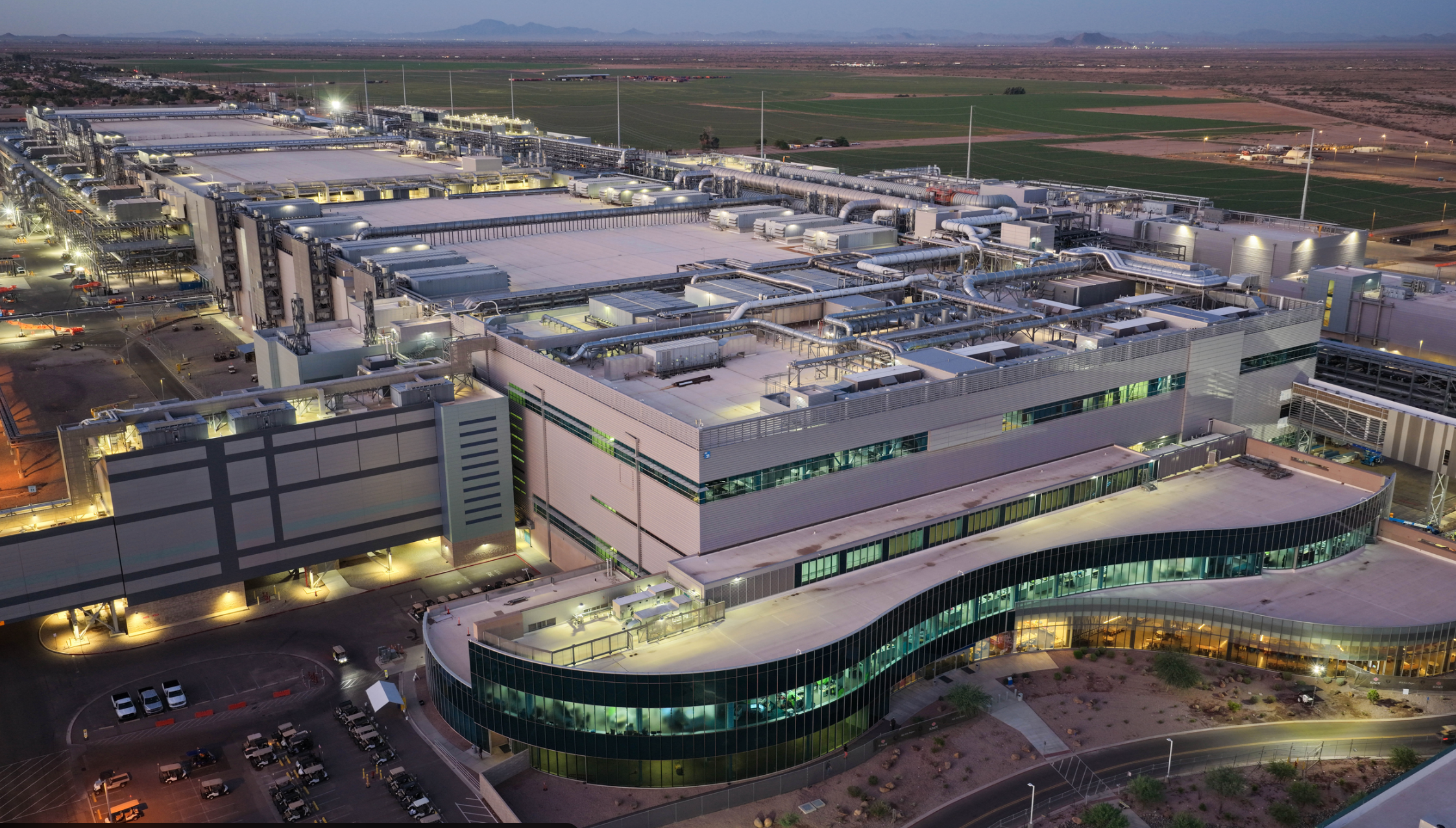
The $15 billion is nominally earmarked to accelerate Intel's AI chip strategy: expanding its foundry capacity, funding advanced packaging research, and closing the competitive gap with TSMC and Nvidia on the hardware stack that AI model training actually runs on. Earlier this year, Intel guided Q1 revenue to a range of $11.7 billion to $12.7 billion, with management citing memory supply constraints affecting handset demand as a complicating factor. That guidance range was notable not because it was catastrophically bad, but because it illustrated the structural reality Intel is operating inside: the company has meaningful revenue exposure to smartphones, PCs, and automotive silicon — markets that are growing slowly or not at all in 2026 — while its AI-focused competitors are running at the pace of TSMC's 45% July revenue surge.
That divergence is the core problem the $15 billion is supposed to solve. But capital alone does not solve a technology gap, and Intel's foundry business — Intel Foundry Services — has not yet demonstrated the volume or yield economics that would justify the multiple expansion the company's AI narrative requires. Investors are being asked to fund a multi-year buildout at a 4.65% 10-year Treasury yield, meaning the opportunity cost of capital has rarely been higher in the post-financial-crisis era. The dilution is immediate; the payoff is measured in years.
The EMIB Angle Is Underappreciated
There is a specific technical development inside the semiconductor supply chain that deserves more attention from Intel investors, and it cuts in two directions simultaneously. Reports surfaced recently that TSMC is developing a new advanced chip-packaging technology that closely resembles Intel's Embedded Multi-die Interconnect Bridge — EMIB — approach, and is said to be partnering with Taiwan-based Kinsus Interconnect Technology on the project. When that report crossed, Intel shares jumped approximately 12% and TSMC gained nearly 7% in a single session, suggesting the market read the development as validation of Intel's packaging intellectual property.
The bullish interpretation is straightforward: if TSMC is building something that looks like EMIB, then Intel's years of investment in heterogeneous chip packaging were not wasted — the technology is proven enough that the world's most important foundry is replicating the architecture. Advanced packaging is the critical competitive moat in AI chip manufacturing right now. TSMC's CoWoS packaging, which connects GPU dies to high-bandwidth memory at the densities required for large model training, is already capacity-constrained and has become one of the binding bottlenecks in the global AI hardware supply chain. If Intel's EMIB technology can serve as a competing packaging platform — or if Intel Foundry Services can offer CoWoS-equivalent capacity — the company has a legitimate angle into the AI infrastructure stack.
The bearish interpretation is equally valid: TSMC replicating your technology means TSMC is about to compete with you in your own differentiated capability. Intel does not have TSMC's manufacturing scale, its customer relationships with Nvidia and AMD, or its yield track record across advanced nodes. TSMC CEO C.C. Wei has already stated publicly that the company is working hard to build production lines in the United States but that existing capacity is "still not enough, far from enough," with new sites planned in Japan and Germany. That is a company running at full capacity utilization and investing aggressively in expansion — the exact profile that makes a new entrant's packaging technology increasingly irrelevant if TSMC can replicate it internally. Intel's EMIB advantage may have a shorter shelf life than the $15 billion raise assumes.
What Traders Watch Next
The actionable question for INTC is not whether the AI strategy is directionally correct — it probably is — but whether the timeline works at current valuations given the dilution overhang. Samsung's potential strike risk, flagged in recent supply chain reports, is a wildcard that could indirectly benefit Intel: Samsung is a primary supplier of high-bandwidth memory that feeds into AI chip packages, and any disruption to Samsung's HBM output would tighten the supply chain in ways that could create urgency around alternative packaging solutions, including Intel's. That is a low-probability tail event, but traders in INTC should have it on their radar.
The more immediate catalyst is Applied Materials' earnings later this week. AMAT supplies the wafer fab equipment that foundries — including Intel Foundry Services — use to build advanced chip manufacturing capacity. AMAT's order book is a leading indicator of where foundry investment dollars are flowing; if Intel Foundry Services is gaining traction as a customer alongside TSMC and Samsung, it should show up in AMAT's commentary around customer concentration and equipment order mix. D.A. Davidson's $45 price target is the level the market will test if SMCI or CRWV disappoint tonight and the AI infrastructure sentiment sours across the board — a risk-off move in the data center trade would remove the one narrative pillar that has kept INTC above its fundamental support levels. The next hard number that resets the Intel thesis is the company's next quarterly revenue print; until then, the $15 billion raise is an equity overhang that will cap the upside on every AI-driven rally attempt.
The Weekly Investor
Daily market analysis for active traders. Free.