
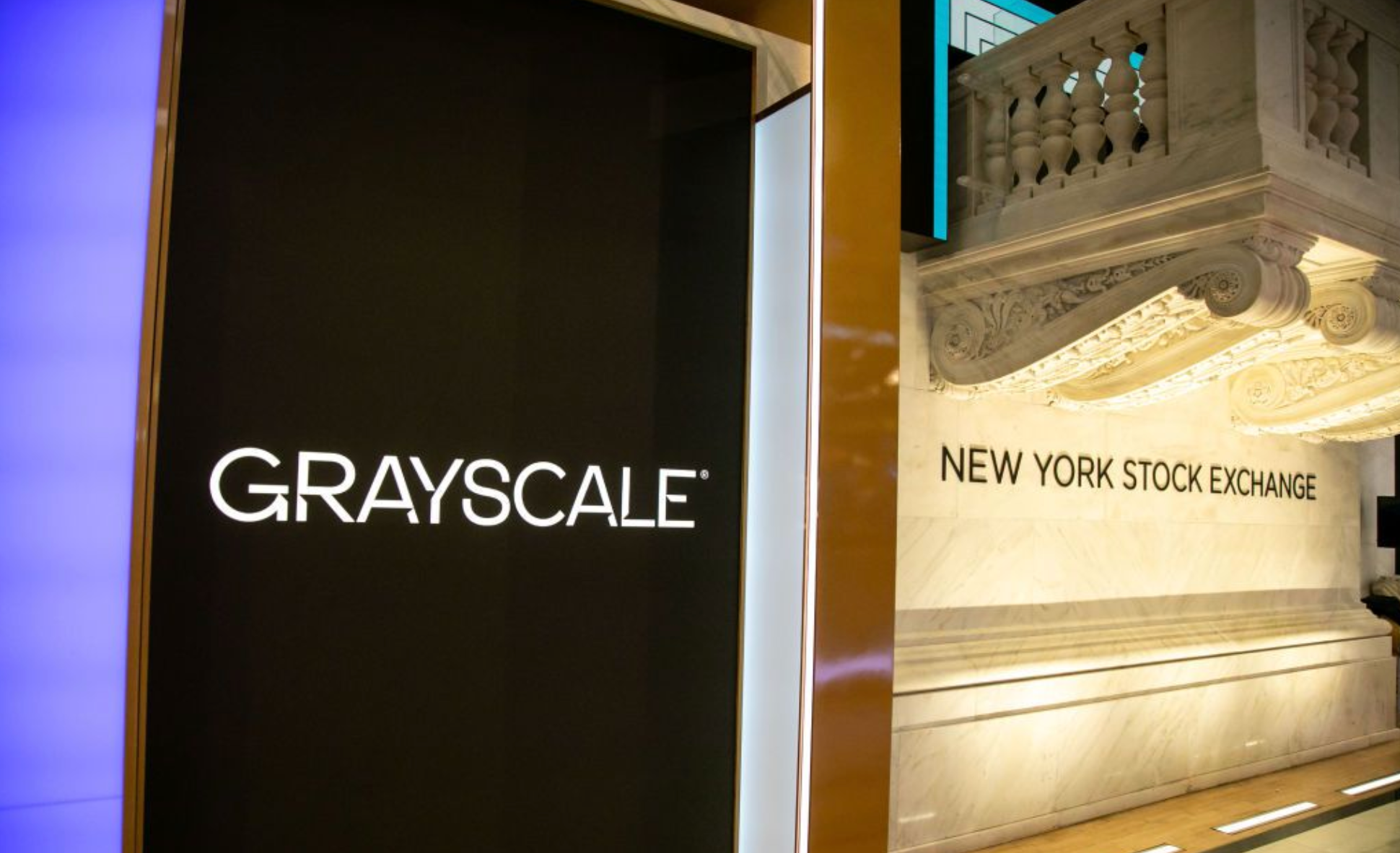
Grayscale Kills 3 Altcoin ETFs in 190 Seconds
Grayscale withdrew ADA, HBAR, and DOT ETF filings in under four minutes. The move signals deep issuer doubt about the CLARITY Act and U.S. crypto regulation.
Key Points
- Grayscale filed three Form RW withdrawals — killing its Cardano, Hedera, and Polkadot ETF registrations — in exactly 190 seconds on August 7, with no public explanation.
- The withdrawals arrived two days after Grayscale's own research team warned the U.S. faces a crypto capital exodus if the CLARITY Act fails — making the timing a blunt statement of issuer confidence.
- The September 15 Senate return date is now the hard deadline: if CLARITY stalls again, expect additional ETF withdrawals across issuers and renewed altcoin selling pressure.
Three Form RW submissions. One hundred and ninety seconds. No press release. On August 7, between 4:33 and 4:36 p.m. ET, Grayscale quietly buried its U.S. exchange-listed ambitions for Cardano, Hedera, and Polkadot — and the speed of the withdrawal tells you more about the state of American crypto regulation than any Senate floor speech has managed to.
The 190-Second Decision and What It Signals
A Form RW is a withdrawal of a registration statement filed with the SEC. It is not a pause, not a deferral, and not a request for additional review. It is a termination. All three filings used identical language — "Grayscale does not intend to proceed with the proposed distribution of shares" — which signals that this was a coordinated legal decision made at the firm level, not a product-specific judgment about ADA, HBAR, or DOT individually. When a firm withdraws three products in under four minutes using boilerplate language, the message is institutional: the cost-benefit analysis on proceeding has collapsed.
The context surrounding those 190 seconds is what makes this actionable for traders. Two days before the withdrawals — on August 5 — Grayscale's research team published analysis warning that the United States risks a crypto capital exodus if the CLARITY Act fails to advance in the Senate. That is a lobbying position. The Form RW filings that followed 48 hours later are a revealed preference. Grayscale was simultaneously telling Washington that regulatory clarity is existential for U.S. crypto competitiveness while internally deciding it no longer believed that clarity was coming in time to justify maintaining three active registration statements. Those two positions are not contradictory — they are sequential. First you lobby. Then you cut your losses.
For ADA holders, the withdrawal removes a catalyst that had been partially priced into Cardano's positioning among U.S.-focused institutional allocators. HBAR and DOT face the same dynamic. None of these assets have spot ETF vehicles available in the U.S. market, and Grayscale's exit from the queue signals that the wait is getting longer, not shorter. Other issuers with pending altcoin registrations are now operating with an updated data point about the institutional read on CLARITY Act timing.
Ethereum, which does have an active U.S. spot ETF market, is the immediate relative beneficiary — and worth watching as institutional altcoin appetite that can't find a listed vehicle in ADA or DOT gets redirected. ETH pulled in $244.94M in spot ETF inflows last week, a four-month high, even as it trades at $1,870 — a level representing more than a 62% drawdown from its August 2025 peak near $5,000. The ETF wrapper is doing work that spot price performance is not.
The CLARITY Act: Senate Calendar and Realistic Odds
Senate Majority Leader John Thune filed a procedural motion on August 8 — one day after the Grayscale withdrawals — to advance the CLARITY Act. The motion acknowledged reality: a final floor vote before the August recess was not achievable. Lawmakers return to Washington on September 15. That date is now the de facto deadline for meaningful progress in 2026.
The CLARITY Act, if passed, would establish the first comprehensive U.S. market structure framework for digital assets — defining which tokens are securities, which are commodities, and which regulatory body has jurisdiction over each. The absence of that framework is the direct cause of Grayscale's withdrawal. The SEC has not provided a consistent standard for evaluating altcoin ETF applications beyond Bitcoin and Ethereum, and issuers have been left to guess at what the commission will approve. The Form RW withdrawals for ADA, HBAR, and DOT reflect that guessing game ending.
The Senate calendar is not friendly. Lawmakers return September 15, and the September FOMC meeting falls on September 16–17 — meaning the first week back will be dominated by monetary policy coverage and market reaction, not legislative floor management. After that, the calendar compresses rapidly toward midterm election season. Grayscale's own analysis, before the withdrawals, described an agreement this year as "technically possible." The operative word was already technically. Since the filings, the honest read is that 2026 passage is a low-probability outcome, and institutional positioning in altcoins without existing U.S. ETF wrappers should reflect that.
It is worth noting that Form RW withdrawals are not permanent closures. Any issuer — including Grayscale — can refile a registration statement if regulatory conditions change, if Congress passes CLARITY, or if SEC guidance evolves. The door is not locked. But it is not open either, and the firms best positioned to refile quickly are the ones that have maintained internal product development infrastructure for these assets. Whether Grayscale has done that, or whether the August 7 decision reflects a broader product rationalization inside the firm, is not yet public.
What Traders Watch Next
The immediate trade implication is asymmetric and date-dependent. If the CLARITY Act advances to a full Senate floor vote after September 15 and shows credible momentum toward passage, ADA, HBAR, and DOT will reprice sharply — those assets carry regulatory optionality that is currently being discounted to near-zero by U.S. institutional allocators. A Grayscale re-filing, or a competing issuer entering the queue for any of these three assets, would be the first visible signal that the regulatory calculus has shifted.
The downside scenario — CLARITY stalls again in September, either through procedural delay or outright failure to advance — has a clear transmission mechanism into crypto prices. Grayscale has already demonstrated willingness to withdraw filings rapidly and without public explanation. If other issuers with pending altcoin registrations reach the same cost-benefit conclusion, a wave of coordinated Form RW filings would remove significant forward price catalysts from the altcoin market simultaneously. That is not a tail risk — it is the base case if September 15 produces another procedural delay.
Watch the Senate floor schedule in the week of September 15 for any indication of CLARITY Act prioritization. Watch Grayscale's SEC filing page for any new registration statements — a re-filing within 90 days of the withdrawal would signal the firm received informal guidance from the SEC that changed its outlook. And watch ETH ETF flows specifically: the $244.94M weekly inflow into Ethereum's spot vehicles suggests that institutional altcoin demand has not disappeared — it is just crowding into the one listed vehicle that exists. If CLARITY passes, that crowding unwinds fast, and capital rotates into the newly accessible assets. September 15 is the date that determines whether that rotation happens in 2026 or gets pushed to 2027.
The Weekly Investor
Daily market analysis for active traders. Free.