FTC's State AI Law Ruling Is the Sleeper Catalyst Nobody Is Pricing
The FTC's pending preemption ruling on Colorado's AI Act could reshape regulatory risk for every major AI model provider. Comment period closed July 31.
Key Points
- The FTC's public comment period on whether Colorado's AI Act is federally preempted closed July 31, 2026 — a ruling is now pending and could set the national legal framework for state-level AI regulation.
- The proposed FTC policy statement labels Colorado's law "impliedly preempted" where it conflicts with federal regulatory schemes, a position that would function as a structural legal shield for large AI model providers.
- Traders should watch for the ruling drop alongside active Microsoft antitrust and Google DOJ remedy proceedings that together represent the most concentrated regulatory risk cluster in the AI sector right now.
The most consequential AI regulatory development of the year is receiving almost no market attention: the FTC's pending ruling on whether state AI laws can legally compel companies to alter their models' outputs is now in the final decision window, with the public comment period having closed July 31, 2026. If the agency formalizes its proposed position — that Colorado's Artificial Intelligence Act is impliedly preempted by federal law — it establishes a national legal precedent that shields every large AI model provider from a growing patchwork of state-level regulatory mandates. That ruling could land any day. Nobody is pricing it.
The Preemption Stakes
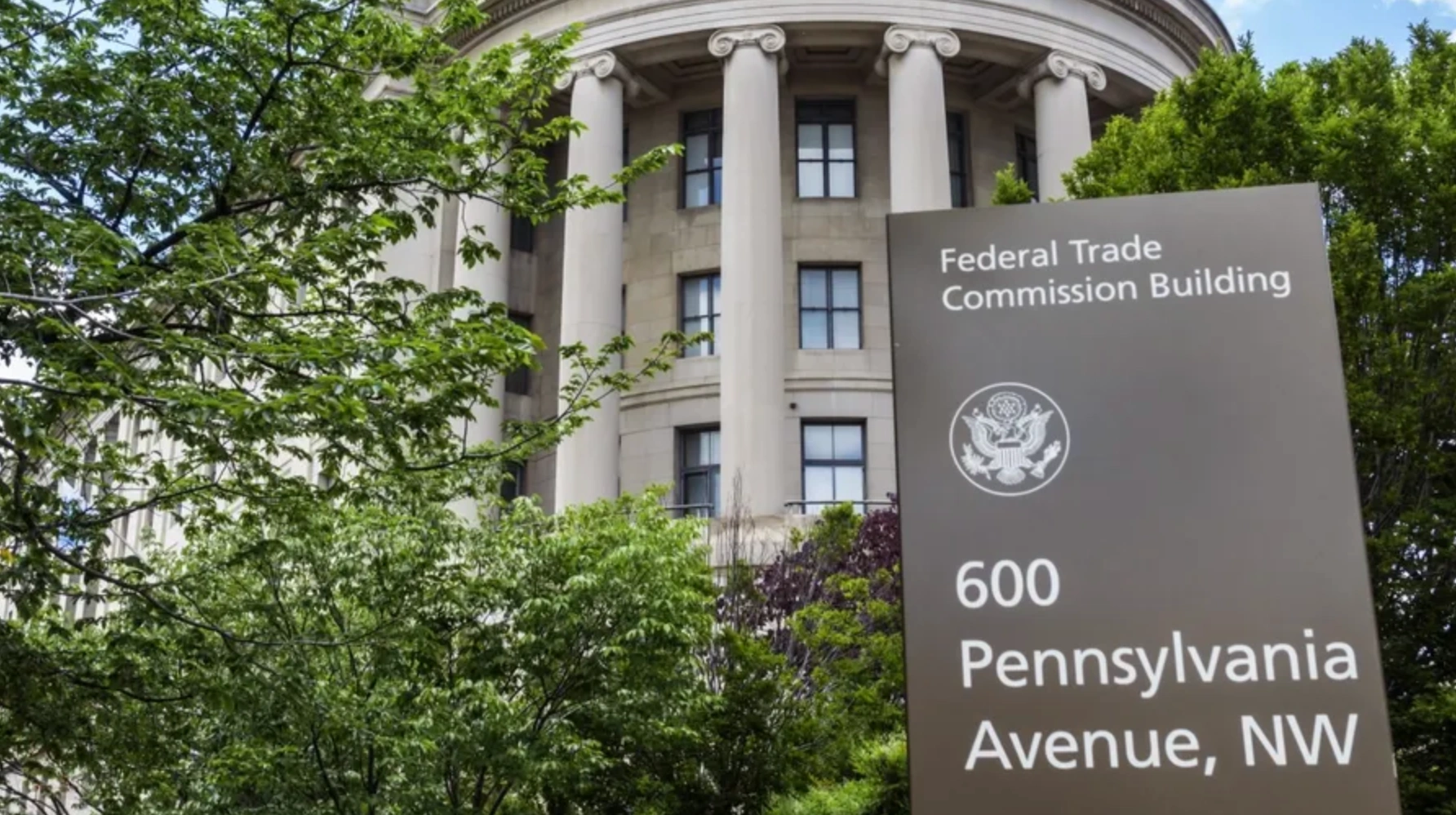
Colorado's AI Act is the test case, but the implications extend to every state that has passed or is drafting AI legislation that requires companies to modify how their models generate or filter outputs. The FTC's proposed policy statement, published in the Federal Register ahead of the July 31 comment deadline, frames Colorado's law as "impliedly preempted to the extent it conflicts with a federal regulatory scheme." That is precise legal language, not a vague directional preference. The Trump executive order issued in December directed the FTC specifically to address state laws that require alteration of "truthful outputs of AI models" — meaning this ruling has explicit White House backing at the policy level.
For investors in Alphabet, Microsoft, OpenAI (when it becomes publicly tradable), Anthropic, and every enterprise AI software vendor, this is a structural derisking event if the FTC formalizes preemption. The alternative — a fragmented landscape of 50 state AI mandates, each with different output requirements — would impose compliance costs that disproportionately crush mid-tier and emerging AI vendors while large incumbents absorb them. A federal preemption shield concentrates advantage at the top of the market. That is a bullish structural outcome for Google's Gemini, Microsoft's Azure AI stack, and Amazon's Bedrock platform, all of which have the engineering and legal resources to navigate a complex regulatory environment but benefit from a simpler one.
The bifurcation happening simultaneously in AI product strategy amplifies this regulatory dynamic. Big tech is splitting AI into two distinct tracks: large general models — Google's Gemini 3.1 Pro being the current flagship, positioned around reasoning, long-context handling, multimodal work, and agent-style workflows — and narrow task models from players like Microsoft. Mid-tier AI vendors caught between those camps are already facing margin compression from the product side. A state-level regulatory burden on top of that product-market squeeze would accelerate consolidation. The FTC ruling is not just a legal question — it is a competitive structure question.
The Active Overhang on MSFT and GOOGL
While the preemption ruling is the sleeper catalyst, two active regulatory proceedings carry more immediate risk for specific tickers. The FTC has advanced a broad antitrust probe into Microsoft covering its cloud, AI, and software businesses — an investigation initiated under the Biden administration that the Trump FTC has reportedly continued. No new filings landed Friday, but the probe remains an active overhang for MSFT shareholders. Microsoft's positioning in the AI infrastructure stack — Azure hosting OpenAI's models, Copilot embedded across enterprise software, Teams as the productivity layer — makes it exactly the kind of vertically integrated AI platform that antitrust enforcers find structurally interesting regardless of administration.
Google faces a different but equally live regulatory risk from the DOJ's ongoing antitrust remedy proceedings. The court has accepted the DOJ's extension of the remedy framework to qualified AI firms — meaning the structural remedies initially designed around Google's search dominance now have an explicit AI dimension. The full scope of how that extension applies to Google's AI partnerships with third-party cloud providers, including its relationships with enterprise customers using Gemini through non-Google infrastructure, remains legally unsettled. Every new Gemini deployment partnership Google announces carries this DOJ remedy question as an implicit rider. That is a specific risk for GOOGL that is distinct from the broader sector regulatory environment.
FTC Chairman Andrew Ferguson has signaled a narrower enforcement philosophy than his predecessor on competition matters generally, but "AI washing" enforcement has remained active on a bipartisan basis since the agency began investigating exaggerated AI capability claims. That enforcement posture has real teeth: any company making specific claims about model accuracy, performance benchmarks, or autonomous decision-making capability that cannot be documented with rigorous internal evidence is exposed. This is not a hypothetical risk — the FTC has already acted on AI washing cases and has signaled it will continue to do so regardless of which political coalition controls the agency.
What Traders Watch Next
The sequencing of regulatory catalysts matters as much as the outcomes. The FTC preemption ruling on Colorado's AI Act is the nearest-term binary — it has no scheduled release date, which is precisely what makes it a gap risk rather than a managed event. A formal preemption finding removes a significant legal uncertainty overhang for Alphabet and Microsoft at a moment when both are aggressively scaling enterprise AI deployments. A ruling that stops short of preemption — or that qualifies the federal shield narrowly — reintroduces state compliance complexity and hands plaintiffs' lawyers a roadmap.
The TechCrunch Disrupt 2026 conference running today has OpenAI, Anthropic, Replit, and others on six industry stages. Model announcements or partnership disclosures out of that event will be scrutinized for any AI capability claims that could attract FTC attention under the AI washing framework — a particularly relevant watch given that the comment period on the preemption question just closed and the agency is actively reviewing the space. For traders holding GOOGL or MSFT into next week, the DOJ Google remedy scope and the Microsoft antitrust probe timeline are the two regulatory calendars worth tracking directly. The FTC preemption ruling has no announced timeline, but given that the comment window closed 49 days ago, the decision window is open now.
The Weekly Investor
Daily market analysis for active traders. Free.