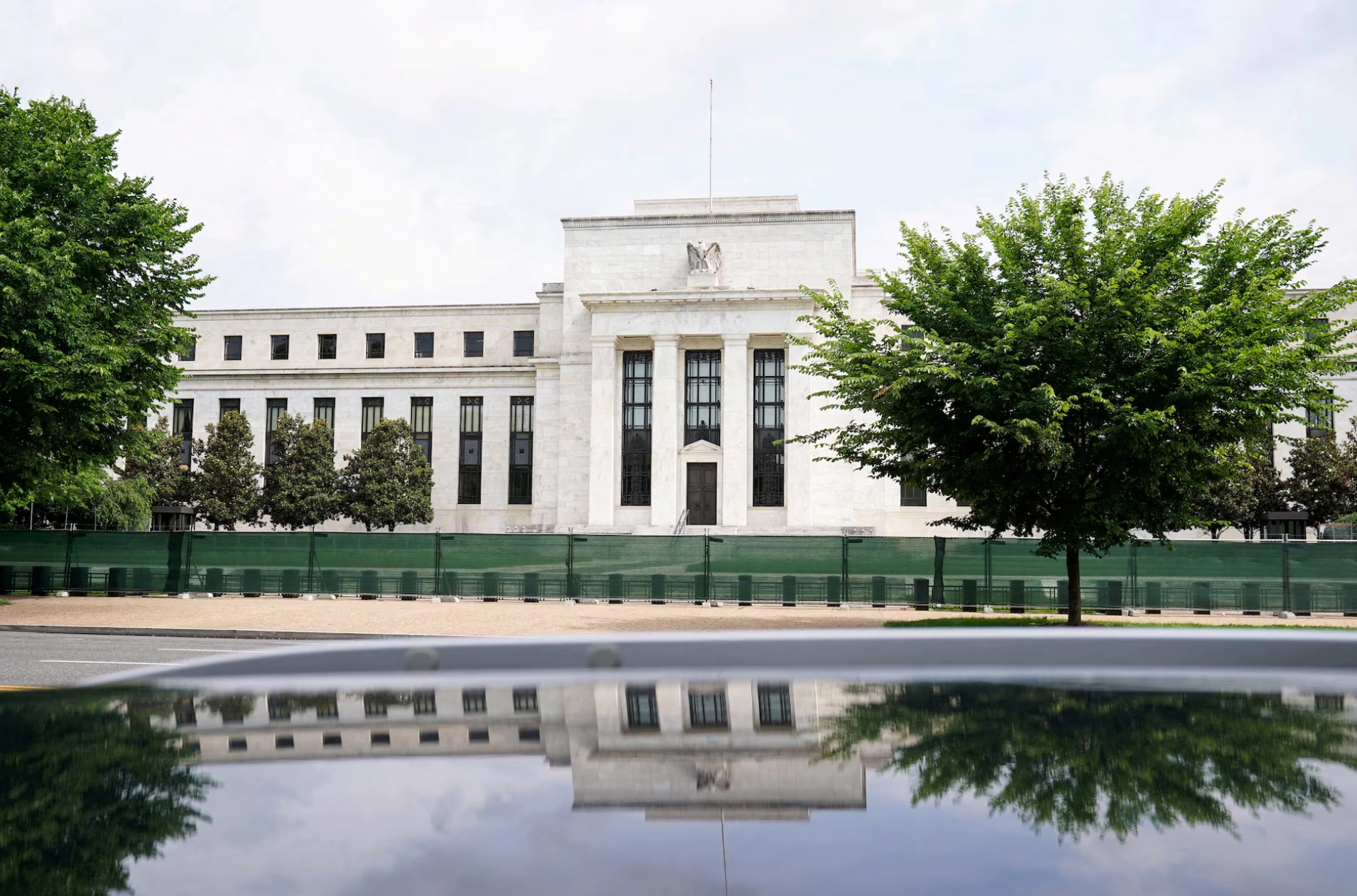
Fed's Dot Plot Has 16 of 18 Hawks — What Comes Next
The Fed's first hike in three years just landed. With 16 of 18 officials penciling in more, here's what traders must watch before October 28.
Key Points
- The FOMC voted 12-0 to hike 25 basis points on September 16, lifting the target range to 3.75%–4.00% — the first increase in more than three years.
- Sixteen of 18 dot-plot participants see at least one additional hike in 2026, with CPI still running at 3.4% and NFP printing a solid +162,000 — giving doves no statistical cover.
- The next decision lands October 28 without an SEP update, meaning Chair Warsh's preference for minimal forward guidance makes every data release between now and then a direct market mover.
The Fed pulled the trigger last Tuesday, and the dot plot it left behind is the most important document in markets right now. The FOMC voted 12-0 to raise the federal funds rate by 25 basis points to a target range of 3.75%–4.00% on September 16 — the first hike since 2023 — and 16 of 18 officials immediately signaled they expect at least one more before year-end. Four of those 16 see two additional moves still on the table. For traders pricing October 28, that arithmetic is not subtle.
The Dot Plot Is the Story
Strip away the policy statement language and what you're left with is a committee that isn't done. The September projections show near-unanimity on the direction of travel: 16 of 18 participants dot at least one more hike, and only two officials drew a line at the September move. Zero participants penciled in a cut before 2028, with just a single reduction indicated for that year and at least one more for 2029. The message from the median Fed official isn't "wait and see." It's "we've started, and we intend to continue."
What makes this dot plot more actionable than most is who's running the institution. Chair Kevin Warsh has made his preference for "minimal forward guidance" explicit — the September 16 announcement was described as extremely brief by those in the room. That approach has a direct market consequence: without a chairman willing to pre-commit via press conference tone or policy signals, the data itself becomes the forward guidance. Every print between now and October 28 gets traded as if it were the decision itself.
What the Data Is Telling the Committee
The two indicators that matter most to this Fed are running in its favor — which, for traders long duration, is the problem. August CPI came in at 3.4% year-over-year, reported by the BLS on the standard release schedule, and that number is 170 basis points above the Fed's 2% target. There is no way to read 3.4% as a committee in retreat. The September print won't hit until October 13 — two weeks before the FOMC decision — and it will arrive with enormous weight attached.
The labor market is doing nothing to slow the Fed's hand. August nonfarm payrolls came in at +162,000, a number that isn't blazing but is cleanly above the threshold most economists associate with labor-market deterioration. The unemployment rate has not been disclosed in today's briefing data, but a +162K headline with no visible sign of stress in the jobs market gives the committee no humanitarian justification to pause. Q2 GDP of +1.5% annualized is soft enough that a recession warning is on the table in some models, but the Fed has historically required two consecutive quarters of negative real GDP before pivoting — and one quarter of 1.5% growth doesn't get there.
Flash PMI data for September from S&P Global was expected Tuesday morning, the typical release timing for this dataset, but no confirmed print was available at publication time. If that data comes in below the 50 contraction line — particularly on the services side, which is most sensitive to domestic demand and wages — it will be the first data point to give a credible pause argument any structural footing. Watch for it.
What Traders Watch Next, and Where the Risk Is Asymmetric
The October 28 meeting does not include an updated Summary of Economic Projections or a new dot plot. That matters enormously. When the Fed hikes without a dot plot in the same meeting, the market has no fresh anchor for the terminal rate — it must infer from speech transcripts, data surprises, and the minutes of the September meeting, which will be released before October 28. That informational vacuum historically widens implied volatility in rates markets in the weeks preceding a no-SEP meeting, and traders in TLT or long-duration credit should be pricing that into position sizing today.
The asymmetric risk for the next 35 days runs hawkish. With CPI at 3.4%, NFP positive, and 16 of 18 dots pointed higher, a single upside surprise on September CPI — due October 13 — or a September jobs print above expectations on October 2 would remove any residual probability of a pause at October 28. Markets would then be pricing two more hikes in 2026 with no logical counterweight. The 10-year yield is the instrument to watch: a decisive move above whatever level it holds at today's close would signal that the bond market has begun absorbing a second consecutive hike as the base case, not the tail risk.
Conversely, the one realistic scenario that opens the door to a pause is a September NFP that prints meaningfully below +100,000, combined with any downward revision to the August figure. That combination — weak September jobs, revised-down August — would give the two holdout dovish officials the coalition-building material they need to push for a hold. Even then, with 3.4% inflation, a pause would almost certainly be marketed as a skip rather than a stop.
The October 2 jobs report is the first live catalyst. Traders should treat it as a binary: above +150,000 with no negative revision, and October 28 is a near-certain hike. Below +100,000 with a revision, and the debate inside the Eccles Building gets genuinely interesting for the first time since the hiking cycle resumed.
The Weekly Investor
Daily market analysis for active traders. Free.