Durable Goods Beat Sets Up Fed's Toughest Call of 2026
June durable goods orders jumped 1.6% with core capex proxy up 1.4%, complicating the FOMC's July 29 rate decision as hawks gain ground.
Key Points
- June durable goods orders rose 1.6% MoM and the core capex proxy beat expectations at +1.4%, erasing fears that May's 4.5% collapse signaled a lasting investment breakdown.
- The beat directly pressures the FOMC — which convenes today and decides Wednesday — by strengthening the case for holding rates at 3.50%–3.75% and keeping the door open for a future hike.
- Watch today's $69B 2-year and $70B 5-year Treasury auctions for a tail signal, and Wednesday's 2:00 PM ET Fed statement for confirmation that the hold is unanimous.
June's durable goods rebound — up 1.6% with the core capex proxy beating at +1.4% — landed at 8:30 AM ET this morning with the FOMC already in pre-meeting blackout and $139 billion in Treasury supply hitting the market this afternoon. The combination is not a coincidence of timing; it is the macro setup that defines the Fed's most consequential decision of 2026. The soft landing just got a data point in its favor, and that makes Wednesday's statement harder to write, not easier.
What the Data Actually Shows
The headline number is clean but the internals are what matter. Non-defense capital goods orders excluding aircraft — the line item that most directly maps to actual corporate spending plans — rose 1.4% in June against a 1.3% consensus estimate. That is not a rounding error. It is businesses committing capital in an environment where the effective fed funds rate sits at 3.63% and the 10-year Treasury yield is at 4.71%. Companies are not flinching at the cost of money, which tells you something concrete about corporate confidence that no survey can replicate.
May's 4.5% drop — which dragged total orders to $332.1 billion after April's 8.5% surge — now reads as exactly what it looked like at the time: volatility around a lumpy aerospace and defense order book, not a fundamental turn in business investment. The three-month pattern of surge, collapse, recovery is a pattern traders have seen before in this series, and it almost always reflects the timing of large defense contracts rather than a genuine shift in private capex intentions. June's print, by recovering cleanly and beating on core, validates that reading. The US Census Bureau data confirms the prior month's figure remains unrevised at -4.5%, which means June's strength is not a statistical artifact of a downward revision to May.
The broader macro picture this number drops into is one of stubborn resilience. CPI sits at 3.5% year-over-year through June, core CPI at 2.6% — both above the Fed's 2% target. Unemployment is 4.2%. SOFR is 3.64%. None of those numbers scream recession, and none of them scream imminent cut. What they describe is an economy that is neither hot enough to justify hikes nor cold enough to justify easing — and today's durable goods data reinforces exactly that ambiguity.
The Fed's Problem
The FOMC meeting that began yesterday evening is the most contested in 18 months. As of CME FedWatch data from July 24, the market is pricing a 64.2% probability of a hold at 3.50%–3.75% — a number that had been 87.2% just one week earlier on July 17. That 23-percentage-point swing in seven days is the bond market telling you something: the inflation-persistence story is not going away, and the hawks inside the Eccles Building are not staying quiet.
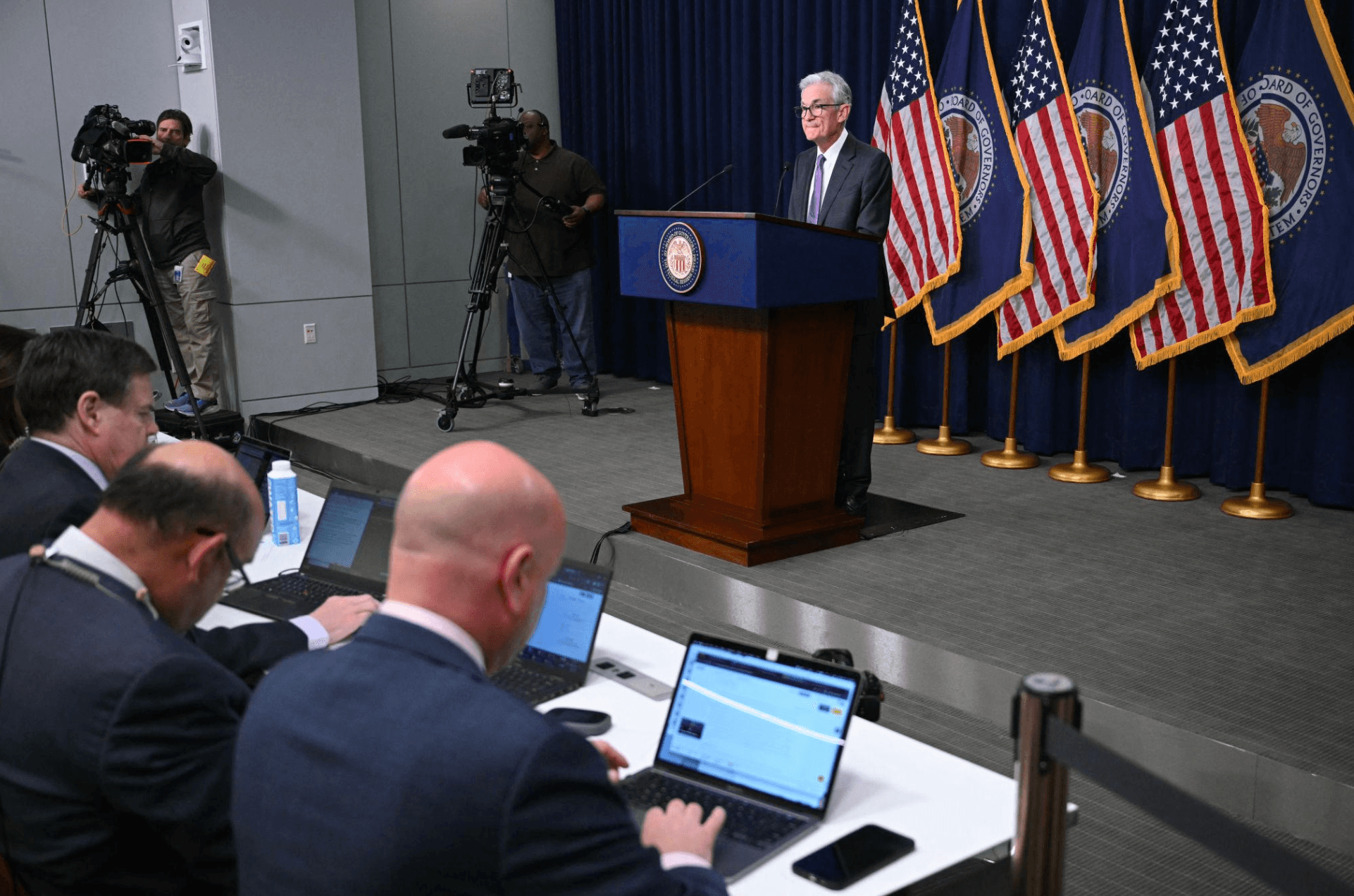
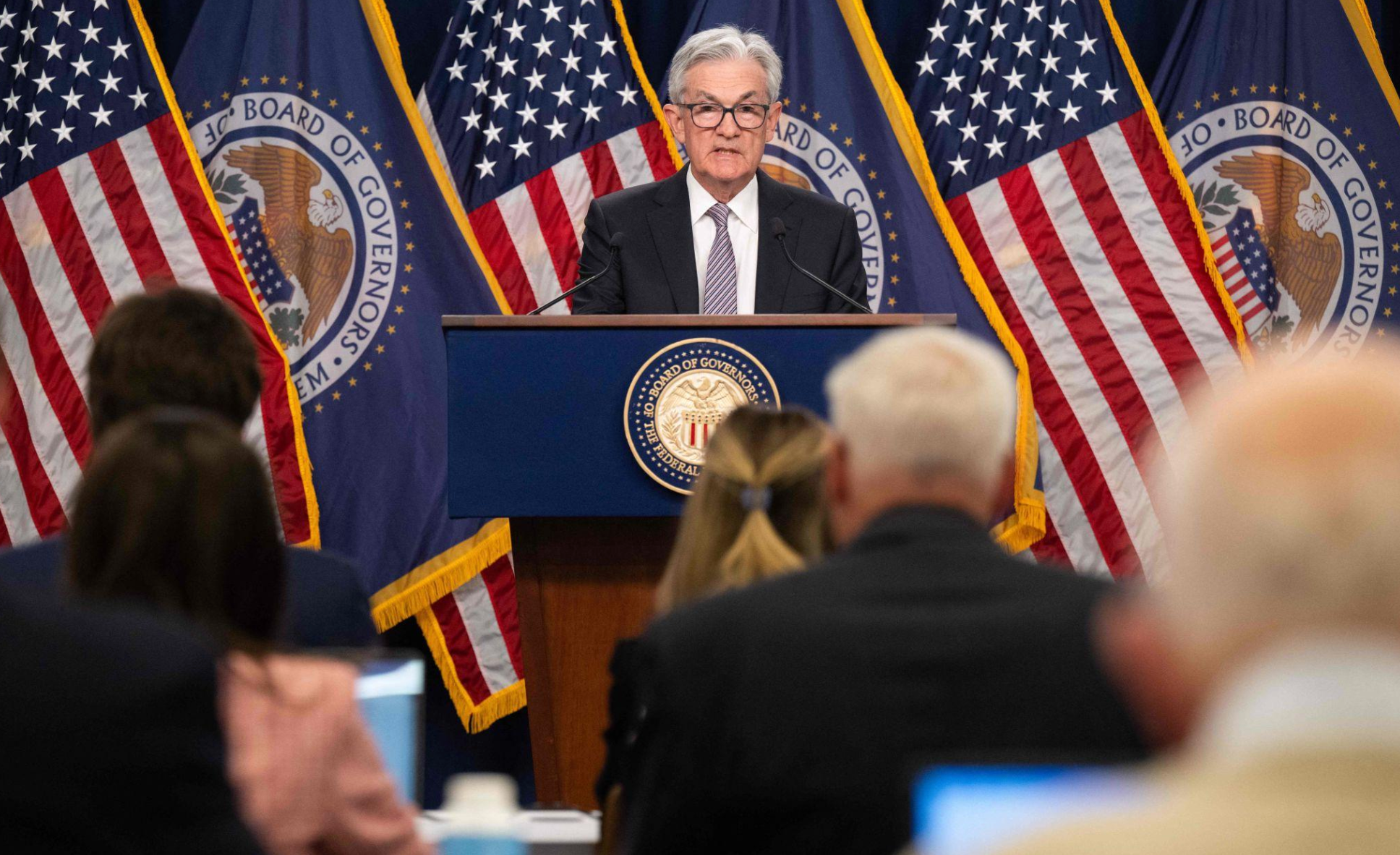
The FOMC statement drops at 2:00 PM ET Wednesday, followed by Chair Powell's press conference at 2:30. This meeting carries no dot plot, which means the market has no updated rate path to anchor against — it gets only the statement language and whatever Powell signals in Q&A. In that context, every word in the opening paragraph of the statement becomes a tradeable event. If the language around inflation shifts from "remains elevated" to anything implying progress, the front end of the curve rallies immediately. If the statement drops language about "remaining attentive to upside risks," interpret that as a hawkish tilt that the 64% hold probability does not fully price.
The durable goods beat complicates the chair's narrative in one specific way: he cannot point to a cooling investment cycle as a reason for patience. The soft-landing case — growth holding up, inflation slowly grinding lower — requires the Fed to thread an extraordinarily narrow needle. Today's +1.4% core capex print is consistent with that needle still being threaded, but it also removes one of the dovish talking points Powell might otherwise have leaned on. An economy where businesses are still deploying capital at this rate is not an economy that needs cheaper money.
What Traders Watch Next
The immediate trade today is not equities — it is the afternoon auction. The Treasury sells $69 billion in 2-year notes and $70 billion in 5-year notes starting at 1:00 PM ET. The 2-year last cleared at 4.189%; the 5-year at 4.200%. If either auction tails — meaning the stop-out yield prints above the 1:00 PM when-issued level at the time of the auction — it signals that bond market participants are demanding a concession to absorb this supply. A tail of more than 1.5 basis points on either maturity would be a direct tightening of financial conditions heading into Wednesday's decision and should pressure equities, particularly rate-sensitive sectors: utilities, REITs, and long-duration tech. A clean auction that stops through would confirm demand is intact and give the soft-landing trade room to extend.
The week's full macro sequence runs as follows: Treasury auctions today, then FOMC decision Wednesday at 2:00 PM ET, then the simultaneous Thursday morning release of Q2 advance GDP (consensus +2.3% annualized) and Core PCE. If GDP prints above 2.5% and Core PCE holds sticky, the 36% tail probability of a July hike — currently dismissed by most desks — will look prescient in hindsight. Traders running long duration into Wednesday should be aware that the data flow over the next 72 hours can reprice the entire 2026 rate path in a single session. The 10-year at 4.71% is a level worth defending; a clean break above 4.85% would be the first signal that the bond market is no longer willing to wait for the Fed to catch up with the inflation reality.
The Weekly Investor
Daily market analysis for active traders. Free.