Darden Q1 Earnings: Olive Garden vs. LongHorn Is the Only Number That Matters
Darden Restaurants reports Q1 FY2027 earnings today. The real trade isn't the headline EPS — it's the brand divergence between Olive Garden and LongHorn.
Key Points
- Consensus heading into today's print is $2.06 adjusted EPS on $3.21 billion in revenue, but management pre-warned Q1 EPS growth would be limited to low-to-mid single digits due to beef inflation.
- The brand divergence — Olive Garden's 2.4% Q4 SSS miss versus LongHorn's 9.5% beat — is the structural fault line that will determine whether DRI trades up or down 8%-plus post-print.
- Watch the 8:30am ET conference call for any revision to full-year FY2027 sales guidance of $13.60–$13.75 billion; a trim to the low end would be the most bearish single signal.
Darden Restaurants reported Q1 FY2027 results pre-market this morning against a consensus of $2.06 in adjusted EPS and $3.21 billion in revenue — but experienced traders know the headline number is the wrong place to look. The real binary is whether Olive Garden's same-store sales momentum has recovered from its Q4 miss or whether LongHorn is carrying the entire enterprise for a second consecutive quarter.
The Brand Divergence That Defines This Trade
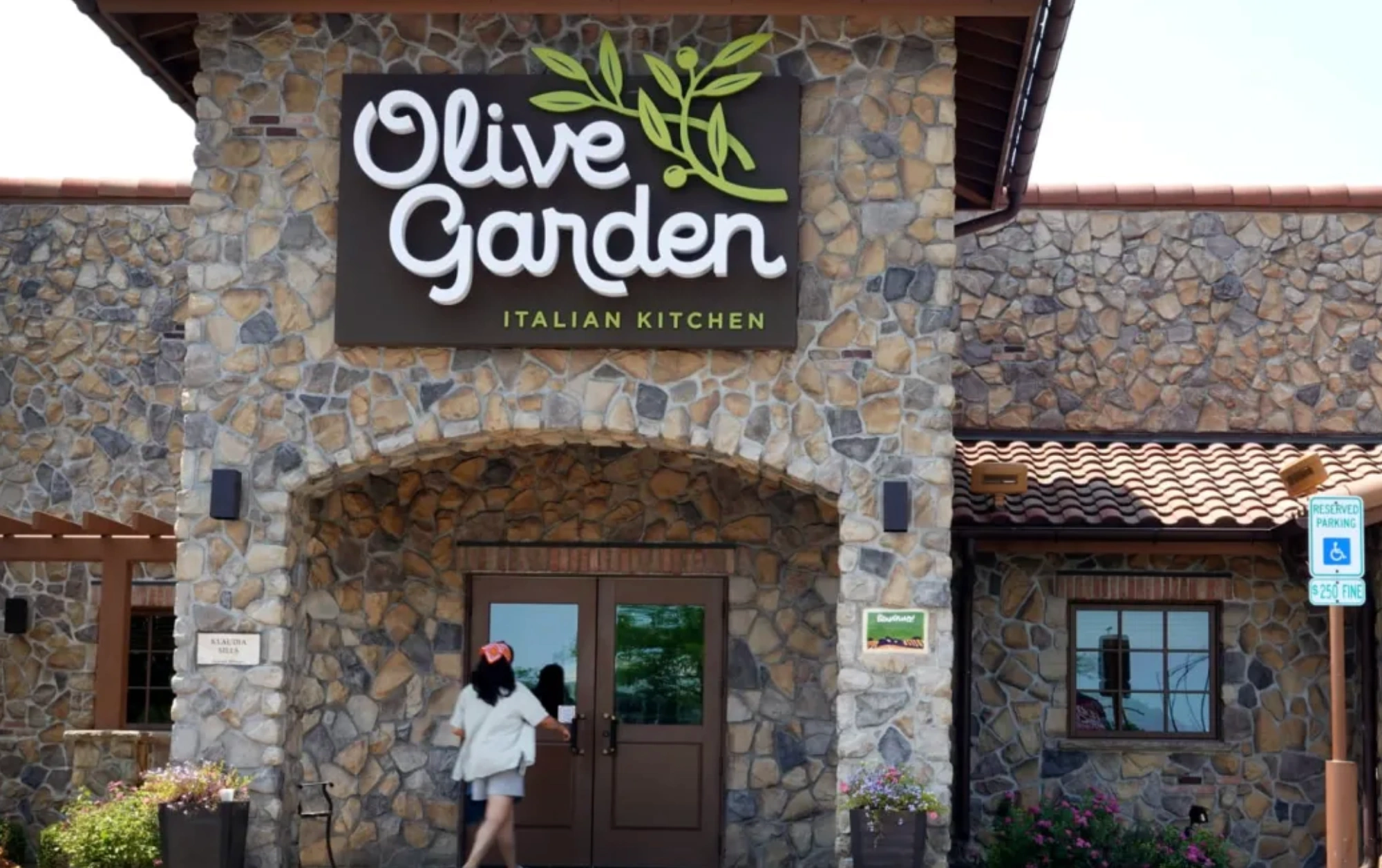
In Q4 FY2026, Darden handed investors a split screen: Olive Garden posted 2.4% same-store sales growth against a 3.2% estimate — a miss that would have been punished more severely had LongHorn not simultaneously printed 9.5% SSS growth against a 7.1% consensus. That 7.1-percentage-point spread between the company's two flagship brands is not noise. It is a structural signal about consumer behavior, traffic patterns, and the relative health of casual dining versus polished casual — and it goes directly to Darden's long-term earnings power.
Olive Garden accounts for roughly half of total system revenue. When it underperforms, no amount of LongHorn outperformance fully offsets the drag at the consolidated level, because the margins, store count, and brand infrastructure are simply not equivalent in scale. The Q4 miss at Olive Garden — a 80-basis-point shortfall against a reasonable estimate — rattled enough institutional holders to keep DRI capped below $230 through the summer. The stock closed September 10 at $207.53, well off its 52-week high of $229.76, and the gap between current price and peak tells you exactly how much skepticism remains baked in.
Management entered this quarter with their hands partially tied. CEO Rick Cardenas and CFO Raj Vennam warned explicitly on the Q4 call that Q1 EPS growth would be limited to low-to-mid single digits — blaming beef inflation on the LongHorn side and incremental one-time costs across the system. That pre-warning is both a gift and a trap for traders. It sets a low bar on EPS, which makes a headline beat easier to engineer. But it also means any revenue softness or same-store sales deceleration at Olive Garden will read as confirmation that the brand's issues are more persistent than management has acknowledged.
Options Pricing, Historical Moves, and What the Setup Says
The options market has consistently underpriced Darden's post-earnings volatility. According to TraderCentral's options setup analysis, DRI's actual post-earnings move has exceeded the implied move in five of its last eight reports. Most critically, last September the stock dropped 8.9% against an implied move of just 5.2% — a gap that cost premium sellers dearly and rewarded anyone who bought protective puts or outright directional exposure.
The implied move heading into today's print has not been fully resolved in live feeds as of publication, but the historical context is critical. When Darden misses on Olive Garden SSS and the options market is pricing a 4-to-5% move, history says to treat that implied volatility as a floor, not a ceiling. The asymmetry is notable: Darden's beats tend to produce modest upside, while its misses — particularly when Olive Garden is the culprit — produce outsized drawdowns. That skew should inform how traders size and structure exposure around today's conference call at 8:30am ET.
Deutsche Bank, KeyBanc, and Baird all raised price targets or upgraded DRI ahead of this print — a notable clustering of sell-side optimism that can cut both ways. On one hand, rising price targets signal that institutional research desks see a credible path to $220-plus. On the other, a crowded upgrade cycle creates a fragile setup if the actual numbers disappoint. When three major shops upgrade before earnings and the stock still sits 9.5% below its 52-week high, the market is telling you it needs to see the data — not the thesis.
Full-Year Guidance Is the Aftershock Risk
Whatever happens in the initial open — whether DRI gaps up on a surface-level beat or gaps down on an Olive Garden SSS miss — the real price action will occur during and after the 8:30am ET conference call. Full-year FY2027 guidance of $13.60–$13.75 billion in sales and $11.10–$11.35 in diluted EPS is the framework. Those ranges were set when management believed Q1 would be the trough quarter, with improvement accelerating in Q2 through Q4 as beef cost pressures ease and one-time items roll off.
The risk is a guidance trim — specifically, any language suggesting the low end of the sales range or the bottom of the EPS corridor is now the working assumption rather than the midpoint. A trim to the low end of guidance would be the single most bearish signal Cardenas could deliver this morning, because it would imply that the beef inflation headwind is stickier than modeled and that Olive Garden's traffic recovery is lagging the recovery the sell-side has been pricing. With crude oil near $102.34 per barrel adding secondary cost pressure across supply chains and gold pulling back to $4,333.90 suggesting some defensive repositioning in broader markets, the macro backdrop is not providing Darden with a tailwind today.
Conversely, if Olive Garden's Q1 SSS comes in at or above the Q4 estimate of 3.2% — even belatedly, demonstrating the brand's recovery thesis — the stock has a clear path back toward $220. LongHorn running above 7% again would confirm that the polished casual segment is not decelerating, and any positive commentary on moderating beef costs in H2 FY2027 would validate management's original setup. That combination — Olive Garden recovery plus LongHorn continuation plus cost relief guidance — is the bull case that would justify the Deutsche Bank, KeyBanc, and Baird price target raises simultaneously.
Per Investing.com's earnings tracker, the conference call is the primary event risk. Traders who entered on pre-earnings optimism should have their exit levels defined before Cardenas opens the call. The $207.53 close from September 10 is the near-term anchor; a clean break below $200 on Olive Garden disappointment opens a retest of $195, while a confirmed SSS recovery with maintained guidance would target a move back above $215 into the October options expiration cycle. The number to watch is not on the income statement — it is the same-store sales line for the brand that serves unlimited breadsticks.
The Weekly Investor
Daily market analysis for active traders. Free.