
CLARITY Act Dead Until Fall: What It Costs Crypto Now
Senate skips CLARITY Act vote before recess, pushing crypto's biggest regulatory catalyst to September at earliest. Kalshi odds drop to 20%.
Key Points
- The Senate left for August recess without voting on the CLARITY Act, with Kalshi prediction markets pricing the bill's passage in 2026 at just 20% — a record low as of August 6.
- The bill's stall preserves an enforcement-first SEC posture and leaves exchanges, DeFi protocols, stablecoin issuers, and institutional fundraisers operating without statutory clarity, which JPMorgan has explicitly identified as a headwind to broader crypto deployment.
- The earliest realistic floor vote is September 14 when the Senate returns — immediately before the Fed's September 15–16 meeting — making that two-day window the single most consequential 48 hours on the crypto calendar through year-end.
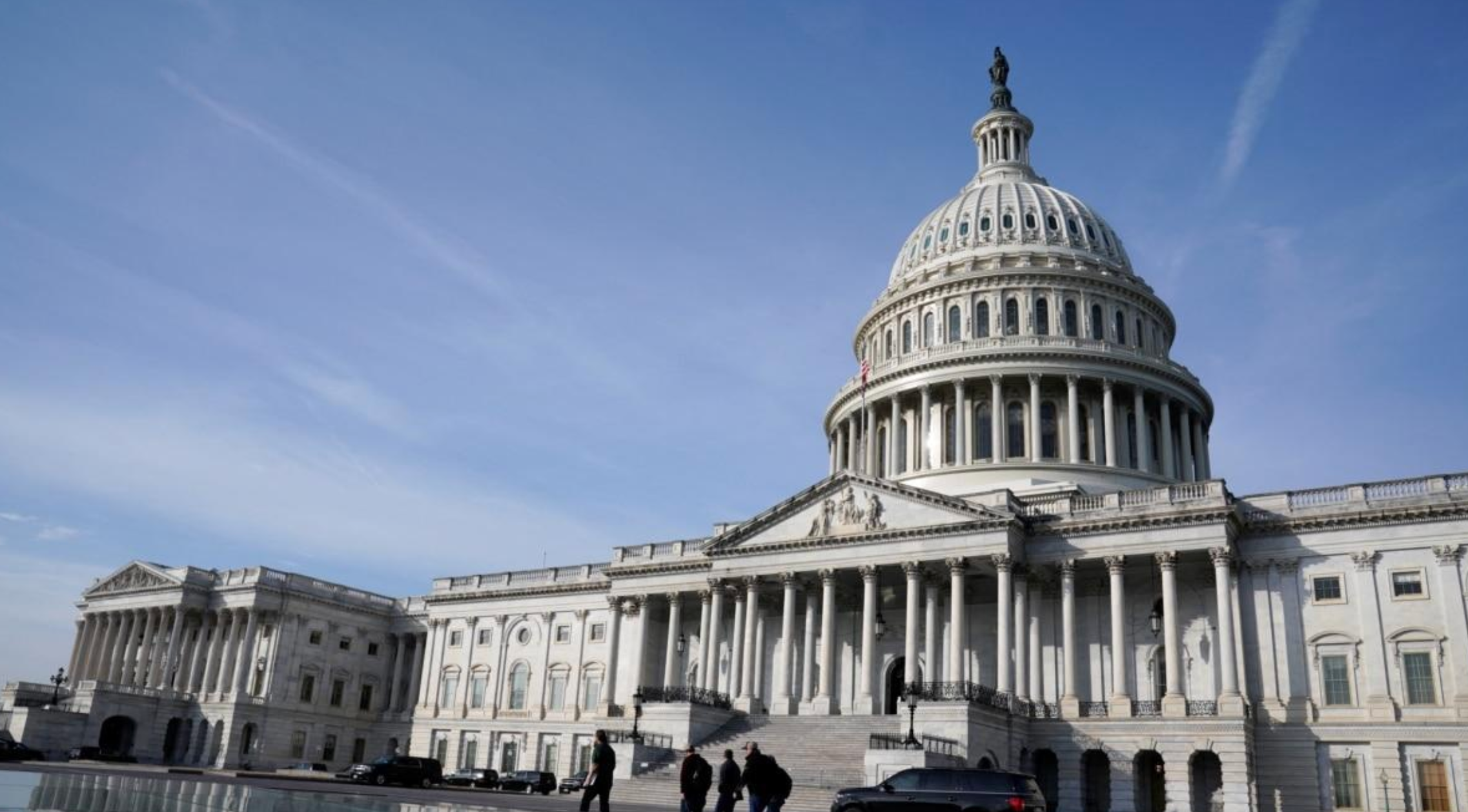
The Senate walked out the door for its August recess over the weekend without voting on the Cryptocurrency CLARITY Act, and the consequences for institutional crypto positioning are immediate and measurable: Kalshi prediction markets put the odds of the bill becoming law in 2026 at 20% — a record low — as of August 6, down sharply from consensus expectations earlier this year when the legislation cleared the Senate Banking Committee with a 15-to-9 vote in May.
What the Bill Would Have Done
The CLARITY Act is not a procedural footnote. It is the single most consequential piece of crypto legislation attempted in the United States, designed to resolve a jurisdictional dispute between the SEC and CFTC that has left the entire digital asset industry operating under enforcement-by-threat rather than statute. The bill, which already passed the House, would establish a legal definition for when a digital token constitutes a security under SEC oversight versus a commodity under CFTC jurisdiction — a binary distinction that currently gets litigated one enforcement action at a time. It would also create licensing and operational frameworks for crypto exchanges, establish custody and capital rules for institutions holding digital assets, and provide a statutory foundation for stablecoin issuers to operate within a defined regulatory perimeter.
The Senate Banking Committee's 15-to-9 May vote suggested the bill had the bipartisan traction to move. It does not need a majority — it needs 60 votes to survive a filibuster, and the banking sector's pushback over custody rules and capital requirements eroded enough swing-vote support to prevent Senate leadership from scheduling a floor vote before recess. A cloture motion was filed August 8, two days after the Senate had already effectively ended legislative business for the summer, making the motion a procedural placeholder rather than a live vote. The bill's House passage and committee approval give it a stronger baseline than most legislation that stalls, but the political calendar is now working against it: midterm election positioning will dominate the September and October Senate agenda, and every week of delay narrows the floor-time available for a 60-vote threshold bill that still faces organized opposition.
The Cost of Doing Nothing
JPMorgan's latest analysis framed declining CLARITY Act passage odds as a direct headwind for the broader crypto market — and the reasoning is straightforward. Without statutory definitions, every major institutional participant — banks, asset managers, custodians, pension funds — faces a binary choice: deploy capital into a handful of products with explicit regulatory safe harbors (spot Bitcoin and Ethereum ETFs, primarily) or wait. The ETF inflow data shows that the first category is working: $754.69 million in weekly Bitcoin ETF inflows and $11.46 billion in cumulative Ethereum ETF net inflows prove that institutional money will find its way into crypto when a regulated vehicle exists. But those flows represent a narrow channel compared to the full deployment that would follow from a clear statutory framework covering exchange-listed tokens, DeFi protocols, and institutional direct custody.
The enforcement-first posture that survives in the CLARITY Act's absence is not neutral. The SEC's approach of treating unregistered token offerings as presumptive securities violations has already driven offshore exchange volume, suppressed domestic DeFi development, and forced multiple institutional fundraising rounds to avoid U.S. investors entirely. Stablecoin issuers face particular exposure — the $287 billion stablecoin market operates today without a federal framework governing reserve requirements, redemption rights, or issuer licensing. Without the CLARITY Act, that gap persists indefinitely, and the stablecoin players most exposed to regulatory discretion — those operating without a bank charter or existing federal relationship — remain structurally vulnerable to enforcement action at any point. The DeFi market, with a current capitalization of $56.69 billion and daily trading volume of $2.5 billion, faces the same ceiling: protocols cannot openly solicit U.S. users, institutional liquidity providers cannot commit capital publicly, and product development happens under a cloud of ambiguity that has measurable cost.
The September Window and What It Means for Traders
CoinDesk reported that the Senate will not vote on the bill before its summer break, confirming the recess delay is not a scheduling technicality but a substantive loss of legislative momentum. Russia moved in a different direction last week, with President Vladimir Putin signing bill No. 1194918-8, titled "On Digital Currencies and Digital Rights," which establishes operating requirements for cryptocurrency exchanges, brokers, and custodians and mandates membership in a financial self-regulatory organization. The contrast is pointed: a geopolitical adversary has enacted a comprehensive crypto framework while the U.S. Senate is on vacation.
The actionable read for traders is this: the current crypto price structure — Bitcoin at $64,896, ETH at $1,917, global market cap at $2.28 trillion — already reflects an environment of regulatory stasis. The 20% Kalshi odds mean the market is not pricing in a CLARITY Act catalyst for 2026; it is priced out. That creates an asymmetric scenario in September. If the Senate returns September 14 and moves the bill toward a floor vote with credible momentum, the repricing in altcoins, DeFi tokens, and exchange-adjacent equities would be sharp and fast — the market has discounted the upside almost entirely. If the bill stalls again, the baseline holds and the trade remains what it is today: concentrate in regulated vehicles (spot ETFs, BTC direct), avoid tokens with active SEC exposure, and monitor the $65,000 BTC level as the technical line of demarcation.
The September 14 Senate return immediately precedes the Fed's September 15–16 policy meeting, when updated rate projections will reflect the weaker-than-expected July jobs data. The convergence of a potential CLARITY Act floor vote and a Fed policy reset in the same 48-hour window makes mid-September the most consequential two-day stretch on the crypto calendar for the remainder of 2026. Traders who are positioned before that window — rather than reacting to it — hold the timing advantage.
The Weekly Investor
Daily market analysis for active traders. Free.