
CLARITY Act at 51%: Crypto's Biggest 2026 Catalyst Teeters
The CLARITY Act has a 51% chance of passing in 2026, per Polymarket — down 14 points. A Senate vote before August recess could reprice the altcoin complex.
Key Points
- Polymarket gives the CLARITY Act a 51% chance of becoming law in 2026, down 14 points from its recent peak, as Senate passage before the August recess remains uncertain.
- Senator Lummis has warned that failure to pass the bill in this legislative window could delay comprehensive U.S. crypto regulation until 2030, a multi-year overhang for institutional adoption.
- Japan's move toward its first spot Bitcoin ETF and Illinois's new 0.2% digital asset transfer tax show that the regulatory picture is shifting fast on multiple fronts simultaneously.
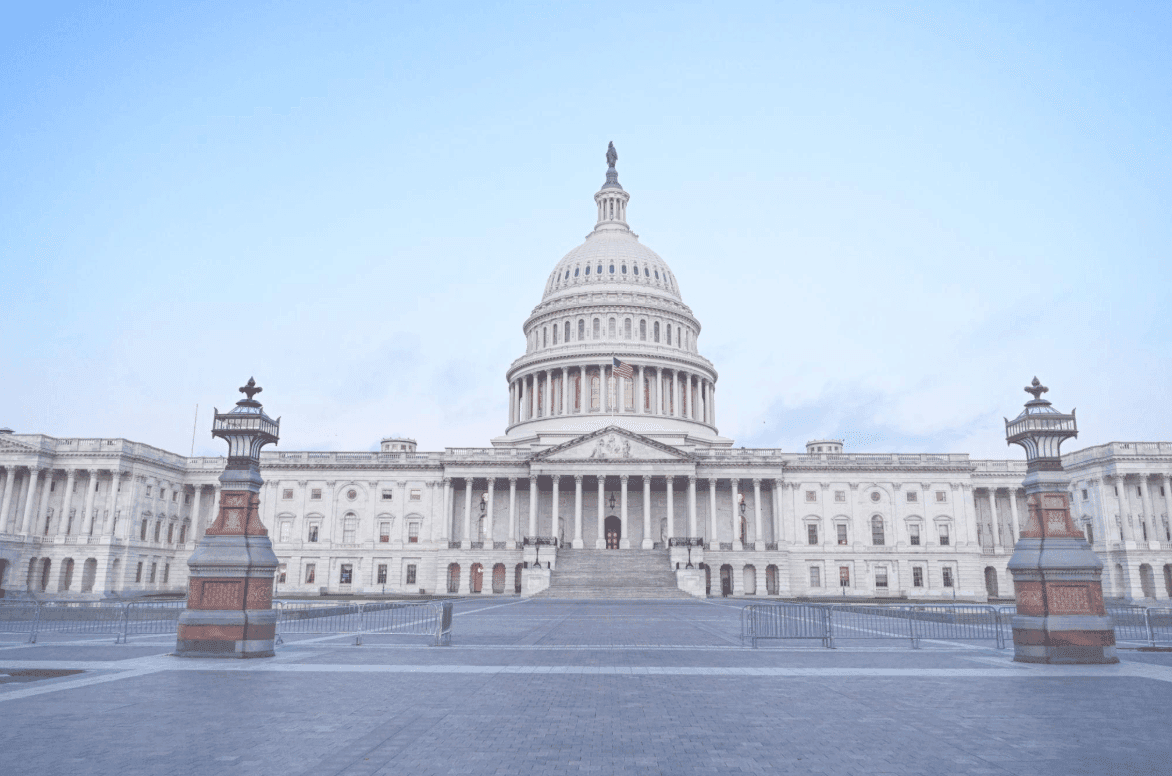
The CLARITY Act — the bill that briefly sent Bitcoin above $65,000 this week — is now sitting at a 51% probability of becoming law in 2026 on Polymarket, down 14 points from its recent high, as the Senate window before August recess narrows and political crosscurrents intensify. What happens in the next two weeks in Washington could reset crypto's regulatory trajectory for the rest of the decade.
What's Actually in the Bill — and What's at Stake
The CLARITY Act is not a feel-good framework document. It is a functional jurisdictional map for the entire U.S. digital asset industry. The core mechanism divides oversight between the SEC and the CFTC, with the CFTC taking authority over digital commodity spot markets — a carve-out that would, in practice, remove the most actively traded cryptocurrencies from SEC enforcement reach and replace case-by-case litigation with a defined regulatory structure. For institutions that have been sitting on crypto allocations pending legal clarity, this bill is the difference between a viable compliance posture and continued paralysis.
Senator Cynthia Lummis announced the bill cleared committee and advanced to the full Senate floor earlier this week — the development that triggered Bitcoin's run above $65,000, which at the time looked like clean institutional optimism. It has since been partly unwound, but the legislative timeline remains live. Senator Lummis has drawn the sharpest possible line: pass this bill now, or wait until 2030. That is not political theater. The legislative calendar is genuinely constrained — the Senate faces a packed agenda after August recess, the 2026 midterm cycle consumes political oxygen starting in September, and the window for bipartisan cooperation on financial regulation is historically narrow.
Senator Elizabeth Warren's intervention is the primary obstacle. Her formal request that President Trump disclose crypto-related earnings before July 23 is designed to create a political liability that makes Republican co-sponsors uncomfortable and gives wavering Democrats cover to withhold support. The request's deadline has already passed, which means the disclosure fight is now a background condition on the vote — not a pre-condition that gets resolved before the Senate acts. Every day the disclosure question festers is a day that floor managers for the CLARITY Act have to manage a distraction they cannot fully neutralize.
Three Other Regulatory Moves Traders Cannot Ignore
While Washington dominates the narrative, three developments outside the CLARITY Act are reshaping the operating environment for crypto in ways that will outlast this week's news cycle. Each one has a direct price or flow implication.
Illinois has enacted the Digital Asset Tax Act — a 0.2% levy on gross digital asset transfer value, effective January 1, 2027. This is the first U.S. state to tax crypto transactions directly based on transfer volume rather than realized gains, meaning the levy applies regardless of whether a trade is profitable. The distinction is significant. A gross transfer tax hits market makers, high-frequency traders, and arbitrageurs disproportionately — participants whose continuous activity provides liquidity to retail and institutional traders alike. If other states view Illinois as a template, the structural cost of operating crypto trading infrastructure in the U.S. rises materially, and the argument for routing volume through offshore venues strengthens. Traders operating through Illinois-registered entities need to begin modeling this into 2027 cost structures now.
Japan's progressive government has officially begun preparing for its first spot Bitcoin ETF. The scale of what this means is easy to underestimate: Japan is one of the largest institutional asset management markets in the world, with pension funds and insurance companies operating under frameworks that require regulated, exchange-listed vehicles before they can gain exposure to any asset class. A Japanese spot Bitcoin ETF is not a retail product — it is an institutional on-ramp for capital pools that dwarf the U.S. retail flows that drove the first wave of American ETF inflows. The timing of the formal preparation announcement, coming as U.S. ETF flows have turned negative, is precisely the kind of structural demand development that could reestablish a bid under bitcoin on a multi-month horizon.
The SEC's settlement of a FOIA lawsuit concerning its Ethereum investigations — agreeing to pay $150,000 in fees and produce remaining documents — adds a wrinkle to ETH's near-term regulatory positioning. The settlement does not resolve questions about Ethereum's classification, but the SEC's decision to pay fees and comply with document production rather than fight the case suggests the agency is managing its Ethereum posture carefully at a moment when the CLARITY Act could render much of the dispute moot. This is a minor point on its own, but it adds to a picture in which regulators across multiple jurisdictions are repositioning rather than escalating.
The Binary and the Levels That Follow From It
The regulatory picture is moving faster than most traders are tracking, and the CLARITY Act vote is the most compressed binary in the space right now. A Senate floor vote before the August recess — with passage — would represent the most significant structural de-risking event for U.S. crypto markets since spot ETF approval. It would remove the single largest overhang on institutional allocation decisions, potentially accelerating flows into both BTC and ETH ETFs simultaneously, and would give a disproportionate lift to tokens whose bull case depends explicitly on legal status clarity — most obviously XRP, which is trading at $1.1062 today after collapsing 69% from its January 2026 high of $3.65.
XRP's current setup is instructive. Futures volume sits at $2.10 billion against spot volume of just $263.27 million — a ratio that reflects speculative positioning rather than genuine spot demand, and that makes the token unusually sensitive to regulatory headlines in either direction. Resistance at $1.16 is the immediate technical gate; a CLARITY Act passage could produce a move through that level rapidly given the positioning imbalance. Conversely, a failed Senate vote or a postponement to post-recess would remove the near-term catalyst entirely and leave XRP exposed to the same macro headwinds pressuring the rest of the complex.
The stablecoin dimension closes the loop. The U.S. GENIUS Act final rules are due this month, and Hong Kong's Stablecoin Ordinance first licenses are imminent. The convergence of stablecoin regulation, spot ETF expansion in Japan, and the CLARITY Act vote makes the next two to three weeks one of the densest regulatory calendars crypto has faced since early 2024. Traders should assign genuine probability to a scenario where multiple positive regulatory outcomes land simultaneously — and recognize that such a scenario would likely produce a violent repricing of the altcoin complex from levels that have been beaten down by uncertainty for months. The date to watch is the Senate's scheduled session calendar before the August recess window closes; any floor vote announcement on CLARITY is the trigger.
The Weekly Investor
Daily market analysis for active traders. Free.