
Chip Sector Meltdown: What the China Shock Means Now
SanDisk down 50% from peak, SK Hynix -15% in Seoul. China's DUV lithography breakthrough is reshaping the global semiconductor trade in real time.
Key Points
- SanDisk has collapsed more than 50% from its 2026 peak after losing -16.1% Tuesday, the worst single-session decline in the current chip rout.
- A Chinese manufacturer has successfully produced an immersion deep ultraviolet lithography machine, directly threatening ASML's equipment monopoly and the West's semiconductor supply chain assumptions.
- Traders must watch Lam Research's earnings print today and any AI capex guidance from Microsoft and Meta tonight — either could confirm or arrest the Nasdaq's slide toward confirmed correction territory.
SanDisk shed another 16.1% Tuesday, bringing its drawdown from the 2026 peak to more than 50% in a matter of weeks. The trigger is not a single earnings miss or a macro shock in the traditional sense — it is something structurally more dangerous: a confirmed Chinese breakthrough in immersion deep ultraviolet lithography machinery that has traders repricing the entire Western semiconductor supply chain from the equipment layer down.
The Breach That Changed the Calculus
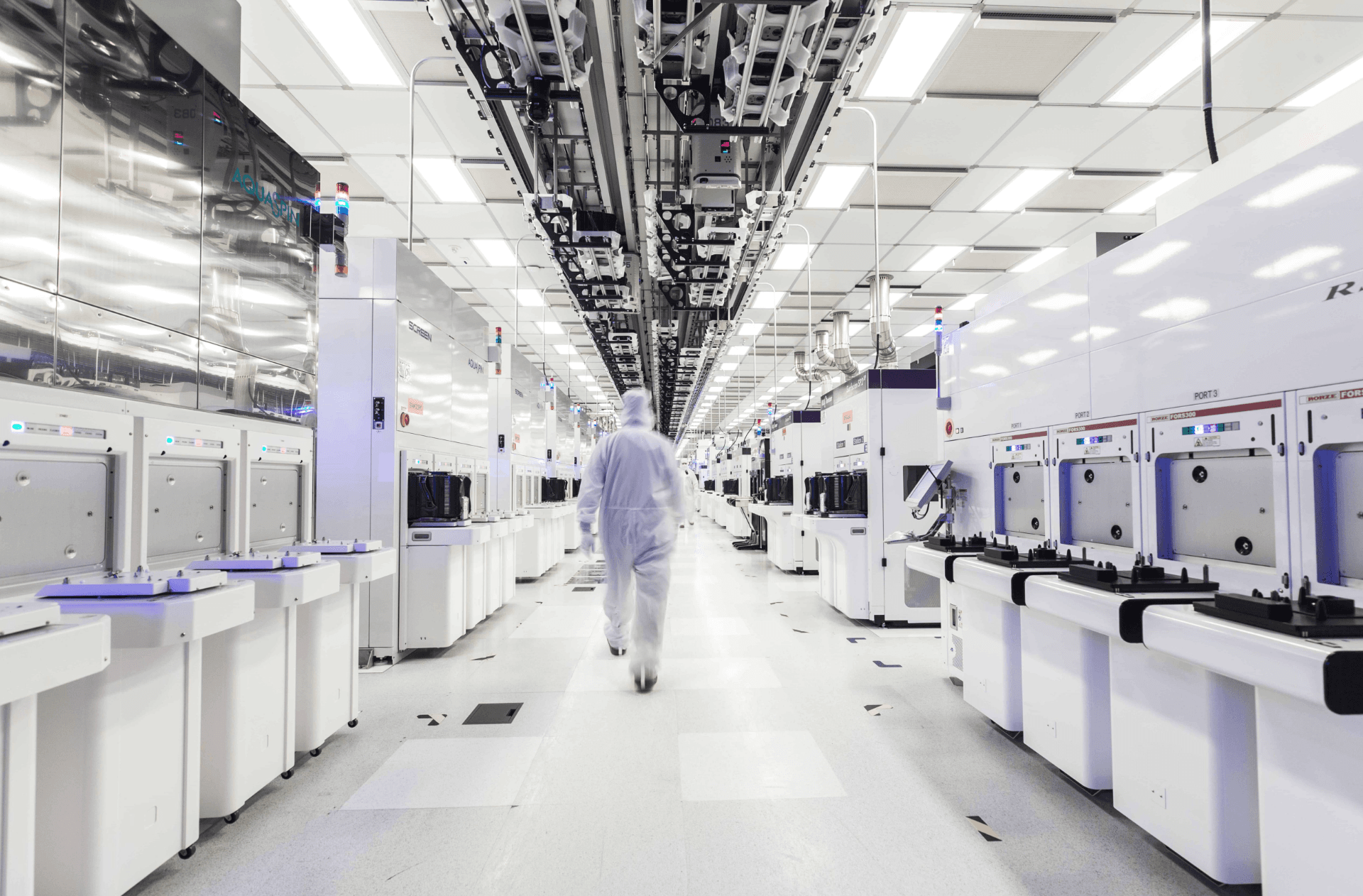
For years, the cornerstone of the West's chip containment strategy against China rested on one assumption — that Beijing could not replicate the precision equipment needed to manufacture advanced semiconductors at scale. ASML, the Dutch lithography giant, held an effective monopoly on extreme ultraviolet machines and a dominant position in the immersion DUV segment that feeds the bulk of global chip production. That assumption cracked publicly this week. Reports confirmed that a Chinese company has produced a functional immersion DUV lithography machine, the precise category of equipment that underpins logic and memory fabrication at the 28nm-to-7nm nodes still central to global output.
ASML fell 5.2% Tuesday on the news. That is a significant single-session move for a company of its scale and relative defensiveness, and it understates the longer-term strategic implications. If Chinese fabs can source domestically what they previously had to either import illegally or build workarounds to avoid, the export controls that Washington has spent three years tightening become materially less effective. The addressable market for Chinese-sourced chips — particularly in the memory and mature-node logic segments — expands dramatically, and the pricing power that U.S. and Korean manufacturers extracted from an artificially constrained competitive landscape begins to erode.
The damage in Tuesday's session was not limited to ASML. Applied Materials dropped 7.9% and Lam Research fell 8.2% — both companies whose revenue depends heavily on selling equipment into fabs that are now, in theory, facing a new low-cost competitor on their own tooling. Lam reports earnings today, and the call will be scrutinized for any commentary on China order trends, customer capex plans, and whether management is revising its China revenue assumptions. That print could set the tone for the entire equipment subsector through the next quarter.
The Memory Stack Gets Repriced
The memory segment is absorbing the sharpest pain because it is the most exposed to commoditization risk. SanDisk, which entered 2026 as the S&P 500's best-performing name on the back of AI-driven demand for NAND storage, is now down more than 50% from peak. Tuesday's 16.1% decline came on elevated volume and was accompanied by an implied volatility reading of 143 — against a 52-week high of 163 — signaling that the options market is not treating this as a short-term flush but as a prolonged repricing event.
Micron fell approximately 10% Tuesday and is carrying an IV of 97, near the top of its 52-week range of 40 to 108. SK Hynix, which reported a staggering 557% year-over-year profit surge in its Q2 print, still closed down 14.7% in Seoul because the results missed analyst estimates — a stark illustration of how fast the goalposts have moved in this sector. This morning, SK Hynix ADRs are down another 8.98% in U.S. pre-market trading, and the Korea KOSPI has dropped 5.98% overnight. A company posting a 557% profit increase getting punished that severely is not a valuation story. It is a forward-expectations story, and the market is saying the next several quarters look nothing like the last one.
The contagion has spread rationally into adjacent infrastructure plays. Dell Technologies fell 10.3% Tuesday, Lumentum dropped 10%, Ciena lost 9.2%, and Vertiv gave up 6.7%. These are not random victims — they are companies whose revenue models are tied to the same AI data center buildout thesis that powered the memory run-up. As Bloomberg reported, the Nasdaq 100 is now on the brink of a technical correction, defined as a 10% drawdown from its recent high. The index closed Tuesday down 0.22% to 24,876.91, and futures this morning are adding only a fractional 0.3% — not enough to signal a genuine stabilization.
What Traders Watch Next
The session today is the most consequential of the week, and possibly the quarter. The Federal Reserve announces its rate decision this afternoon against a backdrop of 3.5% headline CPI, 2.6% core CPI, and a fed funds rate sitting at 3.63% — with Treasury markets pricing approximately 30% odds of a hike. A hold with hawkish language will further pressure growth stocks already under siege; a hike would be an unambiguous negative catalyst for the high-multiple tech names that dominate the Nasdaq. According to Yahoo Finance's live coverage, the binary nature of today's macro setup — the Fed plus Middle East oil risk — is keeping futures in a tight, indecisive range heading into the open.
After the close, Microsoft and Meta report. These two prints matter more to the chip sector right now than any chip company's own earnings, because both are among the largest buyers of AI infrastructure on the planet. If either company signals a deceleration in data center capital expenditure, or trims forward guidance on AI hardware procurement, the justification for the entire memory and GPU supply chain — the thesis that drove SanDisk's 2026 peak — collapses further. Conversely, a Microsoft or Meta print that confirms aggressive continued AI spending would be the most direct circuit breaker available to halt the chip rout. Watch the S&P 500 at 7,400 as the first line of technical support; a close below that level on heavy volume today would put 7,250 — roughly 2.4% lower — in play before month-end.
---
The Weekly Investor
Daily market analysis for active traders. Free.