
BOJ at 1.25%, ECB Hiking: The Global Rate Reckoning
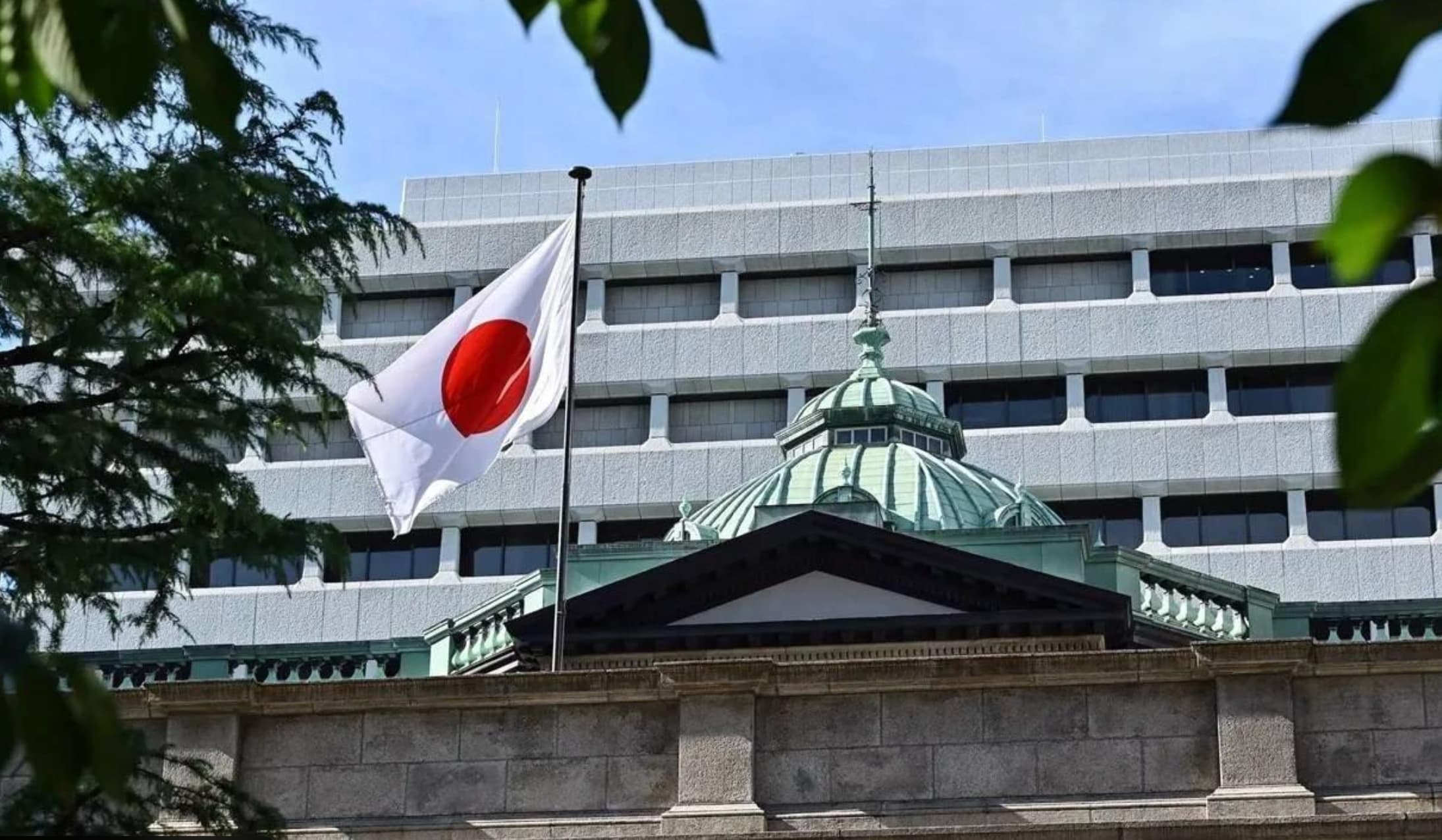
The BOJ hit 1.25% — highest since 1995. The ECB raised again on 3.0% inflation. Three of four major central banks are tightening simultaneously.
Key Points
- The Bank of Japan raised its policy rate 25 bps to 1.25% in a 7-2 vote — the highest level since April 1995 — as the BOJ's normalization cycle accelerates with inflation expected to approach 3% by early 2027.
- The ECB also hiked 25 bps on September 10, with staff projections showing headline inflation averaging 3.0% in 2026 and core stuck at 2.5%, giving the Governing Council no credible case for a pivot.
- With the Fed, BOJ, and ECB all tightening simultaneously, the dollar index faces cross-currents that could cap any rally, while yen strength and euro rate support create complex FX dynamics heading into Q4.
The Bank of Japan raised its benchmark rate 25 basis points to 1.25% at its September meeting, reaching borrowing costs not seen since April 1995, while the European Central Bank hiked its three key rates by 25 basis points on September 10 — making this the first period in modern financial history where the Fed, BOJ, and ECB are all tightening in the same month, simultaneously compressing global liquidity from three directions at once.
Japan's Normalization Is No Longer Tentative
The 7-2 vote at the BOJ signals genuine internal division, but the direction is not in question. Two dissenters presumably wanted to move slower or hold — but the majority is pressing forward, and the institution's communications have grown steadily more explicit about where this is headed. BOJ board member Kazuyuki Masu, speaking Thursday, said the central bank will continue raising its policy rate and adjusting monetary accommodation as underlying inflation approaches 2%. He flagged three specific risk variables that will govern the pace: crude oil prices, AI-driven demand dynamics, and foreign exchange movements. That is a notably sophisticated risk framework for a central bank that spent three decades doing essentially nothing with its policy rate.
The macro backdrop in Japan gives the hawks their ammunition, even if industrial production is wobbling. Japan's GDP for Q2 came in at +0.4% quarter-over-quarter, beating the +0.3% consensus, though it did slip from the prior quarter's +0.5%. The growth story is not accelerating, but it is not cracking either. What is not wobbling is inflation: the BOJ itself expects price growth to remain above its 2% target in coming years, with analysts projecting it approaching 3% by early 2027. For a central bank that spent the better part of two decades fighting deflation, 3% inflation is not a rounding error — it is an institutional mandate to act. At 1.25%, the policy rate remains deeply negative in real terms. Even another 75–100 basis points of hikes would leave Japan's real rate below zero, which means the BOJ's normalization runway is far longer than current market pricing suggests.
The yen implications are immediate and asymmetric. For years, the carry trade that funded dollar and EM positions with cheap yen borrowing was one of the most crowded and structurally embedded trades in global macro. Each BOJ hike incrementally raises the cost of that funding, and at 1.25% — with the market increasingly confident in further moves — the carry trade's risk/reward has deteriorated materially. A violent unwind, of the kind briefly seen in 2024, becomes more probable, not less, as Japanese rates rise into year-end. Traders running yen-funded positions need to be honest about what 1.50% or 1.75% BOJ rates would do to their cost basis.
Europe Hikes on Sticky Inflation
The ECB's September 10 decision was a 25 bp hike across all three of its key rates, and the staff projections that accompanied it told the story clearly. Headline inflation is now forecast to average 3.0% in 2026, declining to 2.5% in 2027 and 2.1% in 2028. Core inflation — the number that keeps ECB hawks awake — is projected at 2.5% in 2026, actually rising to 2.6% in 2027 before retreating to 2.3% in 2028. A central bank whose own economists project core inflation rising in 2027 does not have a credible case for pausing, let alone cutting, in the near term.
The GDP picture in Europe is more complicated. The ECB's baseline growth projection for 2026 is just 0.9% — barely above stagnation — rising to 1.4% in 2027 and 1.5% in 2028. The upward revision from prior projections reflects greater-than-expected resilience, but 0.9% growth is not a number that generates political enthusiasm for continued tightening. The Governing Council is walking the same knife's edge the Fed walked in 2022–2023: inflation that demands higher rates, growth that cannot comfortably absorb them. In Europe, the pressure is amplified by the uneven transmission of monetary policy across member states with very different debt-to-GDP ratios and fiscal situations. Peripheral spreads — the gap between Italian and German 10-year yields — are the instrument to watch for signs that the ECB's hiking path is fracturing sovereign market confidence.
What makes the ECB's position particularly relevant for global traders is the euro's role in the dollar index. With the ECB in active tightening mode, the interest rate differential between Europe and the U.S. is not widening dramatically in the dollar's favor — both central banks are moving in the same direction at roughly similar increments. That reduces one of the traditional tailwinds for dollar strength and creates a more range-bound EUR/USD environment than a simple "Fed hiking = dollar rallying" framework would suggest.
The SNB Diverges — And What That Means
The one G10 central bank moving in the opposite direction is the Swiss National Bank, which cut its policy rate to 0.0% from 0.5% to combat deflation risk and address franc strength. The SNB's move is the outlier data point that actually illuminates the broader picture: Switzerland's structural inflation dynamics — driven by a chronically strong currency and limited domestic demand — are exceptional, not representative. The SNB cut tells you nothing about where global policy is headed; it confirms that every other major central bank is in a different situation entirely.
The simultaneous tightening by the Fed at 4.00%, the BOJ at 1.25%, and the ECB across its rate corridor represents an unprecedented compression of global liquidity that has no clean historical analogue for the current generation of traders. The 2022–2023 hiking cycle was primarily a Fed-and-ECB story; the BOJ was still negative. Now all three are positive and moving higher. The mechanical effect on global asset prices runs through the discount rate applied to every future cash flow, the cost of dollar funding in cross-currency swap markets, and the gradual drainage of the yen-carry reservoir that has quietly subsidized risk appetite for years.
For positioning purposes, the DXY faces genuine cross-currents: Fed hawkishness argues for dollar strength, but ECB tightening caps the upside against the euro (roughly 58% of the index), and yen strengthening from BOJ hikes cuts against the dollar from a different angle. The cleanest expression of the global tightening theme is not in FX at all — it is in duration. Long-end sovereign bonds in every G7 market are structurally challenged when three of the world's four most systemically important central banks are simultaneously signaling higher-for-longer. Watch the October 14 U.S. CPI print and any BOJ communication following Governor Ueda's next scheduled appearance for the next catalysts — a Japanese CPI read above 2.8% would almost certainly pull forward market pricing for a BOJ move to 1.50% before year-end.
The Weekly Investor
Daily market analysis for active traders. Free.